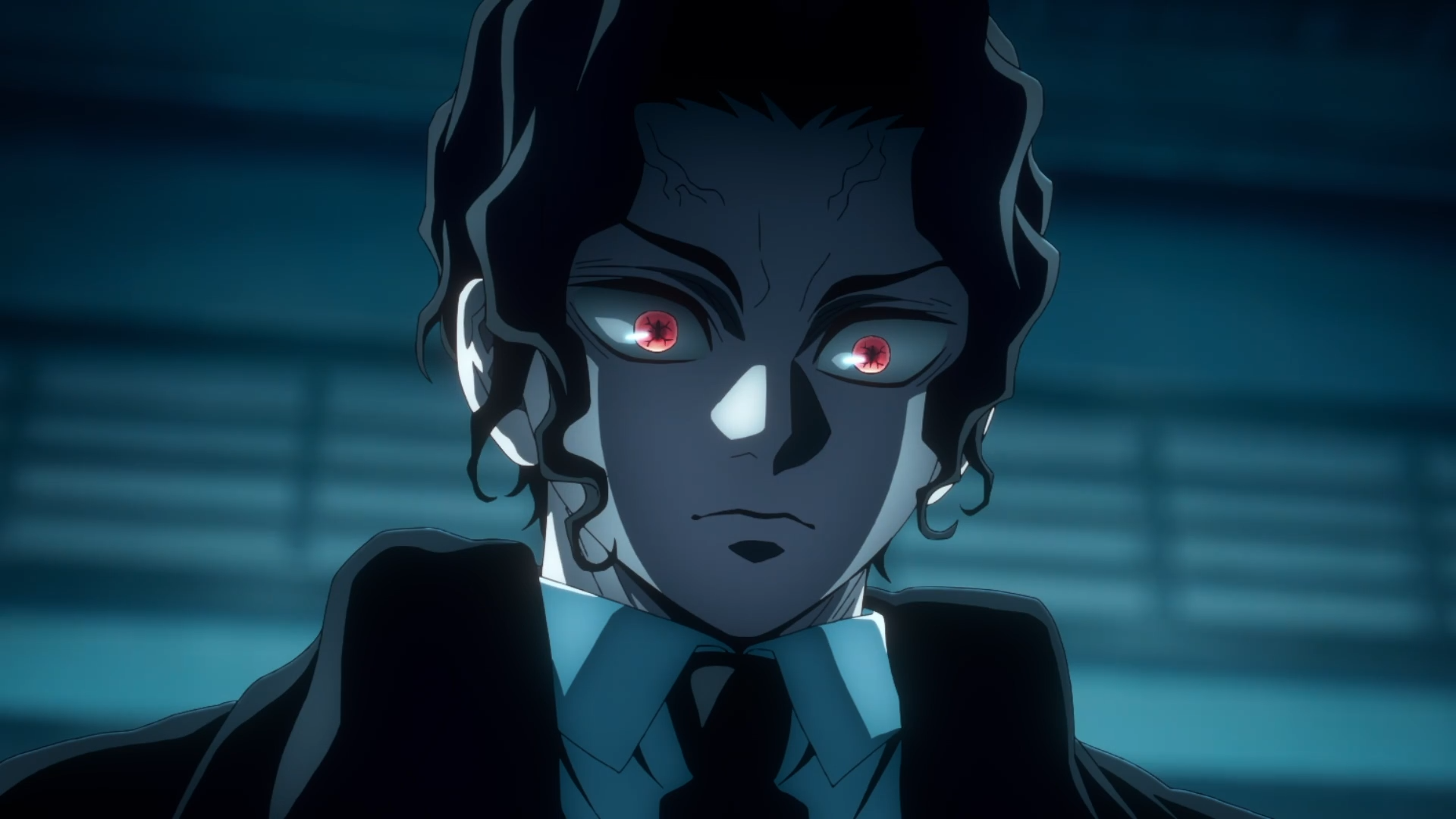
Muzan Kibutsuji isn't just the primary antagonist of Demon Slayer: Kimetsu no Yaiba; he represents a complete inversion of the traditional shonen villain. Most anime antagonists crave grand political domination, world peace through twisted means, or chaotic destruction for its own sake. Muzan wants none of that. His sole, obsessive driver is survival. Born out of a terminal medical condition during the Heian period, his accidental transformation into the first demon birthed a philosophy rooted entirely in absolute control and biological supremacy.
Understanding Muzan requires looking past his sharp suits and terrifying combat forms. He doesn't command fear because he enjoys theatrics; he commands fear because vulnerability is his ultimate terror. By treating his subordinates as disposable tools and restructuring how modern anime handles menace, he redefined what it means to be an untouchable force of nature.
The Origins of a Tyrant
Muzan’s transformation was a botched medical procedure. A Heian-period doctor attempted to cure his frail, terminal condition using an experimental experimental medicine containing the rare Blue Spider Lily. When Muzan realized his body was changing—growing stronger, craving human flesh, and burning under direct sunlight—he murdered the physician in a fit of rage.
This single act defined his entire existence. He achieved immortality, but he inherited a fatal weakness: the sun. His subsequent centuries weren't spent building an empire out of ambition, but out of a desperate, paranoid search for the Blue Spider Lily to cure his solar allergy.
- The Heian Foundation: His medical background poisoned his view of humanity, seeing people as biological material rather than sentient beings.
- The Sun Obsession: Every major strategic move he makes serves his search for absolute sunlight immunity.
- Isolation by Choice: He lives among humans in various disguises not to understand them, but to hide from them and the Demon Slayer Corps.
Absolute Control Through Psychological Terror
Muzan doesn't rule his Twelve Kizuki through loyalty or camaraderie. He rules through total psychological subjugation. Every demon bearing his blood carries a curse: uttering his name triggers an instant cellular destruction mechanism. This absolute leash ensures that no subordinate can plot against him or leak vital intelligence to the Demon Slayer Corps.
When the Lower Ranks of the Kizuki failed him, Muzan didn't offer constructive criticism or disciplinary demotions. He summoned them to the Infinity Castle and systematically slaughtered them one by one, dissecting their excuses with cold, clinical detachment.
"Are you aware of your position? You have no right to voice opinions. I dictate everything."
This scene established a new benchmark for villainous ruthlessness. He viewed his own creations as failed laboratory experiments. If a petri dish cracks, you throw it away. This clinical detachment strips away the humanizing traits usually granted to major anime villains, leaving behind an alien, cold intellect that treats life and death as mere variables.
Biological Warfare and Combat Design
When forced into physical confrontation, Muzan's combat style mirrors his psychological state: chaotic, overwhelming, and focused entirely on self-preservation. Unlike Tanjiro or the Hashira, whose breathing styles draw inspiration from artistic movements like water, flame, and wind, Muzan fights like a pathogen.
His body lacks traditional weak points. Because he possesses multiple brains and hearts distributed throughout his physical form, standard decapitation with a Nichirin blade is entirely ineffective.
- Cellular Regeneration: His tissues heal faster than the human eye can track, often making sword strikes look like they are phasing through empty air.
- Biological Assimilation: He absorbs organic matter on contact, breaking down flesh to heal his own wounds instantly.
- Flesh Whips: He transforms his limbs into massive, spiked bone-whips capable of unleashing devastating area-of-effect shockwaves.
This biological horror design shifts the genre's tone away from honorable martial arts clashes into a desperate survival horror scenario. The Hashira aren't fighting a skilled swordsman; they are trying to contain a mutating biological weapon.
The Contrast of Yoriichi Tsugikuni
Muzan's entire facade of invincibility fractures when confronted with one specific historical memory: Yoriichi Tsugikuni. Centuries prior to the main story, Muzan encountered the inventor of the Sun Breathing style. For the first time, the immortal demon faced total, inescapable death.
Yoriichi outmaneuvered Muzan effortlessly, slicing his body into nearly eighteen hundred distinct pieces. Muzan only survived because he managed to scatter those pieces into microscopic fragments, escaping by the skin of his teeth.
This encounter left deep psychological scars. Even hundreds of years later, Muzan's cells tremble with residual post-traumatic stress whenever he encounters earrings or breathing styles reminiscent of Yoriichi. This vulnerability humanizes his terror in the most twisted way possible. His absolute cruelty stems from a very real, very deep-seated cowardice. He hides behind thousands of foot soldiers because deep down, he knows what true defeat feels like.
Frequently Asked Questions
Why does Muzan look like Michael Jackson in his human form?
Creator Koyoharu Gotouge drew inspiration from early 20th-century Western fashion for Muzan's human disguise, specifically targeting a wealthy, elegant aesthetic. The resemblance to the pop star's iconic look is largely a coincidence of era-specific fedoras, white suits, and slicked-back hair.
Can Muzan be killed by sunlight alone?
Sunlight is his primary weakness, turning his cells to ash. However, because his regeneration is so advanced, standard daytime exposure must be paired with anti-demon drugs (such as Tamayo's aging and human-transformation formula) and prolonged physical containment by the Demon Slayer Corps to prevent him from regenerating faster than the sun can burn him.
Why didn't Muzan just create more powerful upper-rank demons sooner?
Creating strong demons requires a massive injection of his blood. Too much blood at once causes a human body to rupture and die from shock. Muzan had to wait centuries for individuals with high physical compatibility to cross his path naturally.
Is Muzan actually afraid of his own demons?
He isn't afraid of them staging a successful coup, since his cellular curse gives him absolute veto power over their lives. However, he is deeply paranoid about betrayal, exposure, and any demon accidentally or intentionally revealing secrets that could lead the Demon Slayer Corps straight to his current hiding spot.



