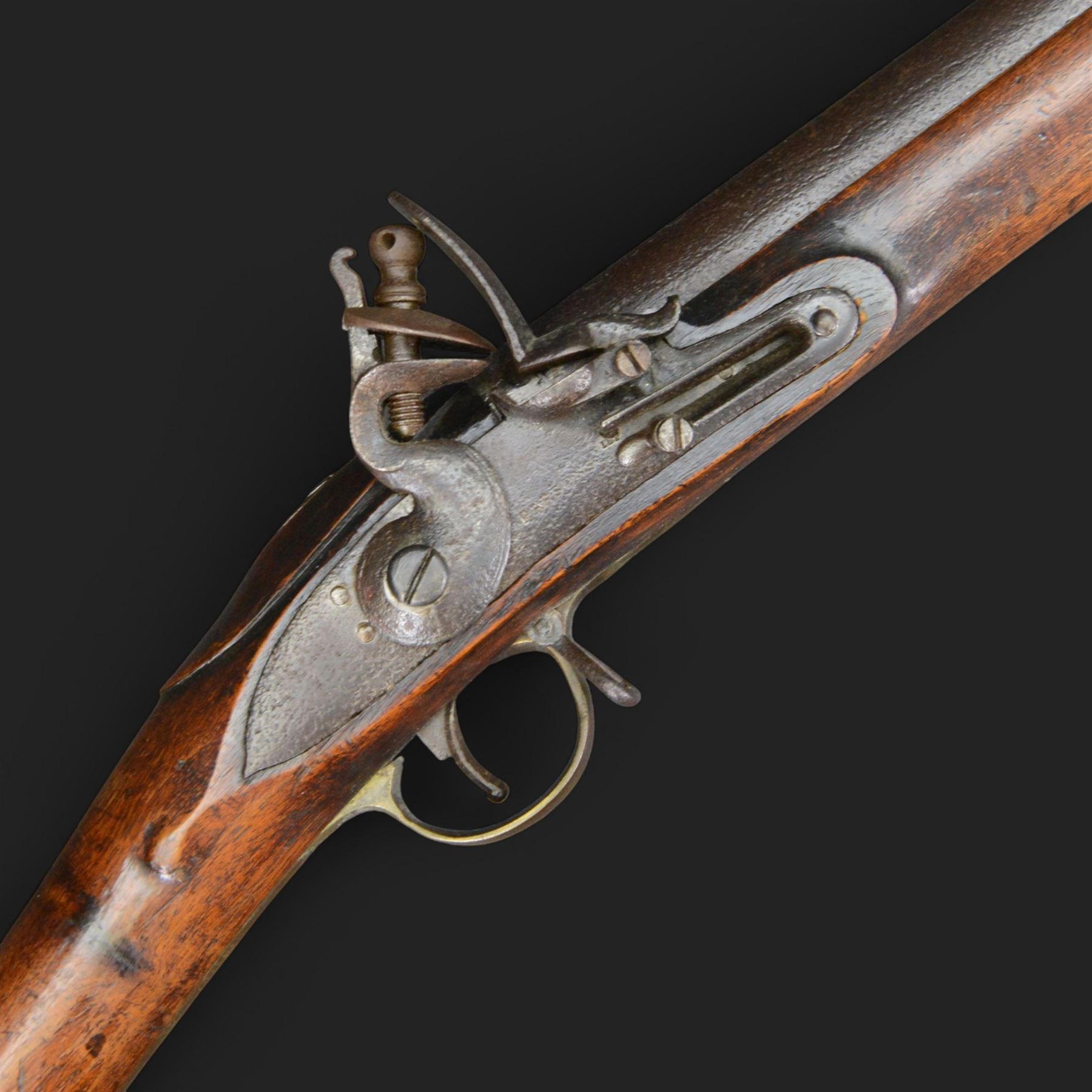
The musket transformed the nature of human conflict, shifting military power from armored nobility to massed infantry formations. Emerging in the early seventeenth century as a smoothbore, muzzle-loaded shoulder-arm, this firearm defined statecraft, empire-building, and technological development for over two hundred years.
Understanding the musket requires looking past romanticized notions of battlefield glory. Its dominance relied on disciplined massed volleys rather than individual precision. By standardizing infantry equipment and driving early industrial manufacturing, blackpowder arms laid the groundwork for modern logistical networks and state administration.
The Evolution of Musket Technology
Early firearms demanded complex handling and suffered from severe environmental vulnerabilities. The transition from crude handgonnes to standardized shoulder arms took centuries of metallurgical and mechanical refinement.
Early versions relied on the matchlock mechanism, introduced in the late fifteenth century. This system used a slow-burning cord match lowered into a pan of priming powder when the trigger was pulled. While it mechanized infantry combat, rain or high winds could easily extinguish the match, rendering the weapon useless in foul weather.
The invention of the flintlock in the mid-seventeenth century solved many of these operational hurdles. By striking a piece of flint against a steel frizzen, the mechanism generated a shower of sparks directly into the priming pan. This drastically improved reliability and accelerated reloading speeds, allowing armies to operate more effectively across diverse climates.
Key technical milestones included:
- Standardized bore sizes: Usually ranging from .65 to .75 caliber to streamline ammunition production.
- The paper cartridge: Combining powder and ball into a single pre-measured paper wrapper, which speeded up loading under stress.
- The socket bayonet: Attached around the barrel without blocking the muzzle, turning the firearm into a pike and protecting infantry against cavalry charges.
Tactics, Drill, and Battlefield Reality
Smoothbore muskets lacked the rifling needed to impart spin on a lead ball, resulting in erratic trajectories. Beyond fifty yards, hitting a specific target was largely a matter of chance.
Commanders compensated for this inherent inaccuracy through rigorous drill and discipline. Soldiers formed dense linear arrays—often three or more ranks deep—to deliver synchronized volleys.
[Enemy Line] <--- Volley Fire ---> [Rank 1] [Rank 2] [Rank 3]
Tactical doctrine emphasized volume over precision. Armies practiced firing by rank, where the front rank discharged its weapons, stepped back to reload, and allowed subsequent ranks to maintain a continuous wall of lead. This required intense physical conditioning and absolute obedience, transforming civilian recruits into synchronized military units.
Logistics posed an ongoing challenge. Soldiers carried dozens of paper cartridges in leather pouches, while supply wagons hauled extra lead, blackpowder barrels, and replacement parts. A breakdown in supply lines meant defeat, as troops without ammunition were entirely defenseless against charging enemies.
Economic and Industrial Impacts
Producing thousands of identical weapons required a transformation in manufacturing. States invested heavily in national arsenals, iron foundries, and timber harvesting operations to secure raw materials.
This demand for mass production fostered early innovations in interchangeable parts and precision machining. Government procurement contracts encouraged ironmasters to standardize barrel lengths, lock components, and calibers. These industrial practices directly influenced the later growth of factory systems during the Industrial Revolution.
The reliance on gunpowder also stimulated the chemical and mining sectors. Securing reliable sources of saltpeter, sulfur, and charcoal required complex supply chains that spanned continents, tying military readiness to global trade networks.
The Transition to Rifled Arms
By the mid-nineteenth century, the limitations of the smoothbore musket became unsustainable. The introduction of the Minié ball and mechanized rifling allowed lead bullets to grip internal barrel grooves easily.
This technological leap extended effective infantry ranges from fifty yards to several hundred yards. As seen during the American Civil War, traditional massed formations faced devastating casualties when meeting modern rifled muskets, rendering old tactical doctrines obsolete.
Frequently Asked Questions
Why were smoothbore muskets used for so long if they were inaccurate?
Armies prioritized rate of fire and ease of reloading over individual precision. Smoothbore balls could be loaded rapidly down fouled barrels, whereas early rifles required tight-fitting patches and constant cleaning.
How fast could a trained soldier reload a flintlock musket?
A well-drilled infantryman could fire about three rounds per minute under ideal conditions. In the chaos of battle, smoke, and fear, that rate often dropped significantly.
What caused the end of the musket era?
The widespread adoption of the percussion cap ignition system and rear-loading mechanisms, combined with rifled barrels, made traditional smoothbore muskets tactically obsolete by the 1860s.
Did indigenous populations use muskets in colonial conflicts?
Yes. Many groups quickly integrated firearms into their trading networks and defense strategies, altering regional power dynamics across North America and other colonized territories.



