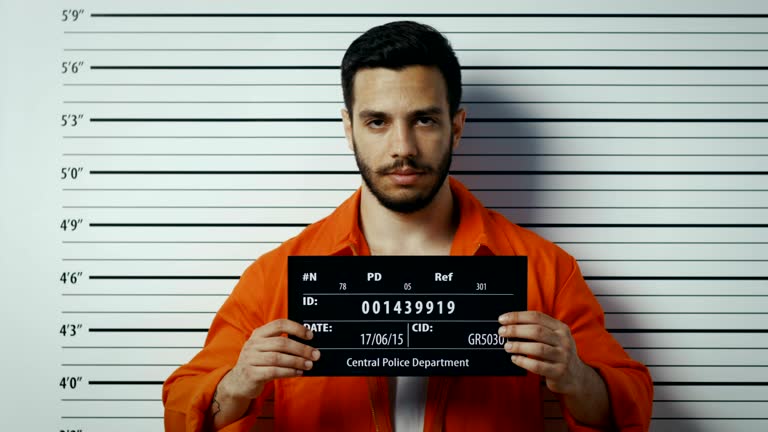
The modern mugshot occupies a strange space between official police record and viral entertainment. What started as a clinical tool for law enforcement identification has transformed into a cultural artifact, shaped by internet archives, celebrity culture, and ongoing debates over digital privacy.
Understanding the evolution of the booking photo requires looking past the sensational headlines. From 19th-century scientific identification methods to modern databases that host permanent digital footprints, the mugshot reflects how society records, shares, and consumes images of people caught in the legal system.
The Origins of the Booking Photograph
Before photography became standard police procedure, law enforcement relied on written descriptions, sketches, and bodily measurements to track repeat offenders. As cities grew denser in the 19th century, these manual methods failed to keep pace with urban crime rates.
Police needed a reliable, standardized way to record a suspect's appearance. The breakthrough came through the work of French police officer Alphonse Bertillon, who developed a system called anthropometry in the 1880s. Bertillon's method recorded exact measurements of the head, body, and limbs, paired with standardized frontal and profile photographs. To explore the bigger picture, we recommend the detailed report by The New York Times.
While the complex body-measurement system eventually faded, the photographic component remained. Police departments worldwide adopted standardized booking photos to create permanent visual archives. These early images were strictly functional:
- Controlled lighting: Harsh overhead lighting eliminated shadows that could obscure facial scars or bone structure.
- Neutral backdrops: Plain walls ensured the viewer's focus stayed entirely on the subject's features.
- Dual angles: Taking both a front-facing and profile view provided a complete spatial record of the face.
The Shift from Police Archives to Public Spectacle
For decades, mugshots remained locked inside physical police files or appeared sparingly in local newspapers alongside crime reports. Access required visiting a precinct or filing formal records requests.
The internet changed this dynamic entirely. In the late 1990s and 2000s, police departments and county jails began digitizing arrest logs and publishing booking photos online to improve public transparency. However, this shift created an unintended secondary market.
Websites scraped these government databases to aggregate booking photos, monetizing them through traffic, ad revenue, and extortionate takedown fees. Individuals whose charges were later dropped, reduced, or dismissed found their mugshots permanently plastered across search engines, affecting employment prospects and housing applications. This modern phenomenon forced lawmakers to reevaluate the ethics of publishing unconvicted individuals' booking photos, leading to various state-level restrictions and the rise of digital reputation management services.
Pop Culture and the Celebrity Mugshot
While everyday citizens often face employment and privacy hurdles from online mugshots, celebrity arrest photos follow a different cultural track. When a famous actor, musician, or athlete gets arrested, their booking photo instantly enters the pop culture bloodstream.
Instead of signaling social ruin, celebrity mugshots often become memes, fashion statements, or badges of rebellion. Fans dissect the lighting, expression, and clothing choice of the subject. A defiant or neutral expression can cement a celebrity's "bad boy" or "rebel" persona, while others use the moment to lean into self-deprecation.
This cultural fascination highlights a clear double standard. For a celebrity, a mugshot can temporarily boost public interest or feed a curated image. For an ordinary person, the exact same photographic format can cause long-term financial and social damage. Outlets like the Electronic Frontier Foundation have long advocated for balanced privacy standards to protect citizens from predatory data scraping.
The Future of the Booking Photo
As criminal justice reform accelerates, the lifecycle of the mugshot continues to evolve. Many jurisdictions have implemented "ban the box" policies and restricted the public display of booking photos for individuals who haven't been convicted of a crime.
At the same time, biometric advancements and facial recognition technology are changing how law enforcement handles identification. As police databases integrate with broader surveillance networks, the traditional mugshot is no longer just a standalone photograph taken at a booking desk. It serves as a training dataset for facial recognition algorithms, raising new questions about civil liberties and data governance.
The mugshot's journey from a dusty 19th-century police archive to a flashpoint in modern digital privacy reveals a lot about our appetite for true crime, public shaming, and visual culture.
Frequently Asked Questions
Are police departments legally required to publish mugshots?
Most jurisdictions treat booking photos as public records under laws like the Freedom of Information Act (FOIA) or state-level equivalents. However, many states have recently passed laws prohibiting mugshot websites from charging fees to remove photos of unconvicted individuals.
Can I get my mugshot removed from Google search results?
Yes, but it requires direct action. You can request removal from specific aggregator sites, use online reputation management services, or submit removal requests directly to search engines if the underlying legal record was expunged, sealed, or resulted in dropped charges.
Do all countries take mugshots the same way?
No. Privacy laws vary widely by country. In several European nations, strict privacy regulations prevent law enforcement from releasing booking photos or identifying suspects by name before a conviction takes place, contrasting sharply with the open-record policies common in North America.
How did Alphonse Bertillon change criminal identification?
Alphonse Bertillon created the first systematic method for criminal identification by combining detailed physical measurements with standardized photography, establishing the foundation for modern forensic archives.



