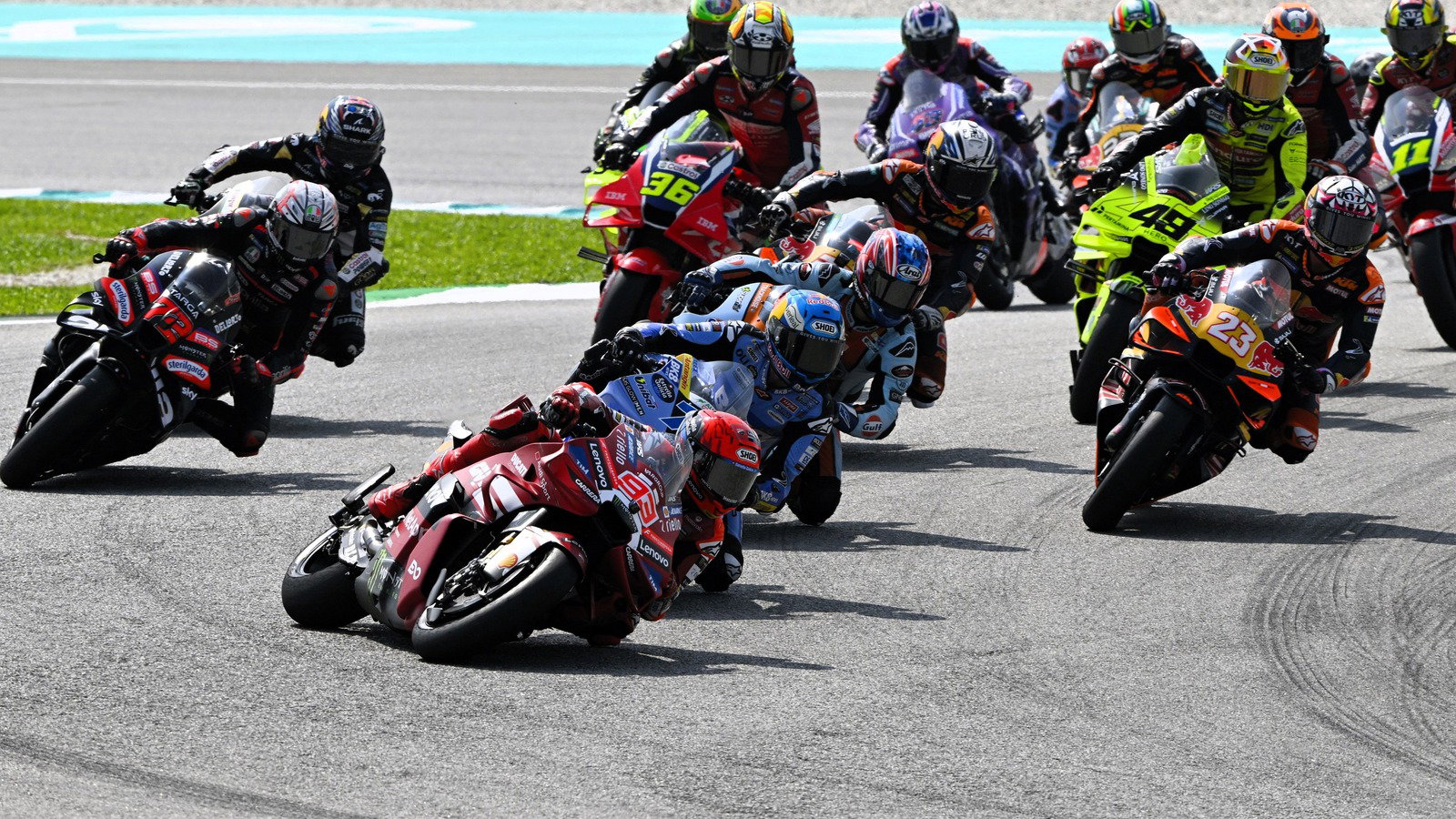
The 2024 MotoGP World Championship delivered one of the most unpredictable and high-stakes campaigns in the modern era of grand prix motorcycle racing. Set against the backdrop of the sport's 75th anniversary, the season combined massive rider roster shakeups, a restructured manufacturer concession system, and intense title fights that went down to the final round.
At the sharp end of the grid, factory dominance faced stern challenges from independent satellite teams running competitive machinery. Whether you're tracking how Marc Márquez adapted to Ducati equipment or evaluating Pedro Acosta's historic rookie campaign, unpacking the 2024 season requires looking closely at the technical regulations, rider moves, and calendar shifts that defined the year.
Major Rider Shifts and Team Lineups
The 2024 rider market produced seismic changes, most notably Marc Márquez cutting ties with Repsol Honda after eleven years to join Gresini Racing. Trading a struggling RC213V for a year-old Ducati Desmosedici allowed the eight-time world champion to return to the top step of the podium, proving he could still win on competitive material.
Meanwhile, the factory Ducati Lenovo Team retained reigning champion Francesco Bagnaia, who faced mounting pressure from Pramac Racing's Jorge Martín. Martín mounted a relentless title charge, utilizing the same factory-spec equipment as Bagnaia to prove that satellite teams could fight for and win the premier-class crown. Similar reporting regarding this has been provided by BBC.
Rookie phenom Pedro Acosta grabbed headlines immediately upon entering the premier class with Red Bull GasGas Tech3. Acosta secured multiple podiums in the opening rounds, establishing himself as a future factory-team centerpiece and earning a direct promotion to Red Bull KTM Factory Racing for subsequent seasons. Other notable moves included Luca Marini stepping into Márquez's former seat at Repsol Honda, and Trackhouse Racing taking over RNF's grid slots as Aprilia's new independent satellite team.
Technical Regulations and Concession System Overhauls
To close the competitive gap that Ducati opened during previous dominant years, MotoGP introduced a completely revised manufacturer concession system for 2024. Factories were divided into four distinct tiers (A, B, C, and D) based on the percentage of constructor points they scored in the preceding season.
- Tier A (Ducati): Faced strict limitations on private testing days and reduced aerodynamic development allocations to help rival manufacturers catch up.
- Tiers C and D (Honda and Yamaha): Received significant operational freedoms, including unlimited private testing with race riders, extra wildcard entries, and fewer engine development freezes.
Additionally, environmental regulations took a step forward. All premier-class machines were mandated to run on fuel composed of at least 40% non-fossil sources, part of the series' ongoing roadmap toward a 100% sustainable fuel standard.
The 2024 Calendar and Format Modifications
The 2024 calendar originally mapped out a record 21 rounds, though logistical adjustments and regional events shaped the final schedule. The season opener returned to the Lusail International Circuit in Qatar, while iconic European circuits like MotorLand Aragón returned to the rotation after brief absences.
The grueling schedule featured heavy double-headers and triple-headers, notably the demanding autumn flyaway stretch spanning Asia and Oceania. Unforeseen circumstances also impacted the schedule; severe regional flooding forced the cancellation of the traditional season finale in Valencia, prompting organizers to move the final showdown to the Circuit de Barcelona-Catalunya under the banner of the Solidarity Grand Prix.
Race weekends continued to feature Saturday Sprint races alongside traditional Sunday Grands Prix, doubling the start pressure and testing rider endurance across 42 total race starts. For official regulations and ongoing championship standings, check the MotoGP Official Website or review technical updates via FIM World Championship News.
Common Misconceptions About the 2024 Season
Fans often misinterpret how satellite teams operate under modern technical parity.
- Misconception: Satellite riders receive inferior machinery that cannot win races.
- Reality: Jorge Martín won the world championship riding for the Prima Pramac Racing independent team, proving that factory-supported satellite squads received identical spec hardware capable of outperforming official factory garage entries.
- Misconception: Concession rules allowed struggling Japanese manufacturers to instantly win races.
- Reality: While testing freedoms helped Honda and Yamaha gather critical telemetry, closing a multi-second deficit in aerodynamics and engine architecture required multi-year development cycles rather than overnight fixes.
Frequently Asked Questions
Who won the 2024 MotoGP World Championship?
Francesco Bagnaia secured the riders' title after a season-long battle against Jorge Martín, clinching the championship during the final round in Barcelona. Martín finished a close secondMotoGP 2024 Season: Standings, Calendar, and Technical Rules
Motorsport
The MotoGP 2024 season delivered one of the most intense battles in modern motorcycle racing history. Jorge Martin clinched his first premier-class world title, battling reigning champion Francesco Bagnaia across 20 global rounds. This campaign rewrote the championship record books while introducing radical technical concessions designed to balance manufacturer competitiveness.
Understanding what happened during this historic year requires looking past surface-level race results. We need to examine aerodynamic shifts, tire strategy changes, and the exact mechanical dynamics that shaped the championship standings.
The 2024 Championship Battle: Martin vs. Bagnaia
The fight for the rider's crown defined the entire season. Jorge Martin, riding for the Pramac Racing Ducati squad, executed a calculated campaign built on consistency and devastating sprint race speed. Meanwhile, factory Ducati rider Francesco Bagnaia claimed more Grand Prix victories on Sunday afternoons but suffered costly DNFs during Saturday sprints.
Sprint races introduced a punishing psychological toll. Riders couldn't afford a conservative weekend. Pushing hard on Saturday morning often led to tyre degradation issues or crashes that bled into Sunday's full-length Grand Prix. Martin managed this risk profile better than anyone else on the grid, securing crucial points while Bagnaia played catch-up through the autumn flyaway rounds.
- Jorge Martin: Maximized sprint race points and minimized unforced errors.
- Francesco Bagnaia: Dominated Sunday wins but lost vital ground in Saturday dashes.
- Enea Bastianini & Marc Marquez: Rounded out the top tier, stealing crucial race wins on updated and year-old machinery.
Technical Regulations and Concessions
A major shift in 2024 came via the introduction of the new MotoGP concession system. Organizers split manufacturers into four tiers (A, B, C, and D) based on championship constructor points collected during the previous two seasons.
This system aimed to rescue struggling Japanese heavyweights Honda and Yamaha. Under the rules, manufacturers in lower tiers received extra private testing days, engine development freedom during the season, and more aerodynamic update allowances. Ducati, dominant in Tier A, faced strict limits on aerodynamic updates and tire test allocations.
Despite these concessions, bridging the technical gap took time. Honda and Yamaha experimented heavily with chassis designs and engine configurations throughout the spring months, finding small gains by late autumn.
Aerodynamics and Ride Height Devices
Aero development reached a fever pitch in 2024. Every manufacturer ran elaborate wing assemblies, ground-effect side fairings, and rear-tail aero packages. These designs increased cornering speeds significantly but created severe dirty air turbulence when following another bike.
Riders consistently noted that passing became harder on tight circuits. Front tire pressure monitoring rules meant that tucking in behind a rival caused front tire temperatures to spike dangerously. Teams had to balance maximum downforce configurations against the physical strain placed on riders during heavy braking zones.
The 2024 Calendar and Circuit Highlights
The 2024 schedule featured 20 rounds across five continents. While classic European tracks like Mugello, Assen, and Sachsenring remained staples of the calendar, logistical challenges forced adjustments.
The traditional round at Termas de Rio Hondo in Argentina was canceled, leaving a gap in the early spring schedule. Meanwhile, circuits like the Buddh International Circuit in India faced organizational hurdles, while new venues and returning tracks like Sokol International Racetrack in Kazakhstan experienced delays before ultimately being dropped or rescheduled.
Mid-season weather disruption also played a massive role. Summer thunderstorms at Silverstone and erratic conditions at Phillip Island forced teams to make split-second tyre strategy calls on the grid.
Common Misconceptions About the 2024 Season
Fans often misunderstand how technical development works under modern regulations. Let's clear up a few persistent myths.
- Myth: Satellite teams get identical bikes with zero delay. Reality: While Pramac received factory-spec Ducati machines, Gresini and VR46 ran year-old GP23 motorcycles. Those older bikes lacked the latest engine upgrades and updated chassis stiffness, making late-season development harder for riders like Marc Marquez.
- Myth: Michelin changed tire compounds mid-season to favor specific bikes. Reality: Michelin provides standardized allocations selected before the season begins. Variations in grip came down entirely to asphalt aging, ambient track temperatures, and how individual bike setups loaded the contact patch.
- Myth: Concessions instantly solved Honda's problems. Reality: Unlimited testing allowed data gathering, but physics can't be rewritten in a few months. Frame rigidity and electronics mapping require fundamental architecture changes that take years to design.
Frequently Asked Questions
Who won the 2024 MotoGP World Championship?
Jorge Martin won the rider's title, competing for the independent Pramac Racing Ducati team. He secured the championship at the season finale in Barcelona.
Why did Honda and Yamaha struggle so much?
European manufacturers, particularly Ducati and KTM, innovated faster in aerodynamics, tire management software, and chassis construction. Honda and Yamaha relied on traditional development philosophies that lagged behind the aggressive R&D cycles seen in Italy and Austria.
How do MotoGP sprint races work?
Sprint races take place on Saturday afternoon before the main Grand Prix. They cover roughly half the distance of a full Sunday race and award points to the top nine finishers, with 12 points going to the winner.
Where can I check official historical race results?
You can find complete championship classifications, lap charts, and historical race archives directly on MotoGP.
What major rider transfers happened for 2024?
The biggest storyline was Marc Marquez leaving Honda after over a decade to join the Gresini Ducati team on a year-old machine, a move that earned him factory status with Ducati Lenovo for future seasons.



