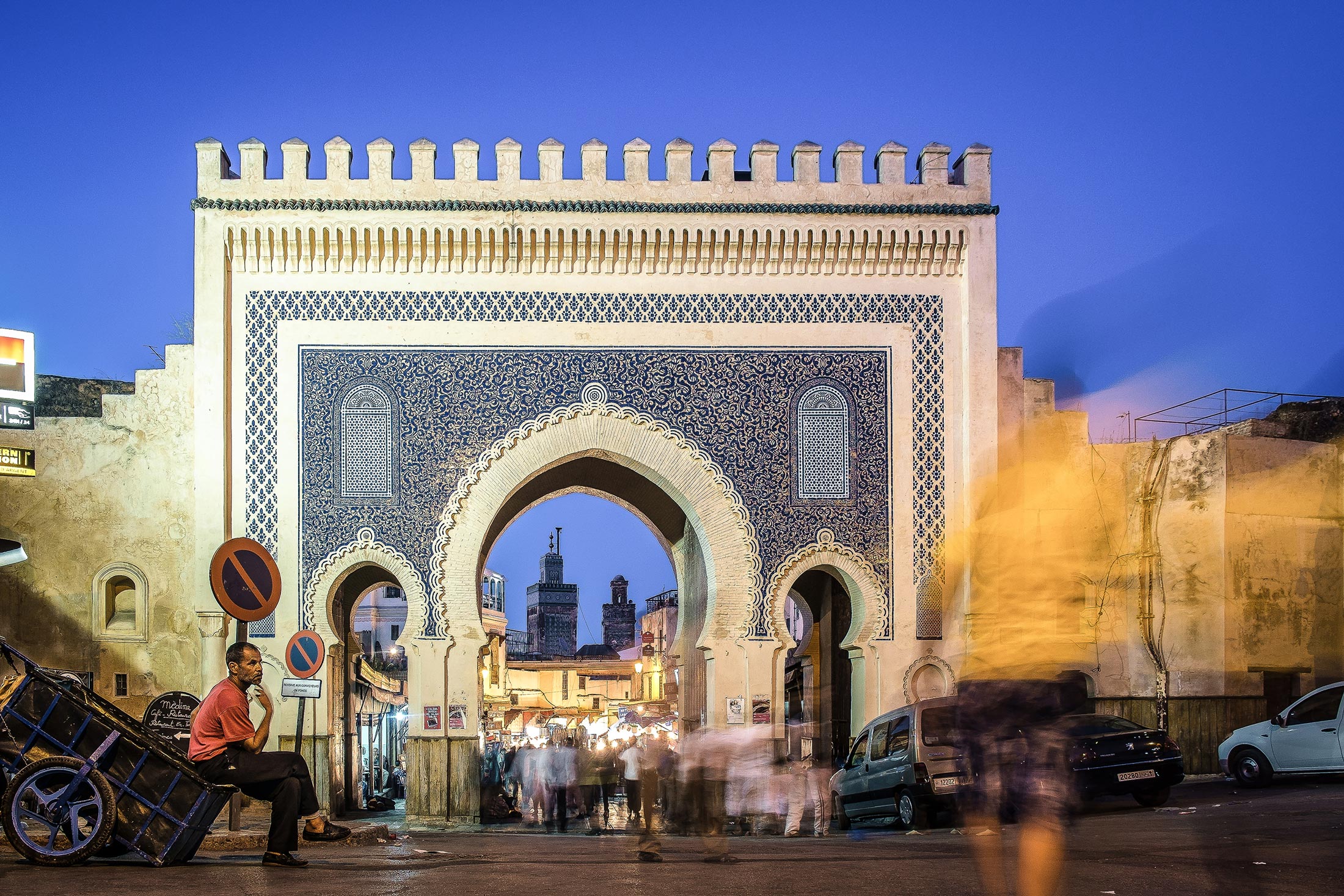
The French protectorate over Morocco, established in 1912 by the Treaty of Fez, fundamentally transformed the political, economic, and social landscape of the North African kingdom. Unlike neighboring Algeria, which France annexed directly as an integral part of its metropolitan territory, Morocco retained its theoretical sovereignty under a native Sultan while actual executive power rested with a French resident-general. This indirect governance model created a dual system of administration that preserved traditional institutions on the surface while systematically dismantling autonomous decision-making from within. Decades after independence in 1956, the fingerprints of this era remain visible across Morocco's legal codes, urban planning, educational institutions, and linguistic identity, reflecting a deeply layered historical footprint that defies simple categorization.
Understanding this epoch requires examining both the structural mechanisms of colonial extraction and the fierce indigenous resistance that ultimately forced France's withdrawal. The French administration, spearheaded by figures like Hubert Lyautey, implemented a policy of "association" rather than direct assimilation, aiming to modernize infrastructure and exploit rich natural deposits—particularly phosphates—while maintaining traditional social strata. Yet, this modernization came at a high cost to local sovereignty, cultural autonomy, and economic equity, sparking decades of nationalist agitation. Today, historians and citizens alike grapple with how this 44-year chapter shaped modern Moroccan statehood, international diplomacy, and socio-economic development.
The Establishment of the Protectorate and the Treaty of Fez
Before 1912, the Sherifian Empire faced mounting internal rebellions and intense European geopolitical rivalries. France, Britain, Spain, and Germany vied for influence over North African trade routes and strategic ports. The 1906 Algeciras Conference granted France and Spain policing rights in Morocco, setting the stage for total colonial intervention. When local insurrections threatened the authority of Sultan Mulay Hafid, French military forces marched inland to occupy Fez, compelling the Sultan to sign the Treaty of Fez on March 30, 1912.
This treaty stripped Morocco of its independent foreign policy and military control, turning the ancient kingdom into a French protectorate. The move provoked immediate and violent opposition from the local populace. Tribes across the Atlas Mountains and the Rif region launched protracted insurgencies against French and Spanish troops.
- The Zaian Confederation, led by leaders such as Moha ou Hammou Zayani, waged a fierce guerrilla war against French columns, inflicting significant casualties through the 1910s.
- In the northern Spanish zone, the Rif Republic under Abd el-Krim el-Khattabi established a short-lived independent state in the 1920s, defeating Spanish forces before a combined French and Spanish military coalition subdued the rebellion with chemical weapons.
By the early 1930s, active military pacification concluded, allowing the colonial administration to consolidate its grip over the country's economic and administrative infrastructure.
Administrative Control and Economic Exploitation
Resident-General Hubert Lyautey shaped the early years of the protectorate with a distinct philosophy of colonial governance. He believed in preserving traditional Moroccan elites, religious structures, and urban architecture to minimize friction, separating modern European quarters (villes nouvelles) from traditional medinas. However, beneath this façade of cultural preservation lay a rigorous apparatus of economic extraction.
The French administration prioritized the development of export-oriented industries, focusing heavily on agriculture and mining.
- Phosphates: Morocco possessed some of the largest phosphate reserves in the world, vital for global fertilizer production. The creation of the Office Chérifien des Phosphates (OCP) in 1920 centralized extraction, shipping raw mineral wealth directly to French industrial centers.
- Agriculture: Fertile plains in the Gharb and Chaouia regions were seized from traditional communal ownership and converted into large-scale commercial farms operated by European settlers (colons), producing wine, citrus fruits, and cereal crops for export.
- Infrastructure: A vast network of railways, deep-water ports like Casablanca, and paved roadways was constructed primarily to facilitate the rapid extraction of raw materials and the movement of military troops.
This economic restructuring marginalized the indigenous peasantry, drove rural migration to burgeoning urban slums, and concentrated wealth in the hands of European enterprises and a small domestic elite.
Rise of Moroccan Nationalism and the Path to Independence
The contradictions of colonial rule—praising traditional heritage while dismantling economic self-sufficiency—fueled the birth of the Moroccan national movement in the 1930s. A new generation of urban intellectuals, educated in French universities or traditional institutions like the Quaraouiyine University, began organizing political resistance.
In 1934, young nationalists formed the Bloc d'Action Nationale, presenting the Plan of Reforms to the French authorities. The plan did not initially demand full independence, but rather asked for respect for the Treaty of Fez, equal taxation, representative councils, and educational access. When the French protectorate administration rejected these moderate demands, the movement radicalized.
The pivotal turning point arrived with World War II. The defeat of France in 1940 and the landing of Allied forces in Morocco during Operation Torch in 1942 shattered the aura of French invulnerability. Moroccan nationalists seized the moment. In January 1944, the Istiqlal (Independence) Party issued the Manifesto of Independence, explicitly demanding complete sovereignty and a constitutional monarchy under Sultan Mohammed V.
Faced with growing unrest, the colonial administration attempted to bypass the nationalist movement by allying with traditionalist figures, most notably Thami el-Glaoui, the Pasha of Marrakech. In 1953, the French authorities deposed and exiled Sultan Mohammed V to Corsica and later Madagascar, replacing him with the pliable Mohammed Ben Arafa.
This exile backfired spectacularly. It transformed Mohammed V into a potent symbol of anti-colonial resistance across all segments of Moroccan society. Widespread protests, strikes, and urban guerrilla attacks erupted in major cities like Casablanca and Rabat. Recognizing that the situation was untenable and facing the drain of the Algerian War, France reversed course. Sultan Mohammed V returned triumphantly in November 1955, and negotiations led to the formal recognition of Moroccan independence on March 2, 1956.
Enduring Legacy in Modern Morocco
Decades after independence, the legacy of the French protectorate remains complex and deeply embedded in Moroccan society. It is neither purely positive nor entirely negative, but rather a dual inheritance that continues to shape daily life.
- Language and Administration: French remains the primary language of business, higher education, medicine, and government administration alongside Modern Standard Arabic, creating an ongoing debate about linguistic identity and social mobility.
- Legal and Institutional Frameworks: Much of Morocco's civil law, bureaucratic organization, and economic systems were built upon foundations laid during the colonial era, adapted post-independence to suit national governance.
- Urban Landscape: The dual-city model—where historic medinas sit adjacent to grid-patterned French colonial districts—remains the architectural blueprint for major urban centers like Casablanca, Rabat, and Marrakech.
Common Misconceptions About the Protectorate
Many observers assume that Morocco's experience under France was identical to that of neighboring Algeria. In reality, the legal status of a protectorate preserved the Moroccan state apparatus, monarchy, and Islamic legal traditions, shielding the country from total demographic replacement by European settlers. Another common misconception is that modernization efforts were entirely altruistic; infrastructure development was intentionally designed to serve French economic interests and strategic defense needs rather than domestic welfare.
Frequently Asked Questions
When did Morocco become a French protectorate?
Morocco officially became a French protectorate on March 30, 1912, following the signing of the Treaty of Fez by Sultan Mulay Hafid and French representatives.
How did Morocco regain its independence?
Following years of nationalist political mobilization, widespread civil unrest, and armed resistance triggered by the French exile of Sultan Mohammed V in 1953, France entered negotiations that restored the Sultan and granted Morocco full independence on March 2, 1956.
Did France colonize Morocco the same way as Algeria?
No. Algeria was annexed as an integral part of France (départements), whereas Morocco was governed as a protectorate, meaning it theoretically retained its own sovereign ruler and administrative institutions under French supervision.
What were the primary economic impacts of French rule?
The French administration modernized Moroccan ports, railways, and mining operations—particularly for phosphates—but heavily favored European agricultural settlers and industrial extraction over domestic economic autonomy.



