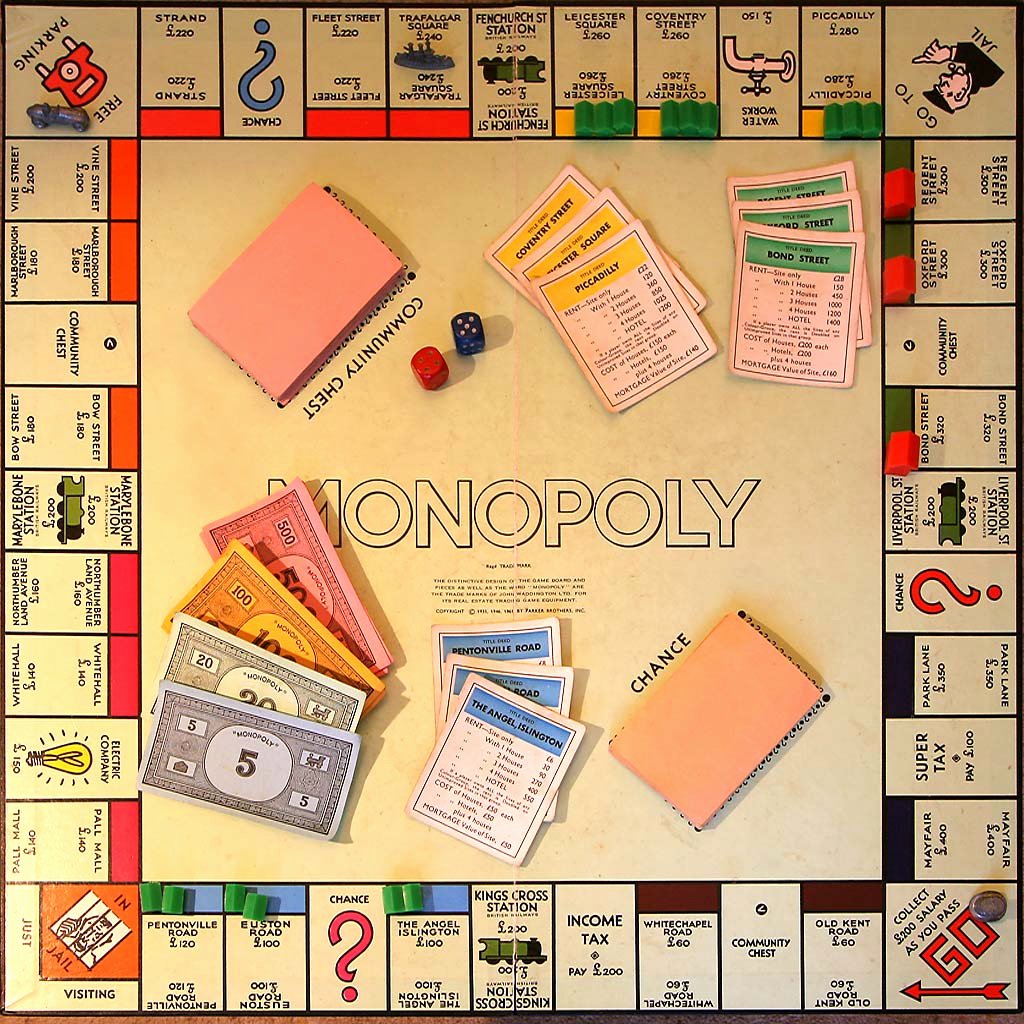
When you pull a classic Monopoly set off the shelf, you're holding a piece of tabletop history. A standard, fully unfolded classic Monopoly board measures 20 inches by 20 inches (roughly 50 by 50 centimeters), forming a symmetrical square. Because the board features a folding center crease to fit inside retail packaging, it collapses down to a compact 20 by 10 inches for storage. Knowing these exact physical dimensions helps when you're clearing table space, building a custom DIY board, or finding proper storage solutions.
Beyond the main board layout, understanding the size of individual components—like property spaces, card decks, and storage boxes—matters for players, collectors, and designers. Different editions vary wildly, ranging from tiny travel sets to massive outdoor installations.
Standard Monopoly Board Dimensions Explained
The classic board layout relies on precise spatial distribution around its perimeter. Each side of the square board accommodates eleven distinct spaces, including the corner squares.
- Overall Board Size: 20 x 20 inches (50 x 50 cm) when fully open.
- Standard Property Space: Approximately 1.5 inches wide by 2.5 inches tall.
- Corner Squares: Perfect squares measuring about 2.5 x 2.5 inches (such as GO, Jail, Free Parking, and Go To Jail).
- Board Thickness: Typically ranges between 1.27 to 2.54 millimeters of dense, heavy-duty pressed cardboard.
The central artwork area—featuring the iconic Chance and Community Chest card placement zones along with the trademark logo—serves as a neutral graphic space. It doesn't affect active gameplay mechanics, but it anchors the folding halves together.
Box Sizes and Storage Requirements
The retail box enclosing the game doesn't match the open board's dimensions because the board folds in half. A standard rectangular game box measures roughly 16 inches long by 10.75 inches wide, with a depth of about 1.75 inches.
This packaging footprint allows the folded board to lie flat alongside the plastic money tray, banker's tray, houses, hotels, dice, and token compartments. If you're organizing a game shelf, you'll want to account for this rectangular profile rather than a square footprint. Vintage wooden editions or deluxe collector's tins often feature slightly larger, heavier outer containers that require dedicated vertical clearance.
Component Measurements: Cards, Money, and Pieces
Every physical piece inside the box is scaled to fit the board's perimeter and the banker's tray slots.
- Title Deed and Playing Cards: Standard Chance, Community Chest, and property title cards measure 3.125 inches by 2 inches (8 x 5 cm). They are small enough to shuffle easily in one hand yet large enough to display clear mortgage values and rent tiers.
- Play Money: Monopoly banknotes measure approximately 4 inches wide by 2 inches tall (10 x 5 cm). They feature color-coded denominations designed to fit neatly into individual slots inside the plastic bank tray.
- Houses and Hotels: Traditional plastic green houses measure roughly 0.5 inches square at the base and 3/8 inches tall. Red hotels are slightly larger, measuring 0.75 inches wide by 0.5 inches deep and 5/8 inches tall.
Alternative Editions and Size Variations
Hasbro and other licensed manufacturers have released hundreds of distinct variants over the decades, altering the physical footprint to suit different environments.
- Travel and Compact Editions: Pocket or "Grab and Go" versions feature folding boards under 10 inches across, utilizing magnetic pieces or pegged tokens to prevent shifting during transit.
- Deluxe and Carousel Editions: Rotating wooden cabinet versions feature larger, heavier footprints—often measuring 22 inches or more across—and include built-in storage drawers for all components.
- Giant and Outdoor Versions: Oversized novelty boards or custom city installations can scale up significantly. For instance, large-scale immersive experiences like Monopoly Lifesized scale the board up into walk-on arenas measuring 15 by 15 meters.
Common Mistakes When Measuring for Custom Boards
If you're designing a custom-themed board for a school project, wedding gift, or corporate event, scaling errors can ruin the final product.
- Ignoring the Fold Line: If you print a custom board on a single rigid sheet of poster board, make sure it fits through standard doorways or vehicle trunks. If you replicate a folding design, reinforce the center hinge with flexible linen tape so the cardboard doesn't fray after repeated use.
- Miscalculating Property Spacing: Don't guess the dimensions of the side strips. If you divide a 20-inch side incorrectly, your property rectangles won't line up with the corner squares. Always map out your 9 regular property spaces between the 2.5-inch corners to ensure clean visual proportions.
- Disregarding Token Clearance: Custom spaces must be wide enough to hold multiple metal tokens at once. If you crowd too many players onto a single property square, miniature pewter thtopes and top hats will constantly knock over houses.
Frequently Asked Questions
Does every official Monopoly version use the 20x20 inch size?
No. While standard editions stick strictly to the 20x20 inch format, themed editions, junior versions, and travel compacts vary based on target age groups and portability needs.
How much table space do I actually need to play Monopoly?
You need more than just the 20x20 inch board footprint. Factor in extra room on all sides for players to keep their cash, rolled property deeds, and drawn cards. A table that is at least 3 feet by 3 feet provides comfortable clearance.
What is the thickness of a standard game board?
Most standard boards measure between 1/16 and 1/8 of an inch thick (roughly 1.5 to 3 millimeters), constructed from layered grayboard wrapped in printed paper and finished with a protective linen or glossy coating.
Can I use standard paper to print a replacement board?
Standard printer paper is too flimsy for long-term gameplay. If you're printing a replacement layout, use heavy cardstock (at least 110 lb weight) or mount standard paper onto mounting board or corrugated cardboard for proper structural rigidity.


