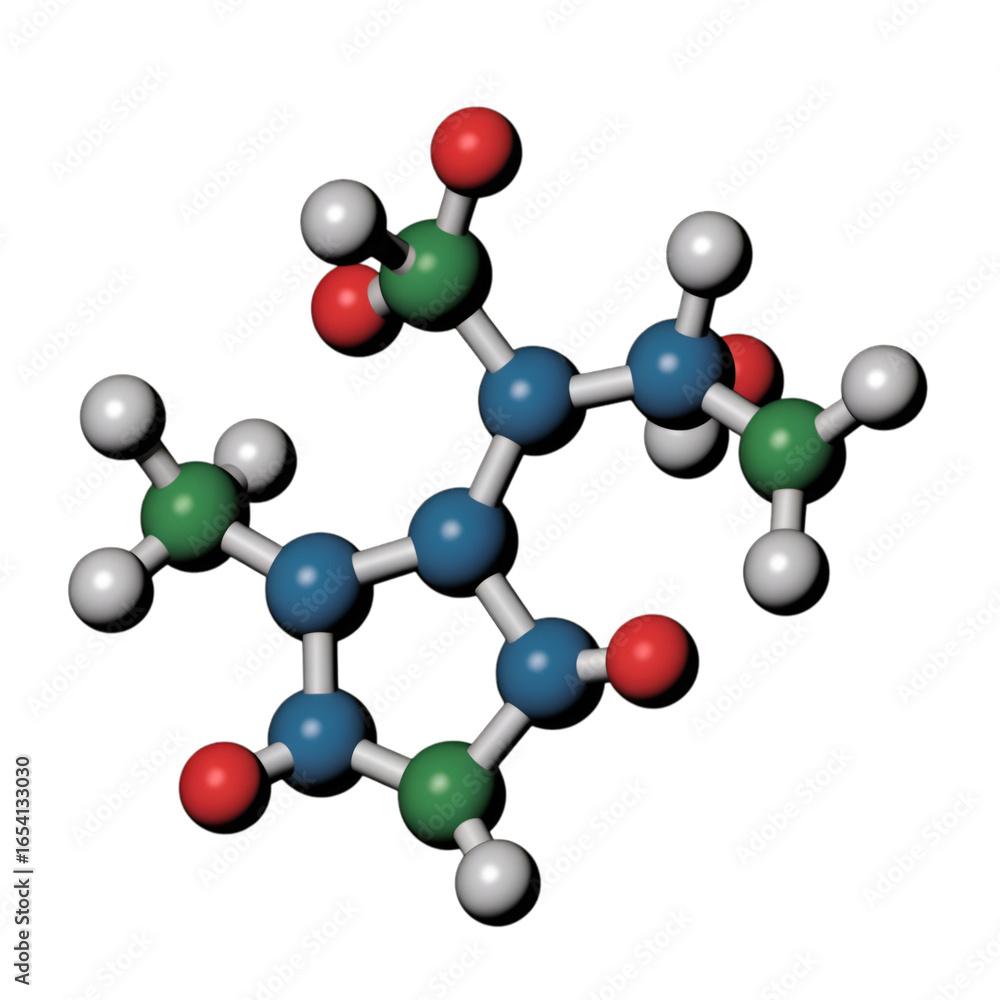
Molecules dictate the physical properties of everything around us. From the water we drink to the screen you're reading this on, tiny clusters of atoms bound together determine strength, flexibility, electrical conductivity, and biological function.
Understanding specific molecule examples helps bridge abstract atomic theory with real-world applications. By examining how atomic arrangement drives macroscopic behavior, scientists can engineer new materials, develop targeted pharmaceuticals, and build sustainable energy storage systems.
The Foundation of Structure and Bonding
At the heart of every molecule is a chemical bond. Atoms share, gain, or lose electrons to achieve stable electronic configurations, typically following the octet rule. The type of bond—covalent, ionic, or metallic—sets the baseline for how a substance interacts with its environment.
- Covalent Bonds: Formed when atoms share electron pairs. These bonds are strong and directional, creating discrete molecules like water ($H_2O$) and carbon dioxide ($CO_2$).
- Ionic Bonds: Formed through the electrostatic attraction of oppositely charged ions, producing extended crystalline lattices rather than isolated molecules, such as sodium chloride ($NaCl$).
- Metallic Bonds: Characterized by a "sea" of delocalized electrons moving freely among metal cations, giving metals their conductivity and malleability.
Molecular geometry matters just as much as bond type. Valence Shell Electron Pair Repulsion (VSEPR) theory dictates that electron pairs push away from one another, establishing 3D shapes that govern whether a substance is rigid, flexible, polar, or nonpolar.
Biological Molecule Examples: The Architecture of Life
Biology relies on complex macromolecules whose folding patterns and specific functional groups determine physiological activity.
Deoxyribonucleic Acid (DNA)
As one of the most vital molecule examples in existence, DNA stores genetic instructions using a double-helix architecture. The sugar-phosphate backbone provides structural stability, while internal nitrogenous bases—adenine, thymine, cytosine, and guanine—link via hydrogen bonds. This precise base-pairing allows for high-fidelity replication and protein synthesis across living organisms.
Proteins and Amino Acids
Proteins are polymers constructed from chains of amino acids. The sequence of these building blocks determines how the chain coils and folds into a functional tertiary structure. A single altered amino acid in the chain can disrupt the entire fold, leading to functional failures or pathologies like sickle cell anemia.
Industrial and Material Molecule Examples
Beyond living systems, synthetic and processed materials rely on precise molecular architectures to achieve industrial durability.
Water ($H_2O$) and Concrete Hydration
Water's bent geometry and electronegativity difference between oxygen and hydrogen create a permanent dipole moment. This polarity makes water an exceptional solvent. In civil engineering, water triggers hydration reactions in cement, forming calcium silicate hydrate ($C-S-H$) crystals that bind aggregate particles into solid concrete. Without this specific molecular reactivity, modern infrastructure could not exist.
Graphene and Carbon Allotropes
Carbon exhibits versatile bonding capabilities, forming graphite, diamond, and graphene. Graphene consists of a single two-dimensional layer of carbon atoms arranged in a honeycomb lattice. Bound by tight $sp^2$ covalent bonds, it is stronger than structural steel while remaining exceptionally light and flexible.
Electronic and Energy Storage Molecule Examples
Modern computing and renewable energy systems depend on manipulating electron movement at the molecular level.
Silicon Semiconductors
In computer processors, pure silicon crystal lattices form the base substrate. By introducing trace impurities through a process called doping, engineers substitute silicon atoms with elements like phosphorus or boron. This controlled introduction of extra electrons or electron "holes" creates p-n junctions that regulate current flow inside microchips.
Lithium-Ion Battery Materials
Lithium-ion cells rely on intercalation host molecules. During discharge, lithium ions move from a graphite anode through an electrolyte solution to slot into the crystal lattice of a metal oxide cathode, such as lithium cobalt oxide ($LiCoO_2$). The energy density and recharge stability of the battery depend directly on the structural integrity of these host molecules during ion insertion.
Environmental Impact and Molecular Design
Molecular stability is a double-edged sword. Synthetic compounds that lack natural degradation pathways can accumulate in ecosystems or the upper atmosphere.
For example, chlorofluorocarbons (CFCs) were engineered for refrigeration due to their non-toxicity and low reactivity in the lower atmosphere. However, once lofted into the stratosphere, ultraviolet radiation cleaved chlorine free radicals from the CFC molecules. These free radicals catalytically destroyed ozone ($O_3$) molecules, creating the Antarctic ozone hole.
Modern chemical engineering utilizes "green chemistry" principles to design molecules with built-in degradation triggers or non-toxic metabolic pathways, ensuring industrial utility without unintended environmental persistence.
Frequently Asked Questions
What makes a molecule polar versus nonpolar?
Polarity depends on molecular symmetry and electronegativity differences between bonded atoms. If atoms with differing electronegativities pull electron density unevenly and the molecular geometry doesn't cancel out those dipoles, the molecule is polar (like water). If the geometry is symmetrical, bond dipoles cancel out, making the molecule nonpolar (like carbon dioxide).
Why do small changes in molecular structure alter physical properties drastically?
Macroscopic properties emerge directly from atomic configuration. Changing a single functional group on a carbon chain can alter boiling points, water solubility, receptor binding affinity, or toxicity because intermolecular forces like hydrogen bonding or van der Waals interactions depend heavily on spatial arrangement.
How do scientists determine the 3D structure of complex molecules?
Researchers use analytical techniques such as X-ray crystallography, nuclear magnetic resonance (NMR) spectroscopy, and cryogenic electron microscopy (cryo-EM) to map atomic positions and bond angles within large biological macromolecules and synthetic crystals.
What is the difference between a molecule and a compound?
A molecule consists of two or more atoms chemically bonded together. A compound is a substance formed when two or more different chemical elements are bonded together. Therefore, oxygen gas ($O_2$) is a molecule but not a compound, whereas water ($H_2O$) is both.



