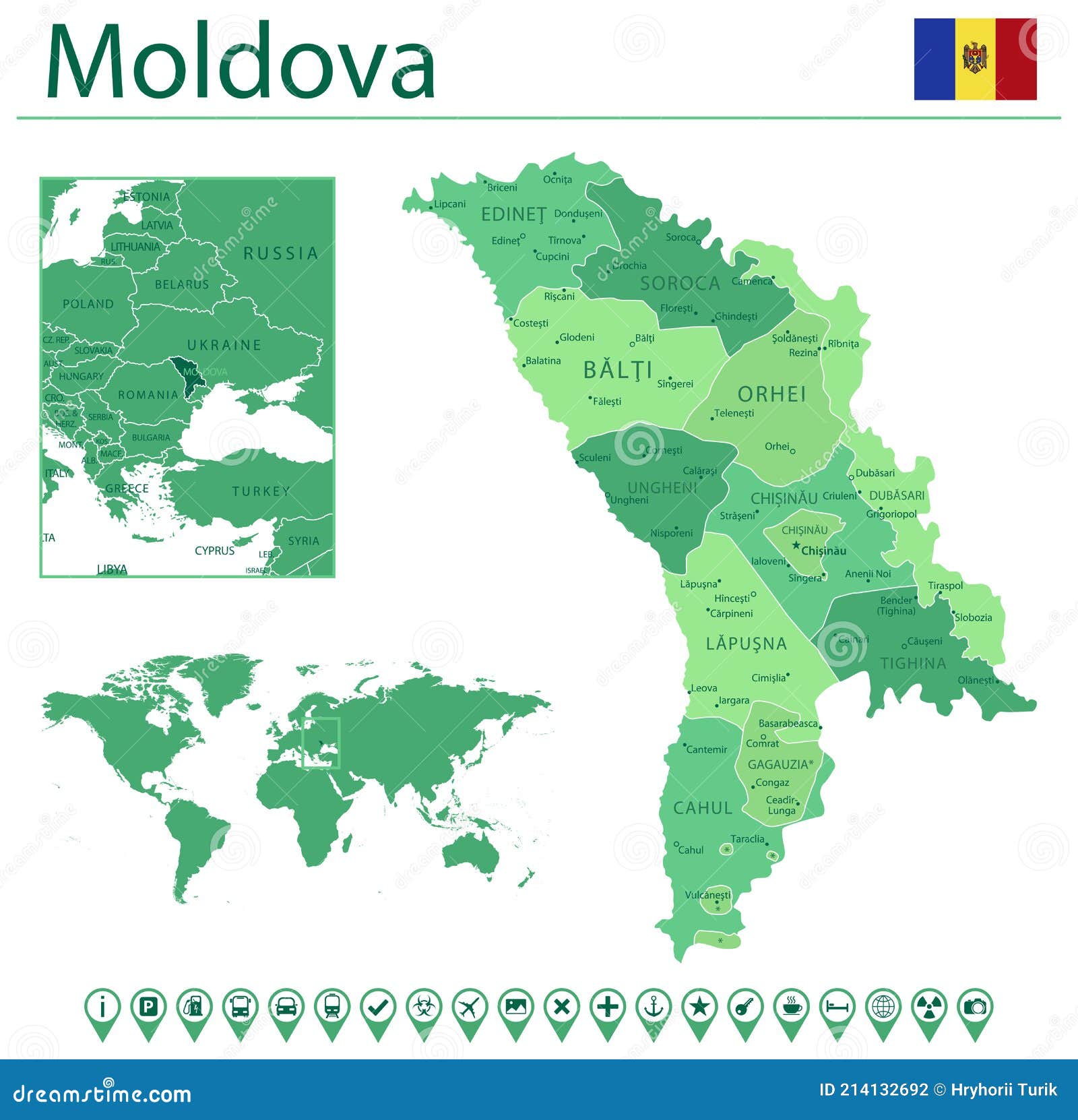
When you run across references to Eastern Europe, you'll often see two distinct names used for the same geographic space: Moldova and Moldavia. It is easy to assume they refer to entirely separate nations or eras, but they actually point to the same linguistic roots and historical territory, split apart by centuries of shifting imperial borders.
At its core, Moldova is the native Romanian spelling and the modern sovereign state's official designation, while Moldavia is the traditional English and Romance-language variant historically applied to the broader medieval principality. Grasping why both terms persist requires looking past simple spelling preferences into the region's geopolitical evolution, linguistic transitions, and modern diplomatic standards.
The Linguistic Roots: Why Two Names Exist
Languages shape geography. The name stems from the Moldova River, which flows through the historical heartland of the region. In the local Romanian language, the territory has always been called Moldova.
English speakers, however, traditionally adopted names through French or German translations during the nineteenth and early twentieth centuries. The French form Moldavie naturally translated into the English Moldavia. For generations of Western cartographers, historians, and literature writers, Moldavia was the standard entry in the lexicon.
When the region gained independence from the Soviet Union in 1991, the newly formed government chose its native Romanian spelling, Republic of Moldova, for international diplomatic recognition. English media and global bodies adopted Moldova to match local preference, while Moldavia shifted into a historical term used mostly when discussing medieval or nineteenth-century contexts.
Historical Evolution: From Principality to Partition
To understand how a single geographic concept fractured into different names, you have to look at the medieval Principality of Moldavia. Founded in the fourteenth century, this independent state stretched from the Carpathian Mountains in the west to the Dniester River in the east, encompassing land that is now divided among three modern countries:
- Western Moldavia: The portion situated west of the Prut River, which later united with Wallachia to form modern Romania.
- Eastern Moldavia (Bessarabia): The portion situated between the Prut and Dniester rivers.
- Northern and Southern Outskirts: Portions that now belong to parts of Ukraine.
In 1812, the Russian Empire annexed the eastern half of the principality, known as Bessarabia. This partition split the region's identity. The western half eventually merged with other Romanian lands, while the eastern half remained under Russian and later Soviet control. During the Soviet era, the territory became the Moldavian Soviet Socialist Republic, cementing the Moldavia spelling in English-language Soviet maps and literature. When the Soviet Union dissolved, the state reclaimed its heritage by dropping the Russian-derived suffix in favor of the Romanian name.
Geographic Distinctions Today
Today, using one term over the other usually depends on whether you are talking about modern politics or medieval history.
When referencing the independent United Nations member state located between Romania and Ukraine, the correct and current term is the Republic of Moldova. Using Moldavia for the modern country sounds dated and can imply a lack of awareness of post-Soviet self-determination.
Conversely, when historians discuss the medieval state that fought off Ottoman expansion under leaders like Stephen the Great, they typically use Moldavia. Similarly, if you are discussing the historical Romanian province that forms the eastern third of modern Romania today, locals and geographers often still refer to that specific region as Western Moldavia (Moldova in Romanian).
Common Misconceptions
People often stumble over these terms due to a few persistent myths.
First, some assume that Moldova and Moldavia are entirely different ethnic regions or possess distinct languages. In reality, the majority population in both the independent Republic of Moldova and the Romanian region of Moldavia shares the same ethnic and linguistic roots, speaking Romanian.
Second, travelers occasionally worry that using the old English term is offensive. While locals overwhelmingly prefer Moldova because it matches their national identity and language, historical references to Moldavia are generally understood as an outdated geographic label rather than an intentional slight. For official guidance on country names and designations, you can check resources maintained by organizations like the United Nations.
Frequently Asked Questions
Are Moldova and Moldavia the same place?
They refer to the same historical territory, but Moldavia is the traditional English name for the medieval principality, while Moldova is the modern independent country's official name and the Romanian word for the region.
When should I use the term Moldavia?
Use Moldavia when discussing historical contexts, such as the medieval Principality of Moldavia that existed prior to the nineteenth century, or when referring to the historical province within modern Romania.
Why did the name change in English?
The name didn't strictly change so much as preference shifted. English speakers adopted Moldavia from French usage. When the country declared independence in 1991, it requested that the international community use its native Romanian spelling, Moldova.
Is Bessarabia the same thing as Moldova?
Bessarabia is a historical geographic term for the eastern part of the historical principality—roughly corresponding to the modern Republic of Moldova—that was annexed by the Russian Empire in 1812. Not all of historical Moldavia was part of Bessarabia.



