Mastering MLA format doesn't have to feel like decoding a secret language. Whether you're drafting a literary analysis or a cultural studies paper, Modern Language Association style provides a clean, predictable blueprint for your text. The system relies on simple page layout rules and a flexible container model for citations, making it straightforward once you know the core requirements.
This guide breaks down exact margins, title setup, parenthetical in-text citations, and Works Cited page creation without the fluff. You'll get practical templates and clear rules to ensure your paper meets current academic standards.
Core Document Setup and Page Layout
Before writing a single sentence, your document needs standard structural formatting. Setting up your word processor correctly from the start saves you hours of tedious reformatting later.
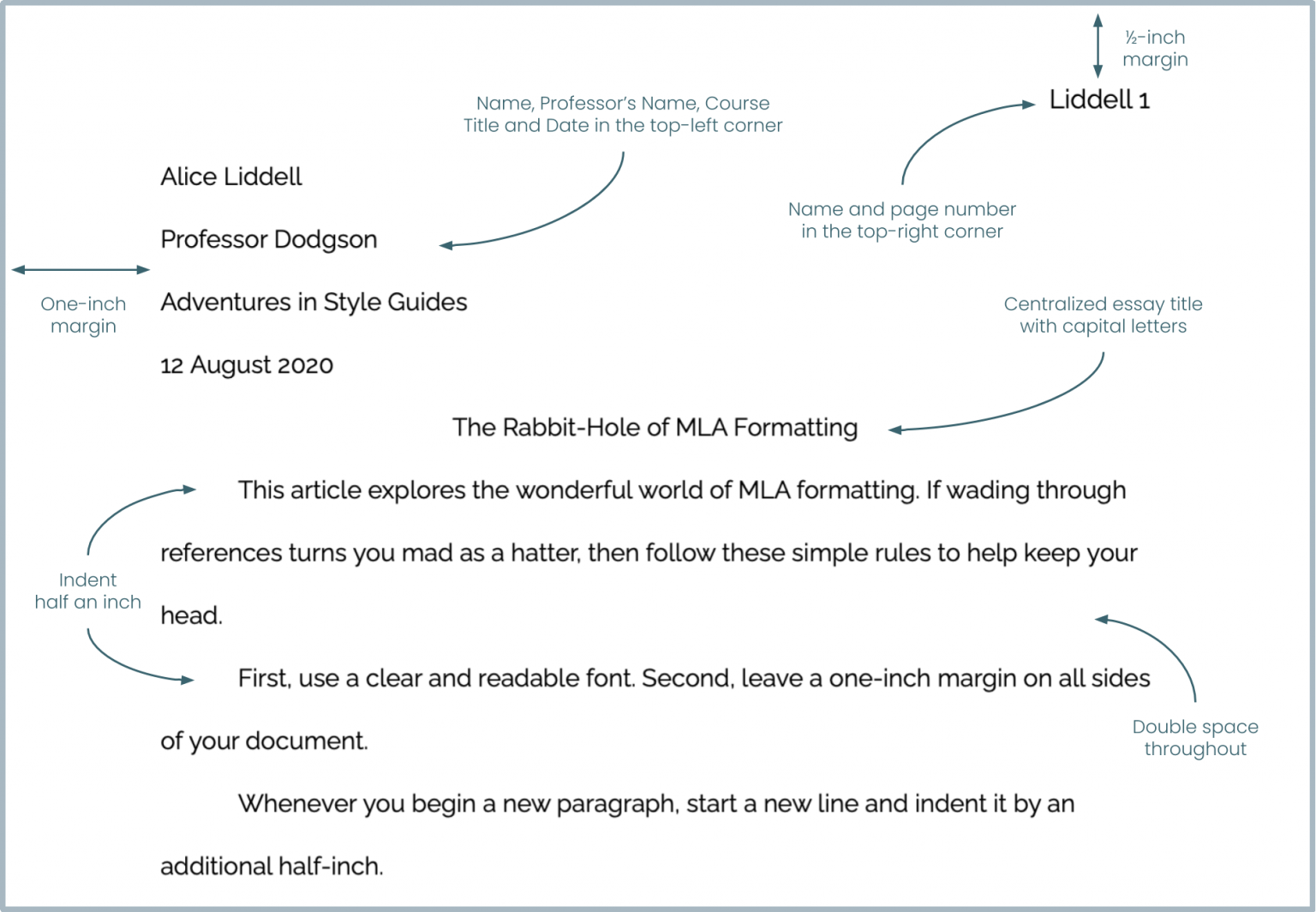
- Margins: Set 1-inch margins on all four sides of the document. Don't rely on default software settings, which often default to 1.25 inches.
- Font Choice: Use a readable, standard font like 12-point Times New Roman. Ensure that regular text and italics look distinctly different from one another.
- Line Spacing: Double-space the entire research paper, including block quotes, notes, and the Works Cited page. Never add extra blank lines between paragraphs.
- Paragraph Indentation: Indent the first line of every paragraph exactly one half-inch from the left margin. Use the Tab key rather than the spacebar.
- Punctuation Spacing: Leave only one space after periods and other concluding punctuation marks.
The First Page and Running Header
Unlike APA style, MLA typically doesn't require a separate title page unless your instructor explicitly asks for one or you're working on a group project.
In the upper right-hand corner of every page, create a running header containing your last name and the page number, separated by a single space. This header should sit half an inch from the top edge and flush with the right margin.
On the upper left-hand corner of the first page only, present your identifying information on separate double-spaced lines:
- Your full name
- Your instructor's name
- The course name or number
- The date (written in day-month-year format, such as 14 October 2026)
Double-space once below the date and center your paper title. Capitalize principal words in the title using standard title case. Do not bold, underline, italicize, or enclose your title in quotation marks. If you mention another work within your title, italicize or quote it just as you would in the body text. Double-space again before starting your introductory paragraph.
In-Text Citations Without the Guesswork
When you quote, paraphrase, or summarize outside material, you must direct readers to your source using parenthetical in-text citations. These notes should remain brief and unobtrusive so they don't break your prose flow.
Basic Parenthetical Rules
In most cases, place the author's last name and the relevant page number inside parentheses at the end of the sentence:
Environmental degradation alters local ecosystems faster than species can adapt (Carson 42).
Notice there is no comma between the author's name and the page number. If you mention the author's name directly in your sentence text, omit it from the parentheses and include only the page number:
Rachel Carson argues that environmental degradation alters local ecosystems faster than species can adapt (42).
Handling Missing Authors or Page Numbers
When a source lacks a listed author, use a shortened version of the source title in quotation marks or italics:
Public health guidelines shifted rapidly during the fiscal year ("Healthcare Reform" 14).
For online articles or digital media lacking traditional page numbers, omit the page number entirely in your citation if no paragraph or section numbers are provided. Never force a manual page count from a printed PDF view unless pagination is explicitly stamped on the source file.
Constructing the Works Cited Page
Every source cited within your essay text must appear on your Works Cited page, which starts on a fresh page at the end of your document. Center the title "Works Cited" at the top without bolding or italics.
Entries must be alphabetized by the author's last name. Apply a hanging indent to every citation: align the first line flush with the left margin, and indent all subsequent lines by half an inch. Double-space all entries without adding extra blank lines between individual sources.
The Purdue OWL MLA Formatting and Style Guide relies on a core elements template for citations. Instead of memorizing rigid templates for every media type, you sequence nine standardized components:
- Author
- Title of source
- Title of container
- Other contributors
- Version
- Number
- Publisher
- Publication date
- Location
For instance, a standard scholarly journal article found in an online database follows this core pattern:
Lastname, Firstname. "Article Title." Journal Name, vol. 12, no. 3, 2024, pp. 45-60. Database Name, DOI or URL.
Common MLA Formatting Mistakes to Avoid
Even experienced writers slip up on specific formatting details. Watch out for these frequent errors:
- Wrong Spacing on Works Cited: Adding double line breaks between entries instead of keeping the entire page uniformly double-spaced.
- Incorrect Page Numbering: Forgetting to link the running header to your word processor's dynamic page numbering tool, resulting in the same page number printing on every page.
- Punctuation Placement: Placing the period before the parenthetical citation instead of after it. The sentence-ending period always goes outside the closing parenthesis.
- Hyperlink Formatting: Leaving long URLs live and underlined in blue on the Works Cited page. Check instructor preferences, but modern guidelines usually permit clean URLs without the leading http:// or https://.
For official updates, consult the Modern Language Association website directly. You can also review comprehensive writing tutorials via the Harvard Writing Center resources.
Frequently Asked Questions
Do I need a cover page for an MLA style paper?
No. MLA style generally omits separate title pages unless your instructor explicitly requests one or you are completing a collaborative group project. Your first page begins directly with your identifying block and title.
How do I cite a source with four or more authors?
For sources with three or more authors, list only the first author's full name followed by the Latin abbreviation et al. in your in-text citation and Works Cited entry. For example: (Smith et al. 142).
Should I include URLs for online journal articles?
Yes, when available, include the stable URL or digital object identifier (DOI) at the end of your Works Cited entry. Prioritize DOIs over standard web addresses because they offer permanent links to academic content.
How do I format long block quotations?
If a prose quotation extends past four lines, set it off as a block quote. Indent the entire quote one half-inch from the left margin, keep it double-spaced, and omit quotation marks. Place your parenthetical citation one space after the closing punctuation mark.



