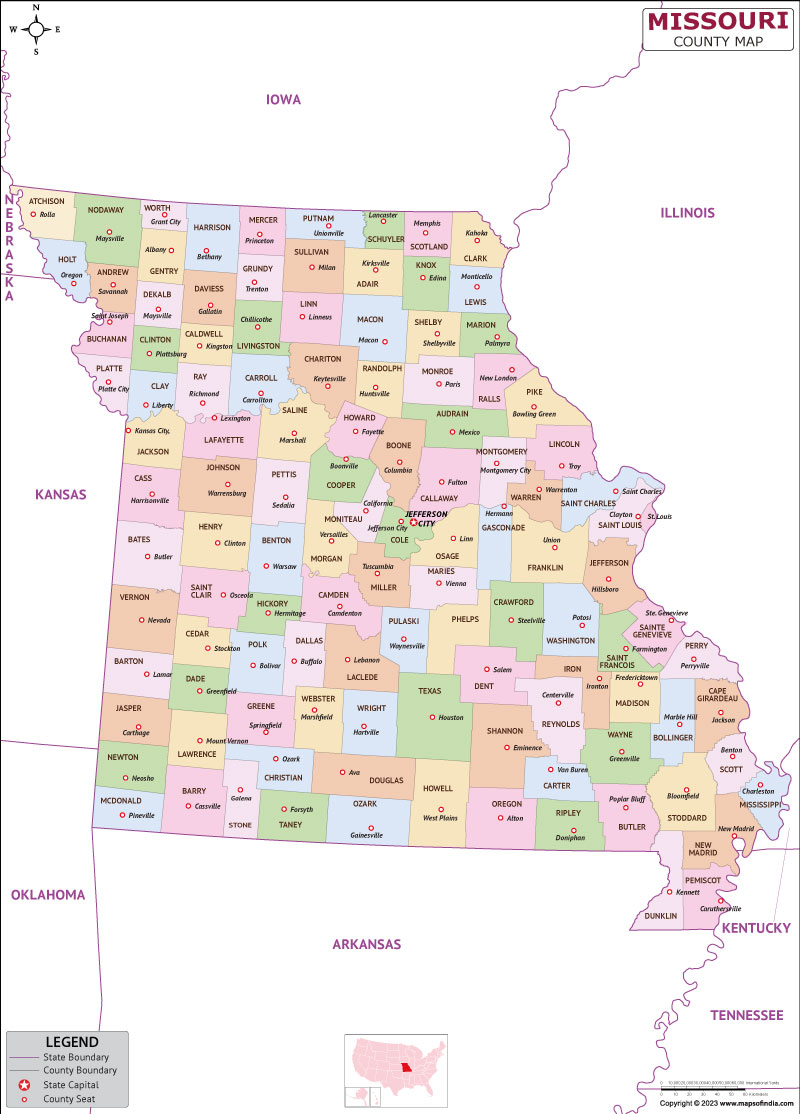
Is Missouri on Central Time? Yes, the entire state of Missouri operates on the Central Time zone. Whether you're visiting St. Louis, Kansas City, or Springfield, you don't have to worry about split-state time boundaries or juggling regional offsets.
Like most of the United States, Missouri observes Daylight Saving Time (DST). This means the state shifts back and forth between Central Standard Time (CST) and Central Daylight Time (CDT) depending on the time of year.
Understanding Missouri's Time Zone Structure
Missouri maintains a uniform time zone across all 114 counties and the independent city of St. Louis. You won't find any bizarre county-level exceptions like those in neighboring states such as Indiana, Nebraska, or Tennessee.
The official baseline for the state is Central Time, which is divided into two distinct seasonal phases:
- Central Standard Time (CST): Operating at UTC-6, this phase runs from early November until mid-March.
- Central Daylight Time (CDT): Operating at UTC-5, this phase runs from mid-March until early November.
When you cross state lines into Iowa, Illinois, Arkansas, or Oklahoma, your clocks won't change because those neighbors share the exact same Central Time rules. However, if you head west into parts of Kansas or Nebraska, you'll eventually bump into the Mountain Time boundary, though most populated regions in those states remain on Central Time as well.
The Seasonal Shift: Daylight Saving Rules in Missouri
Missouri strictly follows the federal guidelines outlined in the Uniform Time Act of 1966. Clocks don't change on a whim; they follow a precise calendar schedule every single year.
In the spring, specifically on the second Sunday of March at 2:00 AM, clocks spring forward by one hour. CST transitions into CDT, giving residents an extra hour of evening sunlight during the warm months.
In the autumn, on the first Sunday of November at 2:00 AM, clocks fall back by one hour. CDT reverts to CST, returning the state to its standard winter offset.
For businesses, remote workers, and travelers, keeping track of these changes matters. If you schedule a virtual meeting with someone in Kansas City during October, you're dealing with CDT (UTC-5). If that same meeting happens in December, you're dealing with CST (UTC-6).
To double-check current official offsets or synchronized clocks, you can consult the National Institute of Standards and Technology or review official federal guidelines via the U.S. Department of Transportation.
Common Mistakes and Border Confusion
Travelers often assume large states feature multiple time zones. Because Missouri stretches quite a distance from the Mississippi River in the east to the Kansas border in the west, people frequently search for split-zone lines that simply don't exist.
Another common error involves confusing Missouri's eastern border neighbors. While western Illinois and eastern Missouri share Central Time, folks traveling past Illinois toward Indiana will cross into the Eastern Time zone. If you have a tight connection driving across state lines, always verify local times near state boundaries.
Legislators have occasionally introduced state bills trying to abolish seasonal time changes or lock in year-round daylight saving time, mirroring broader national debates tracked by agencies like the Bureau of Transportation Statistics. Despite these periodic legislative discussions, federal law still requires states to stick to the standard biannual transition unless Congress authorizes permanent daylight saving time nationwide.
Frequently Asked Questions
Does any part of Missouri observe Mountain Time?
No. Every single county in Missouri stays strictly within the Central Time zone.
When do clocks change in Missouri?
Clocks move forward one hour on the second Sunday in March and move back one hour on the first Sunday in November.
What is the time difference between Missouri and New York?
New York is always one hour ahead of Missouri. When it's noon in St. Louis, it's 1:00 PM in New York, regardless of whether it's standard or daylight saving time.
How does Daylight Saving Time affect travel out of state?
If you drive west into western Kansas or Nebraska, you will cross into the Mountain Time zone, putting you one hour behind Missouri. Driving south, east, or north keeps you on Central Time.



