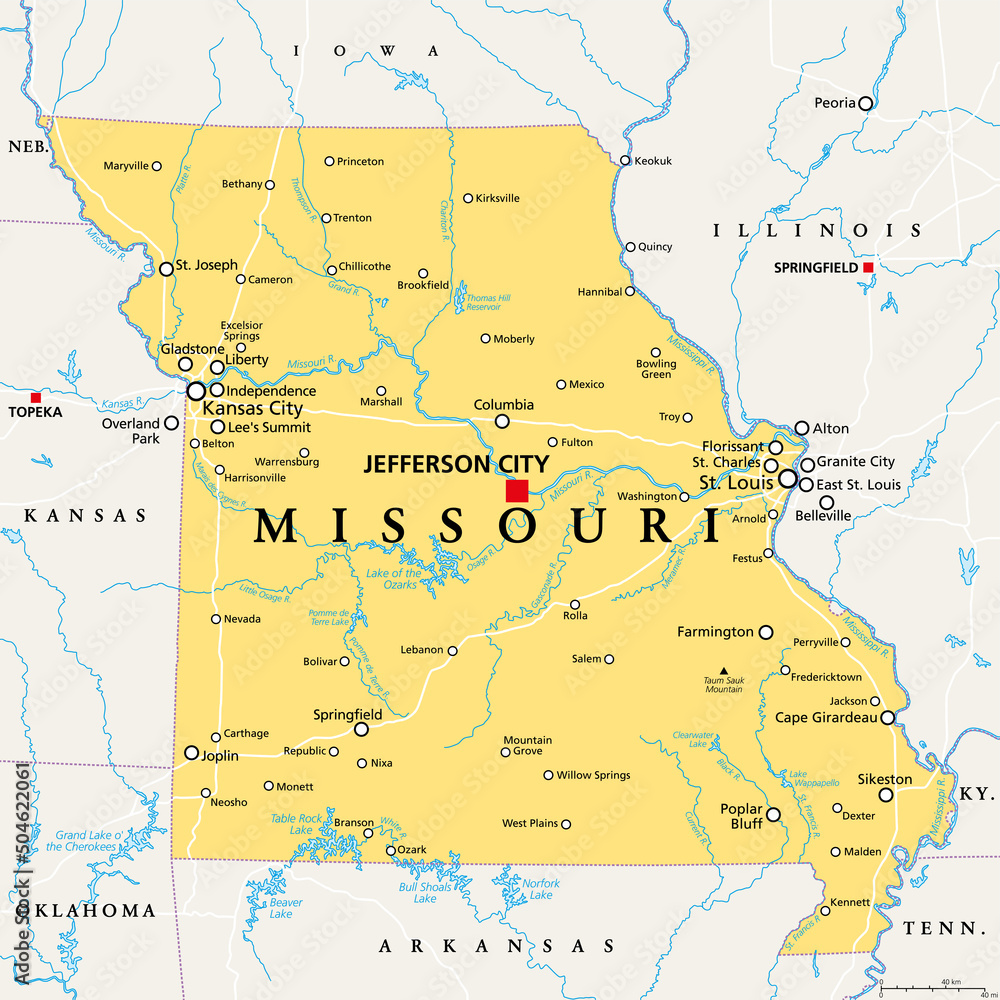
Missouri operates almost entirely within the Central Time Zone, aligning its clocks with a vast corridor stretching from the Gulf of Mexico to the Canadian border. This single temporal alignment anchors the state's commercial rhythm, broadcasting networks, and daily routines from St. Louis to Kansas City. While a handful of outlying western regions or specialized logistics networks brush against different scheduling demands, the heartbeat of the Show-Me State ticks to Central Standard Time (CST) and Central Daylight Time (CDT).
Understanding how this time zone governs daily life reveals a complex interplay between geography, economic synchronization, and cultural identity. Far from being a mere abstract number on a digital clock, Central Time dictates logistics on the Mississippi River, shifts commuter patterns across Interstate 70, and shapes how millions of residents coordinate their personal and professional schedules.
The Geographical and Legal Framework of Missouri Time
Missouri's position within the Central Time Zone is codified federally and managed via the National Institute of Standards and Technology guidelines, which regulate official time standards across the United States. Nearly all of the state's 114 counties and independent cities observe Central Time, putting Missouri in direct sync with major regional economic centers like Chicago, Dallas, and New Orleans.
Unlike states split down the middle by rugged mountain ranges—such as neighboring Kansas or nearby Nebraska—Missouri's geography sits entirely east of the classic Rocky Mountain divide, avoiding internal time zone fractures. The state does observe Daylight Saving Time, shifting clocks forward one hour on the second Sunday in March and falling back on the first Sunday in November. This seasonal adjustment modifies daylight distribution across the state's agricultural valleys and urban centers, altering peak energy consumption and evening recreation windows.
Daylight Transitions and Seasonal Shifts
The biannual time change creates distinct operational shifts for Missouri residents:
- Spring Forward: Clocks move ahead one hour in March, plunging morning commuters into pre-dawn darkness while extending evening sunlight past 8:00 PM during peak summer months.
- Fall Back: Clocks return to standard time in November, restoring morning light but causing early winter sunsets that wrap up outdoor work well before 5:00 PM.
- Agricultural Impact: Farming communities manage livestock feeding schedules and crop harvesting windows around these manufactured clock shifts, often ignoring the human construct to follow natural solar noon.
Economic Synchronization Across the Show-Me State
Operating on Central Time grants Missouri businesses a distinct operational advantage. By sharing an exact time coordinate with major financial markets in Chicago and manufacturing hubs throughout the Midwest, companies based in Kansas City, Springfield, and Columbia experience zero friction when scheduling interstate meetings, supply chain deliveries, or financial transactions.
Logistics hubs rely heavily on this temporal uniformity. Freight shipping operations moving along major corridors like I-70 and I-44 coordinate driver shift logs, warehouse handoffs, and distribution windows without needing to calculate cross-zone hour offsets. This seamless scheduling reduces administrative errors and keeps retail supply chains moving efficiently across state lines.
Business Hours and Public Infrastructure
The uniformity of Missouri time standardizes public services and commercial sectors:
- Banking and Finance: Standard operating hours run from 9:00 AM to 5:00 PM CST/CDT, matching national clearinghouse schedules.
- Public Education: K-12 school districts across the state typically open between 7:30 AM and 8:30 AM, aligning youth schedules with parental work shifts.
- Emergency Services: Dispatch centers, police precincts, and municipal utilities rely on Coordinated Universal Time (UTC) backends mapped directly to Central Time stamps to log incidents accurately.
Cultural Rhythm and Media Consumption
Media consumption habits in Missouri are deeply tied to the Central Time feed. Broadcast networks uplink programming based on Central and Eastern blocks, meaning primetime television slots kick off at 8:00 PM local time. This keeps Missouri viewers synchronized with the broader central United States audience.
Sports culture also bends to the clock. Major League Baseball games featuring the St. Louis Cardinals or Kansas City Royals, as well as college athletics at the University of Missouri, schedule evening game times tailored to local broadcast windows and stadium attendance norms. Fans expect games to start under specific twilight gradients, reinforcing a shared regional routine.
Common Misconceptions About Missouri Time
A frequent point of confusion for visitors and new residents involves the state's western border. While the state is entirely within the Central Time Zone, some travelers assume proximity to Kansas—which touches Mountain Time in its far western reaches—implies a split zone inside Missouri itself. In reality, state lines firmly contain the Central Time designation, ensuring that even western border towns like Joplin and Kansas City operate on the exact same clock as Hannibal on the eastern edge.
Another misconception is that Missouri institutions ignore federal daylight saving rules. While proposals surface periodically in the state legislature to debate year-round standard or daylight time, Missouri continues to follow federal mandates alongside the majority of the nation.
Frequently Asked Questions
Does any part of Missouri observe Mountain Time?
No. The entire state of Missouri operates within the Central Time Zone, spanning from the western border with Kansas to the Mississippi River on the east.
When does Missouri change its clocks for Daylight Saving Time?
Clocks move forward one hour on the second Sunday in March and shift backward one hour on the first Sunday in November, adhering to standard US practice.
How does Central Time affect Missouri's logistics industry?
Because major freight routes like Interstate 70 run through the state, a unified time zone prevents confusion for cross-state trucking, warehousing, and delivery schedules.
What is the IANA time zone identifier for Missouri?
Computers and digital systems use the identifier America/Chicago to track local time and handle seasonal shifts for Missouri.



