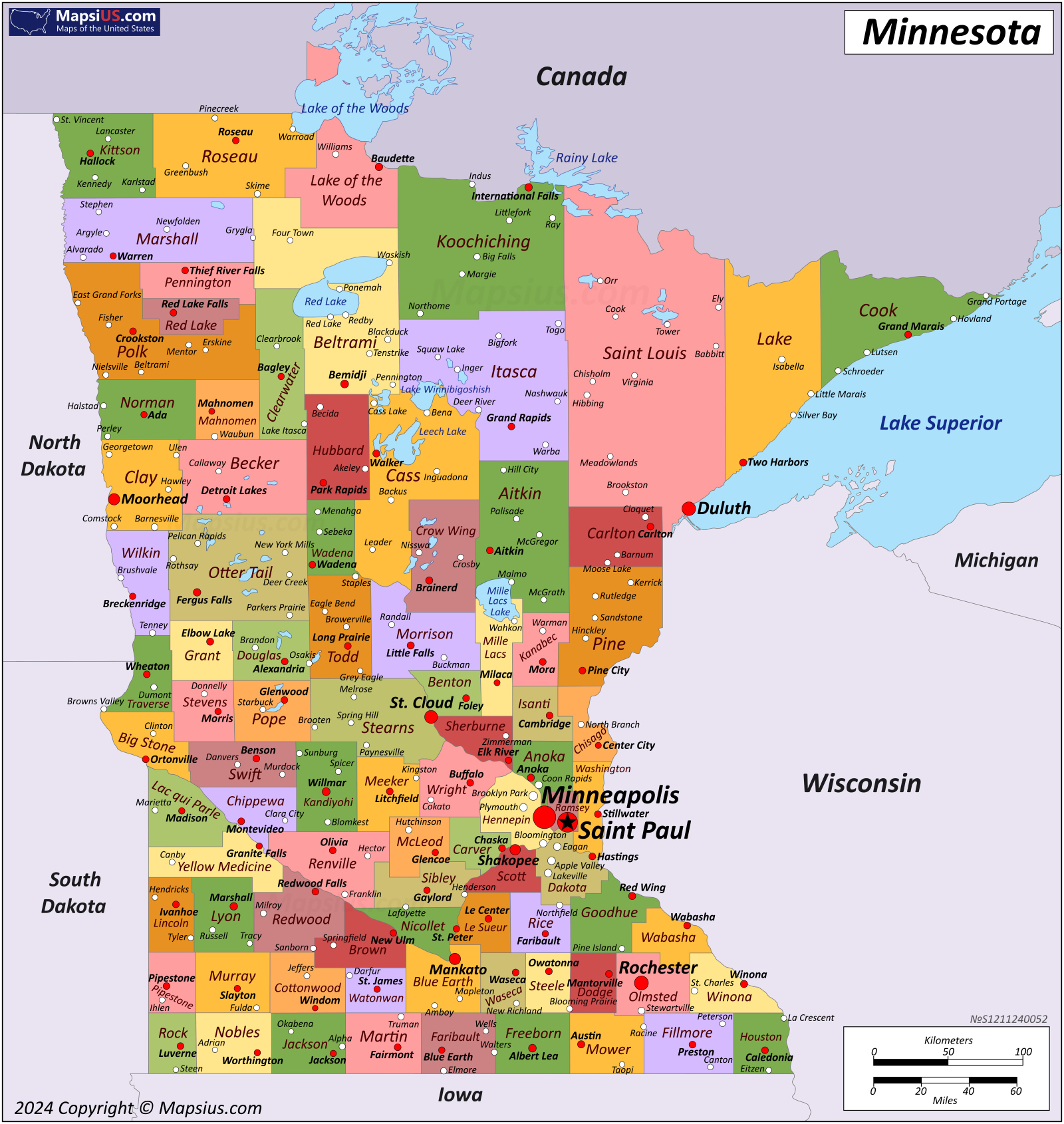
Minnesota is famously known as the Land of 10,000 Lakes, but it's also a geographical outlier in another way: the entire state sits within a single time zone. Despite stretching nearly 400 miles from its southeastern tip to the Northwest Angle, every resident from Duluth to Moorhead shares the exact same clock.
Operating entirely on the Central Time Zone simplifies local commerce, school schedules, and daily logistics. Unlike neighboring states or western regions split by jagged time zone boundaries, Minnesota maintains a uniform schedule that aligns its major economic hubs and rural counties alike. Understanding how this single-zone consistency works reveals a fascinating mix of railroad history, geographic width, and state unity.
The Geography Behind Minnesota's Single Time Zone
Time zones in the United States are technically established by federal oversight through the Department of Transportation, but their boundaries often follow state and county lines to prevent administrative nightmares. Minnesota spans roughly 14 degrees of longitude. In theory, that width could bridge two different time zones based strictly on solar noon.
However, keeping a state under one clock prevents fractured local economies. If the western border towns like Moorhead or Luverne flipped to Mountain Time, residents working, shopping, or attending school across municipal lines would face constant scheduling friction. The state's north-to-south orientation rather than an expansive east-to-west spread makes it much easier to keep everyone synchronized.
For official state data, geographical descriptions, and resources, you can check the State of Minnesota Official Website.
A Brief History of Midwestern Timekeeping
Before standardized time zones, every town set its own clocks based on the sun's position, creating chaos for transportation. Railroad expansion in the late 19th century forced a change. In November 1883, American railroads established standard time zones to prevent train collisions and streamline timetables.
Minnesota slotted cleanly into the Central Time Zone, matching major trading partners like Chicago and Iowa. Even so, local quirks persisted for decades. In the mid-1960s, a famous local dispute occurred when Minneapolis and St. Paul adopted Daylight Saving Time weeks apart from one another. Crossing a bridge between the Twin Cities meant changing your watch by an hour, causing widespread commuter confusion. That local chaos ultimately helped push Congress to pass the Uniform Time Act of 1966, locking down national synchronization.
To learn more about how federal time policies are managed today, visit the U.S. Department of Transportation.
Practical Impacts on Daily Life and Business
Living in a single time zone brings clear advantages for commerce and communication. Businesses don't have to worry about internal scheduling shifts when coordinating shipments from the Twin Cities to the Iron Range or manufacturing hubs down south.
Yet, Minnesota's single time zone creates notable quirks regarding daylight. Because the state reaches far north and curves westward toward the Dakotas, solar times vary wildly between borders:
- Summer Sunsets: In late June, residents in Moorhead on the western border experience sunset past 9:30 PM, while eastern towns see darkness settle slightly earlier relative to clock time.
- Winter Mornings: During mid-winter, northern locations don't see full daylight until well past 8:00 AM, affecting school bus routes and morning commutes.
These variations are a small trade-off for the seamless interstate trade enabled by the state's central geographic placement. For broader economic context on the region, explore insights from the Federal Reserve Bank of Minneapolis.
Common Mistakes and Misconceptions
People often assume that large states must span multiple time zones, but state boundaries depend entirely on political and logistical choices rather than strict square mileage. Another common misconception is that Minnesota flirts with Mountain Time near its western edge. While towns like East Grand Forks sit right across the river from Grand Forks, North Dakota (which is also entirely Central Time), the entire regional pocket stays unified.
It's also worth noting that time zone lines are flexible. Communities petition the Department of Transportation when local commercial ties shift, but Minnesota's internal boundaries have remained rock-solid for generations.
Frequently Asked Questions
Does any part of Minnesota observe Mountain Time?
No. The entire state of Minnesota is strictly within the Central Time Zone.
Why do some western border towns look like they should change time?
Towns on the western border sit close to the Mountain Time boundary in North and South Dakota, but keeping state lines uniform prevents daily administrative friction for schools and businesses.
Did Minnesota ever have a split time zone?
While the state as a whole has stayed Central, individual municipalities experimented haphazardly with Daylight Saving Time start dates in the 1960s, creating brief, chaotic splits between neighboring cities like Minneapolis and St. Paul.
How does the single time zone affect seasonal daylight?
Because of Minnesota's width and northern latitude, western and northern towns experience noticeably later summer sunsets and later winter sunrises compared to the southeastern corner of the state.



