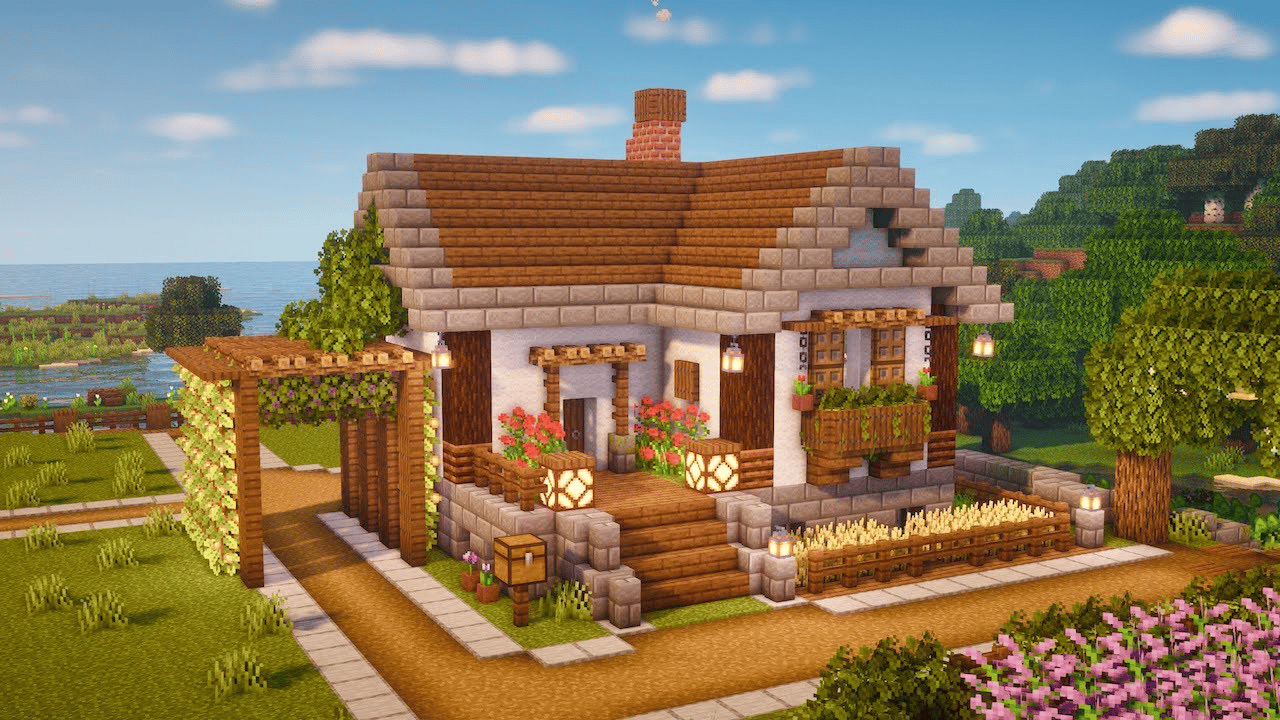
Building a Japanese mansion in Minecraft transforms standard block stacking into a study of proportion, shadow, and nature. If you're tired of symmetrical stone boxes and want a survival base or creative showcase that feels genuinely serene, constructing a Miyoshi-style estate is your next big project. This guide breaks down the exact block palettes, roof geometry, and courtyard layouts you need to pull it off without endless trial and error.
At its core, a successful Japanese mansion build relies on three pillars: structural asymmetry, deep overhanging eaves, and the seamless integration of natural elements like stone pathways and water features. Unlike medieval castles or modern mega-bases, traditional Japanese estates use lightweight materials—spruce, stripped logs, and glass panes—to create airy, open living spaces that frame the surrounding terrain rather than overpowering it.
Establishing the Footprint and Foundation
Before placing any high-tier blocks, you need to map out your floor plan on flat terrain or a raised stone platform. Traditional Japanese architecture rests on raised foundations to protect against moisture, which translates brilliantly into Minecraft survival gameplay by giving you easy under-floor access for redstone or storage.
Start by marking your perimeter using cobbled deepslate or smooth basalt for the base layer. A rectangular footprint measuring roughly 25 by 35 blocks gives you enough room for a main hall, private living quarters, and an attached veranda.
- Foundation Elevation: Raise the stone perimeter by two blocks. Fill the interior floor with smooth stone slabs or stripped bamboo blocks to create a clean, elevated sub-floor.
- Pillar Placement: Use stripped spruce logs at every corner and at five-block intervals along the walls. These vertical columns bear the visual weight of the structure.
- The Engawa (Veranda): Leave a one-block-wide perimeter outside your exterior walls. Drop this walkway down by half a slab and line it with trapdoors to simulate wooden decking that wraps around the house.
Mastering Traditional Roof Geometry
The defining feature of any authentic Japanese mansion is its roofline. Getting those sweeping curves right separates amateur builds from masterclass architecture. Do not use flat or simple pitched roofs; you need deep overhangs and upturned eaves.
Constructing the roof requires patience and careful layering of stairs and slabs.
- Ridgepole Setup: Build a central spine along the length of your roof using dark oak fences or stripped logs. This sets your peak height.
- Layering Stairs: Extend dark oak or mangrove stairs outward and downward from the spine. Alternate between full blocks and upside-down stairs to create a steep, organic slope.
- The Eave Curve: As you reach the bottom edge of the roof, extend the stairs two blocks past your exterior walls. Finish the outer lip with upward-facing stairs or slabs to create that signature upward flick at the corners.
If you want to dive deeper into historical building techniques, check out the Minecraft Wiki for block mechanics or explore real-world references on Digital Chaffetz Architecture for structural proportions.
Crafting Interior Spaces and Shoji Screens
The interior of a Miyoshi mansion should feel modular and fluid rather than chopped up into cramped hallways. Traditional homes use sliding paper partitions to change room sizes on the fly.
To replicate shoji screens in vanilla Minecraft, build frames using stripped birch or bamboo wood, then fill the gaps with white stained glass panes or iron bars. Placing sea lanterns or glowstone behind these screens gives you soft, diffused lighting that mimics warm indoor lanterns without looking harsh.
- Flooring: Use lime and green terracotta or wool blocks arranged in a grid pattern to represent traditional tatami mats.
- The Tokonoma: Carve out a small, raised alcove in your main living hall. Use flower pots, armor stands with custom heads, or item frames holding maps to create a display space for art and heirlooms.
- Low Furniture: Craft tables using spruce fence posts topped with pressure plates or weighted pressure plates. Use stairs flanked by signboards to build low floor seating.
Designing the Surrounding Zen Courtyard
A Japanese mansion is incomplete without its landscape. The exterior environment does as much heavy lifting for the aesthetic as the building itself.
- The Koi Pond: Carve out an irregular pond near your veranda. Line the bottom with clay and cyan terracotta, then fill it with water. Use orange and yellow tropical fish in buckets to populate the pond.
- Custom Foliage: Build custom bonsai trees and Japanese maples using jungle or mangrove leaves mixed with cherry leaves for pink accents. Use dark oak fences and azalea leaves for structured garden shrubs.
- Stone Lanterns: Construct traditional toro lanterns by stacking a stone wall, a smooth quartz block, and a glowstone block capped with a stone button or slab. Place these along your gravel and cobbled deepslate garden paths.
Common Mistakes to Avoid
Builders often ruin an otherwise great Japanese aesthetic by falling into a few common traps. Keep these pitfalls in mind as you construct your estate.
- Overusing Cobblestone: Real Japanese structures use timber and plaster, not rough cobblestone walls. Reserve stone strictly for the foundation and garden pathways.
- Ignoring Scale: Making rooms too tall ruins the cozy, grounded feel of traditional architecture. Keep ceiling heights to three or four blocks max per floor.
- Harsh Lighting: Placing torches directly on walls destroys the mood. Hide your light sources under carpets, behind shoji glass, or inside foliage to keep the lighting atmospheric.
Frequently Asked Questions
What are the best wood types for a Japanese mansion build in Minecraft?
Spruce and dark oak work best for structural framing and roofs because of their deep, rich tones. For interior accents and shoji frames, lighter woods like birch, bamboo, or mangrove provide a sharp, clean contrast.
How do I stop mobs from spawning in my Japanese garden at night?
Hide light sources beneath carpets, inside water blocks, or under slabs throughout your garden paths and courtyard. You can also use buttons or string on top of grass blocks to prevent mob spawns without ruining the natural look.
Can I build a Miyoshi mansion in survival mode easily?
Yes, but it requires a dedicated farm for wood and stone. Gathering dark oak, spruce, and terracotta takes time, so set up a peripheral material camp before starting the main frame.
How wide should the roof overhangs be?
Your roof should extend at least one to two blocks past your exterior walls. This deep overhang creates dramatic shadows and protects the wooden walls from looking flat against the sky.



