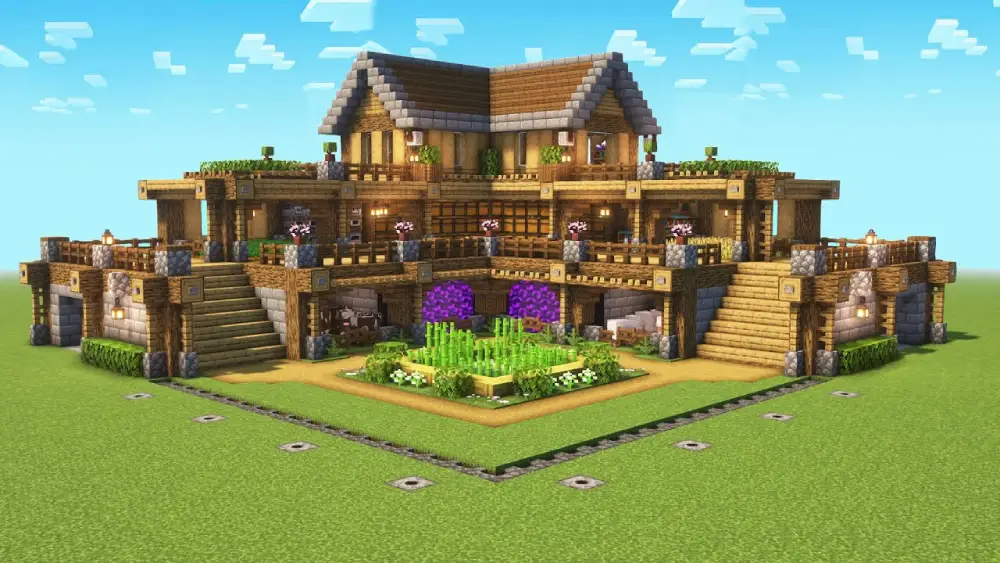
Minecraft Java Edition has evolved from a rough, browser-based indie experiment by Markus "Notch" Persson into the best-selling video game of all time. Looking back at how the game transformed across its major updates reveals a fascinating study in sandbox design. From sparse procedural generation in early alpha to complex underground labyrinths and atmospheric biomes, the journey of Java Edition reflects more than a decade of creative iteration.
Understanding this history requires looking past surface-level nostalgia and examining how foundational updates shaped player behavior, automation, and survival mechanics. Whether you're a veteran who remembers cobble generators or a newer player curious about how the game reached its current state, tracing these milestones uncovers the design choices that built a global phenomenon.
From Browser Prototype to Survival Alpha
The earliest days of Minecraft Java Edition looked nothing like the polished release we know today. In May 2009, the game launched as a simple creative sandbox where players placed and destroyed basic colored blocks. There were no hostile mobs, no hunger bars, and no survival mechanics.
The introduction of Survival Alpha changed the trajectory entirely. The addition of a day-night cycle, health meters, and hostile creatures like zombies and skeletons forced players to build shelters before dark. Basic crafting systems emerged, requiring players to gather wood, build wooden pickaxes, and mine stone.
Key milestones from this foundational era include:
- The Halloween Update (Alpha 1.2.0): Introduced the Nether, bringing the first alternate dimension and terrifying new hazards like ghasts.
- Beds and Spawn Points (Beta 1.8): Allowed players to skip the dangerous night cycle and reset their spawn location, altering exploration risk.
- The Hunger Meter: Replaced instantaneous food consumption with a stamina and health-regeneration mechanic that made farming and animal breeding essential.
The 1.0 Release and the Era of Expansion
The official release of Minecraft Java Edition 1.0 at MineCon 2011 brought a definitive "win-state" to an otherwise endless game. This update introduced The End dimension, the Ender Dragon, and an extensive progression system built around experience points, enchanting, and potion brewing.
Once the game left its beta phase, Mojang accelerated its update cadence, rolling out mechanics that fundamentally transformed multiplayer servers and single-player worlds alike.
The Redstone Revolution
The Redstone Update (Java 1.5) transformed Minecraft from a simple building game into an engineering sandbox. By introducing hoppers, comparators, droppers, and redstone blocks, developers gave community builders the tools to automate item sorting, crop harvesting, and complex logic gates. Players no longer had to move items manually or manage chests by hand; entire industrial districts sprang up in survival worlds.
The Update That Changed the World
Prior to Java 1.7, world generation relied on limited biome parameters that often resulted in uniform terrain. Released in late 2013, the Update that Changed the World overhauled terrain algorithms, introducing mesas, deep ocean biomes, roofed forests, and the dramatic Amplified world type. This update forced players to travel vast distances across distinct regions to secure rare resources, establishing exploration as a core pillar of gameplay.
Refining Survival and Exploration
As the community grew, later updates focused on adding depth, lore, and systemic polish to existing environments rather than just introducing new blocks.
The Update Aquatic (Java 1.13) breathed life into empty oceans, turning deep water from an obstacle into a destination packed with shipwrecks, ruins, dolphins, and coral reefs. Shortly after, Village & Pillage (Java 1.14) reworked static villages into dynamic hubs with specialized villager professions and added high-stakes raid mechanics that tested player combat readiness.
The Nether Update (Java 1.16) completely redeemed what had long felt like a barren hellscape. By adding distinct biomes like the Crimson Forest and Soul Sand Valley alongside piglins and netherite gear, Mojang created an endgame environment that rivaled the Overworld in scale and utility.
Modern Evolution and Technical Scalability
Recent years have focused on verticality and world fidelity. Caves & Cliffs (Parts I and II) completely rewrote how underground spaces and mountain ranges generate, expanding the vertical boundaries of the game to accommodate massive dripstone caverns, lush underground lakes, and towering peaks.
Meanwhile, updates like Tricky Trials (Java 1.21) introduced structured combat challenges through underground trial chambers and the high-mobility breeze mob, offering cooperative players a distinct gameplay loop outside of standard mining and building.
Throughout all these changes, Java Edition has maintained its status as the premier platform for community-driven content, supported by robust modding frameworks like Forge and Fabric that allow players to completely overhaul graphics, mechanics, and world generation.
Frequently Asked Questions
What makes Minecraft Java Edition different from Bedrock Edition?
Java Edition is the original PC version known for its deep modding support, custom server capabilities, and strict adherence to traditional game mechanics. Bedrock Edition is designed for cross-play across consoles, mobile devices, and PC, utilizing a different codebase written in C++.
Can modern versions of Java Edition run on older computers?
While Java Edition has become more demanding due to complex terrain generation and lighting engines, performance optimization mods like Sodium can dramatically improve frame rates on modest hardware.
Why do some players prefer older Java versions like Beta 1.7.3?
Nostalgia plays a major role, but older versions also offered a simpler gameplay loop focused purely on rudimentary survival and unconstrained building without modern mechanics like hunger sprinting or complex crafting trees.
How do snapshots work in Java Edition development?
Snapshots are weekly developmental builds released by Mojang on the Java launcher. They allow players to test upcoming features, report bugs, and provide feedback before a stable update drops globally.



