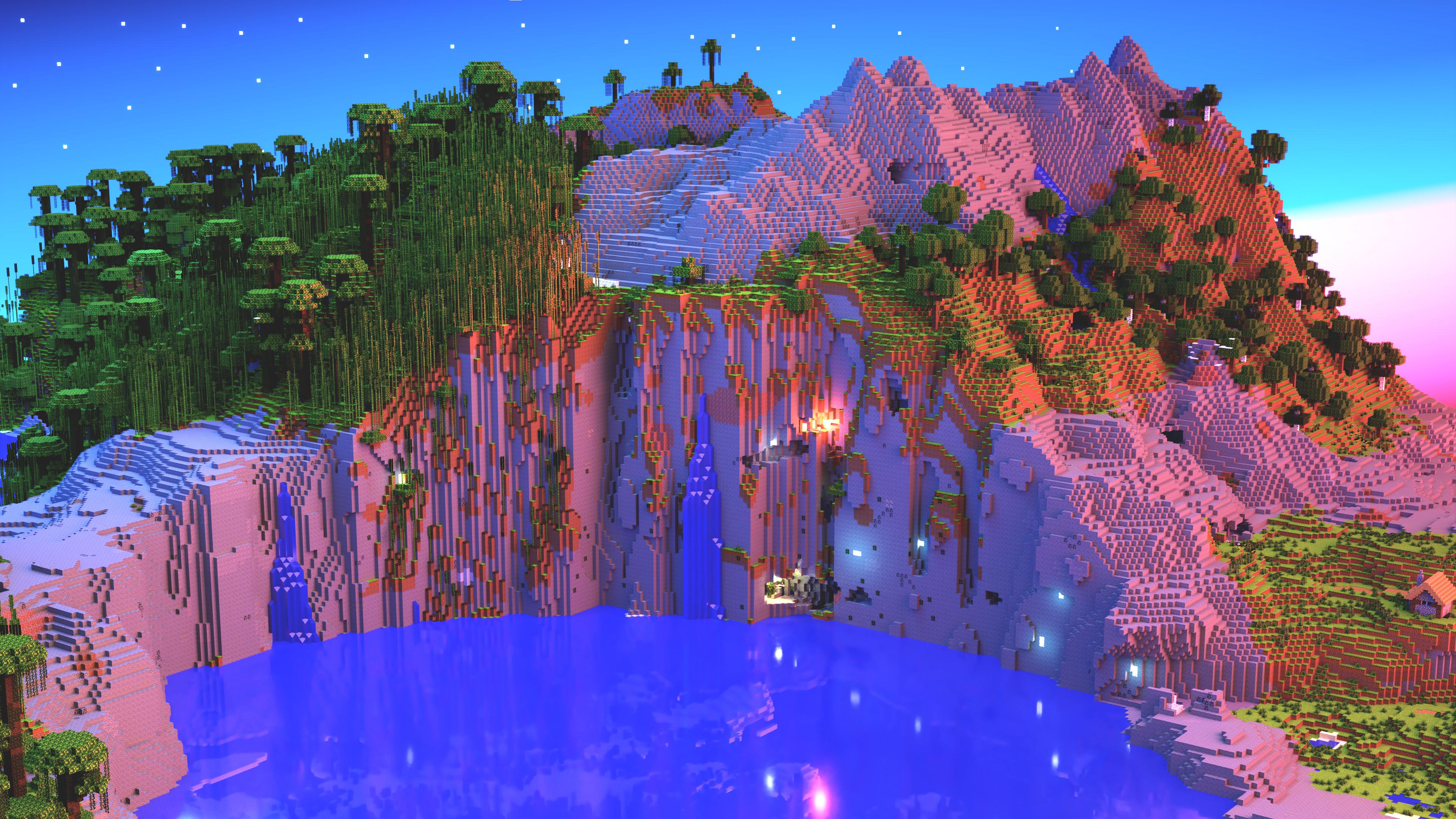
Minecraft in 2022 was already a cultural juggernaut, anchored by massive updates like Wild Update biomes and established Java and Bedrock editions. Looking ahead toward 2050, the sandbox genre faces radical shifts in procedural generation, hardware integration, and player-driven economies. This contrast captures how a simple block-based indie experiment scales into a multi-generational virtual platform.
Evaluating how Minecraft moves from its state in 2022 to its future destination reveals deeper truths about game longevity. Mojang's flagship title relies on core creative freedom, but computing paradigms are shifting away from static servers and rigid client constraints. Let's break down how technology, community design, and hardware will reshape the block universe over the next few decades.
Minecraft in 2022: A Snapshot of the Present
Back in 2022, Minecraft operated firmly within the boundaries of modern PC and console hardware. The release of version 1.19 brought the Deep Dark and mangrove swamps, pushing world atmosphere further than ever before. Yet, core limitations remained apparent to every player.
World generation relied on established seed algorithms, chunk loading distances were bound by local CPU capabilities, and multiplayer hosting required either external realm subscriptions or dedicated third-party server management. Ray tracing had arrived on select Bedrock editions, but true real-time global illumination across vast procedural worlds was heavy and restricted to high-end rigs. The game remained a closed loop of individual clients connecting to centralized or hosted multiplayer servers, bounded by standard graphical interfaces and conventional UI paradigms.
Imagining Minecraft in 2050: A Leap into the Future
Fast forward to 2050, and the definition of a video game client will look entirely different. Cloud compute offloading, neural-network-driven world generation, and brain-computer or advanced spatial interfaces will redefine immersion.
Instead of pre-coded mob behaviors and static trading tables, artificial intelligence models running locally or via edge cloud nodes could grant villagers and creatures dynamic, emergent personalities. Players won't just type commands or press buttons; spatial computing and immersive hardware will let builders physically walk through redstone circuits they've constructed at scale. Procedural expansion could generate entire dimensions dynamically on the fly, tailoring difficulty and architectural styles to individual playstyles without running out of memory.
Key Differences: 2022 vs. 2050
Comparing the mechanics of 2022 to the conceptual horizon of 2050 highlights a shift from manual block placement to intelligent ecosystem management.
- World Scale and Generation: In 2022, worlds were massive but bound by fixed height limits and predictable terrain algorithms. By 2050, verticality and depth will scale infinitely with volumetric, ray-marching voxels instead of simple 16x16 blocks.
- Multiplayer Infrastructure: In 2022, server lag, whitelist management, and chunk throttling plagued large community builds. Future frameworks point toward decentralized, peer-to-peer cloud shards where thousands of players interact in real time without lag boundaries.
- Customization and Modding: The 2022 modding scene relied heavily on Forge and Fabric loaders requiring manual version matching. Future iterations lean toward natural language procedural modding, where players speak or sketch custom mechanics into existence.
For official updates on the game's ongoing trajectory, you can check the Minecraft Official Site.
Potential Advancements and New Features
As hardware capabilities expand, specific mechanics long requested by the community become viable. Traditional redstone logic gates could evolve into quantum computing simulations within the game engine, allowing players to build working virtual computers inside virtual computers with zero tick-rate delay.
Furthermore, procedural quest generation could transform survival mode. Rather than fighting the same Ender Dragon loop, players might encounter dynamically generated lore, ruins, and factions that adapt to their unique building choices over years of gameplay. To track how modern development handles these pivots, developers often look to insights shared through Microsoft Research.
The Enduring Appeal of Minecraft
Despite massive technological upgrades, the core magic of Minecraft doesn't lie in photorealism or high polygon counts. It survives because of human creativity. Whether you're stacking dirt blocks in a basic shelter or designing complex automated farms, the psychological hook is absolute freedom.
Technology will change how we render the blocks, but the blank canvas remains why the game stays relevant across generations. It's a digital Lego set that scales with human imagination. For a broader look at how digital entertainment standards evolve, industry analyses on platforms like Polygon frequently examine sandbox longevity.
Frequently Asked Questions
Will Minecraft ever get a complete graphics overhaul by 2050?
Mojang has historically preserved the iconic blocky aesthetic because it acts as the brand's core identity. While optional high-definition ray tracing and spatial rendering will advance, the core block grid isn't going away.
How will server hosting change in the future?
Traditional server hosting will likely phase out in favor of decentralized cloud micro-shards, allowing seamless transitions between independent worlds without loading screens or IP configurations.
Will AI replace custom building in Minecraft?
AI will likely assist with repetitive tasks like terraforming or lighting, but human intent remains central. Building is about personal expression, not just automated output.
Is Minecraft reaching its final update limit?
The game adapts continuously to new computing hardware, meaning updates won't stop as long as active player communities continue to innovate and expand the platform.



