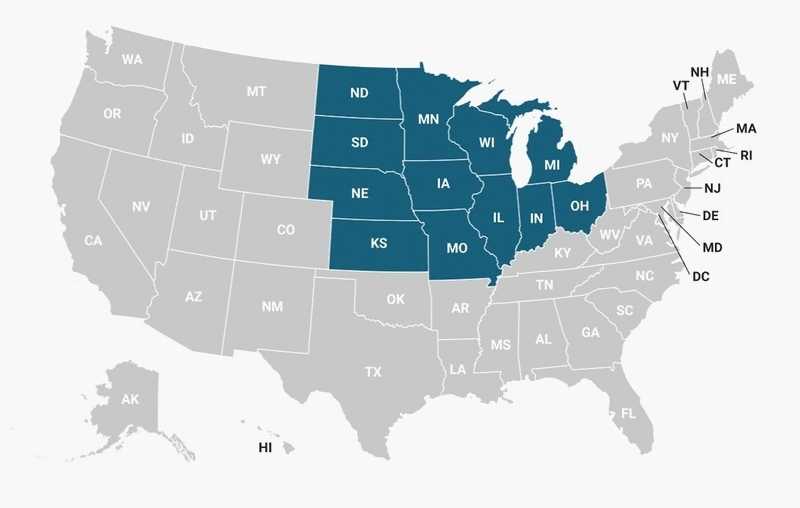
Midwest time primarily operates on Central Standard Time, a temporal framework that dictates the agricultural harvests, stock markets, manufacturing shifts, and daily commutes across America's heartland. From the grain elevators of Iowa to the bustling boardrooms of Chicago, this shared synchronization keeps millions of people moving to an identical beat.
Understanding how this time zone governs daily operations reveals much about why the region functions the way it does. Far from being a passive clock tick, timekeeping here is tied to logistics, historical railroad standardization, and the practical demands of supply chains feeding the entire nation.
The Historical Roots of Central Time in the Heartland
Before standard time zones existed, every American town set its own clocks by the position of the sun. Local solar noon in Chicago differed from local solar noon in St. Louis by several minutes. While this worked for isolated farming communities, the explosive growth of the railroad industry in the 19th century made it unsustainable. Trains routinely crashed or suffered massive delays because timetables across hundreds of small-town stations conflicted.
In November 1883, American railroads officially adopted synchronized regional time zones to bring order to transit schedules. The establishment of the Central Time Zone anchored the midsection of the country, stretching from the western edges of Ohio and Indiana out toward the Great Plains.
This standardization did more than prevent train collisions. It laid the foundation for modern commerce, enabling factories in the Midwest to coordinate parts shipments with suppliers across different states.
How Central Time Directs Modern Logistics and Agriculture
Today, Central time acts as the invisible engine of American logistics. Because the region sits at the geographic crossroads of the United States, its time zone serves as a crucial bridge for shipping and financial markets.
- Freight and Rail Hubs: Major shipping operators in cities like Kansas City and Chicago schedule cargo transfers down to the minute. Trucking fleets operate on strict hours-of-service regulations bound directly to local time tracking.
- Agricultural Cycles: Farmers rely on predictable daylight patterns dictated by the Central zone. Grain markets in Chicago open and close on exact schedules that dictate commodity prices worldwide.
- Manufacturing Shifts: Assembly plants across states like Illinois, Wisconsin, and Minnesota run multi-shift operations where shift handoffs depend entirely on absolute clock punctuality.
According to data from the Bureau of Transportation Statistics, efficient freight scheduling prevents multi-million dollar bottlenecks in America's central supply corridors.
The Economic Impact of Operating on Central Time
Businesses headquartered in the Midwest enjoy a unique logistical advantage because of their time zone placement. Operating on Central time allows companies to communicate easily with both East Coast and West Coast partners during standard business hours.
When a corporate office in Dallas or Chicago opens at 8:00 AM, the East Coast has already been working for an hour, and the West Coast is just waking up. This overlap gives regional businesses a three-hour window of simultaneous nationwide accessibility every single morning.
Furthermore, financial and commodity exchanges anchored in this zone set the daily economic pace. The U.S. Department of Agriculture releases core crop reports and market estimates timed specifically to mid-morning windows in the Heartland, ensuring fair and simultaneous access for traders nationwide.
Common Misconceptions About Midwest Timekeeping
Many observers assume that the entire Midwest shares a single clock, but the region actually bridges two distinct zones. While states like Illinois, Iowa, and Minnesota sit firmly in Central time, eastern portions of Ohio, Indiana, and Michigan observe Eastern time. Meanwhile, western slices of the Dakotas, Nebraska, and Kansas transition into Mountain time.
Another common myth is that daylight saving time affects all agricultural communities equally. In practice, modern farming relies heavily on automated machinery equipped with GPS tracking, meaning field operations often run from dawn until dusk regardless of what the wall clock says.
Frequently Asked Questions
Which states are entirely within the Central Time Zone?
States such as Illinois, Iowa, Wisconsin, Minnesota, and Missouri fall completely within the Central time zone, ensuring uniform scheduling across their major metropolitan and rural areas.
Why is the Central time zone important for U.S. stock and commodity markets?
Chicago serves as a historic hub for futures and agricultural trading. Operating on Central time places these exchanges in a central geographical position that balances trading hours between European markets and the West Coast.
Do all Midwestern states observe daylight saving time?
Most Midwestern states observe daylight saving time, though exceptions exist. For instance, most of Indiana adopted daylight saving statewide in 2006, aligning its seasonal clock changes with the rest of the eastern and central regions.
How does the time zone affect remote work in the Heartland?
Remote workers in the Midwest benefit from centralized scheduling, making it simpler to collaborate with coastal clients without managing extreme time gaps.



