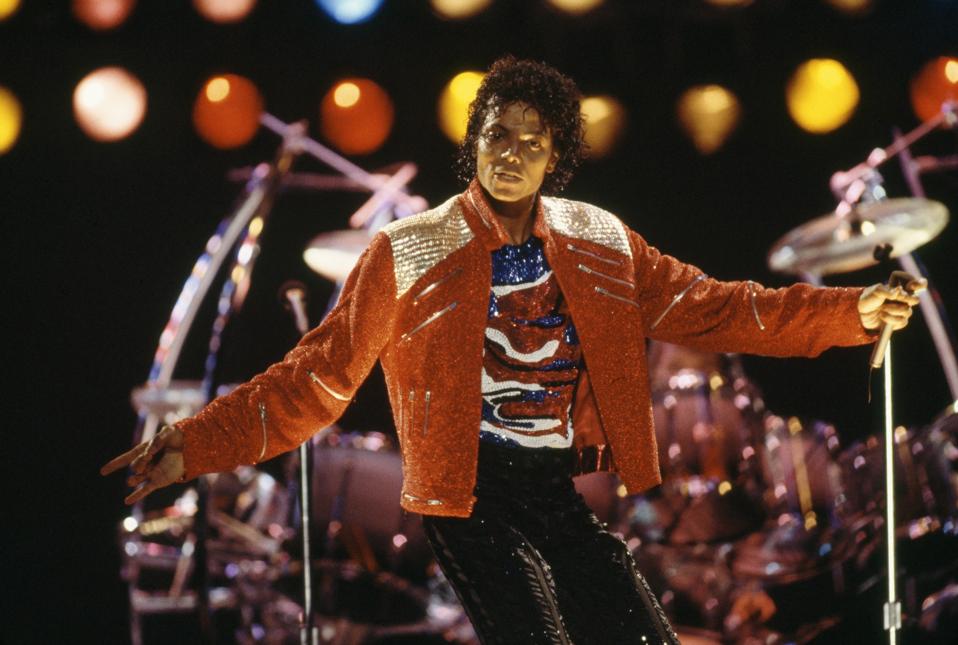
Michael Jackson didn't bleach his skin to change his race. He had vitiligo, a chronic autoimmune condition that destroys skin pigment cells. For decades, tabloids mocked his changing appearance, accusing him of rejecting his heritage.
The public didn't understand the disease. They saw a Black man turning white and assumed vanity. The real story involved a severe dermatological battle, heavy makeup to hide blotches, a formal medical diagnosis, and an autopsy that finally put the rumors to rest.
The First Signs and Early Diagnosis
The change started in the early 1980s, right as Thriller turned Jackson into the biggest star on earth. At first, small patches of lighter skin appeared on his hands and face.
Makeup artists on video sets had to work harder to cover the uneven tone. Jackson wore signature single white gloves and long-sleeved shirts not just as fashion choices, but to hide the spreading depigmentation.
By 1986, dermatologist Dr. Arnold Klein formally diagnosed Jackson with vitiligo and discoid lupus erythematosus. Lupus caused inflammation and skin lesions, while vitiligo actively stripped away his melanin.
The 1993 Oprah Interview
For years, Jackson stayed silent while the press invented wild theories. Public pressure peaked in early 1993 before his landmark television interview with Oprah Winfrey.
Sitting at Neverland Ranch, Jackson addressed the rumors head-on. He explained that he had a skin disorder that destroyed his skin's pigmentation. He stated clearly that it was something he couldn't stop and that it made him feel very sad and insecure about his appearance.
"How people can turn it around? It hurts me," Jackson told Oprah. "It is a problem for me. I can't control it."
Yet, skepticism persisted. Pundits and skeptics claimed nobody's skin turns completely white from vitiligo. They ignored the medical reality of advanced cases.
Transitioning to Depigmentation Therapy
When vitiligo destroys more than fifty percent of skin pigment, treating the remaining dark spots to match the light patches becomes standard medical practice. Dermatologists use monobenzone (Benoquin cream) to remove the remaining pigment.
This process creates a uniform skin tone. It is permanent and leaves the skin highly sensitive to sunlight.
Jackson chose this path because hiding the blotches with dark makeup required thick layers that melted under stage lights. Transitioning allowed him to achieve an even complexion, though it required him to stay out of direct sunlight for the rest of his life.
The 2009 Autopsy Confirmation
Michael Jackson died on June 25, 2009. Following his passing, the Los Angeles County Department of Coroner conducted a full autopsy.
The official medical report documented "focal depigmentation of the skin" across multiple areas of his body. It confirmed the presence of vitiligo.
Dr. Klein and other medical professionals reiterated the facts. The official documents matched what Jackson had told the world sixteen years earlier. The skin bleaching accusations were medically false.
According to the Encyclopaedia Britannica, vitiligo affects roughly one percent of the global population, causing immense psychological distress regardless of fame or wealth. Jackson's high-profile case brought unprecedented global awareness to an otherwise misunderstood condition.
Common Misconceptions About Vitiligo
People often misunderstand how the disease works. Here are the facts regarding the myths that followed Jackson's career:
- It is not a choice: Vitiligo is an autoimmune disorder where the immune system attacks melanocytes, the cells responsible for skin color.
- Depigmentation is a real medical procedure: For extensive cases, evening out skin tone via FDA-approved depigmentation agents is a recognized dermatological treatment, not a cosmetic whim.
- It affects all races: While more noticeable on darker skin tones, vitiligo occurs equally across all ethnic groups.
Frequently Asked Questions
Did Michael Jackson have lupus in addition to vitiligo?
Yes. Dr. Arnold Klein confirmed that Jackson was diagnosed with discoid lupus erythematosus alongside vitiligo in the mid-1980s. Lupus caused additional skin sensitivity and scarring.
Why did Michael Jackson's face look so different over time?
Aside from the depigmentation caused by vitiligo, Jackson underwent multiple plastic surgeries, including rhinoplasties. The combination of structural facial changes and complete loss of skin pigment altered his appearance dramatically.
What treatment did he use to turn white?
He used monobenzone cream under medical supervision. This prescription topical agent removes the remaining functional pigment cells to create an even, solid white skin tone when spot treatments fail.
Did the autopsy prove he had vitiligo?
Yes. The 2009 Los Angeles County coroner report explicitly noted patches of light and dark pigmentation and confirmed vitiligo as part of his medical history.



