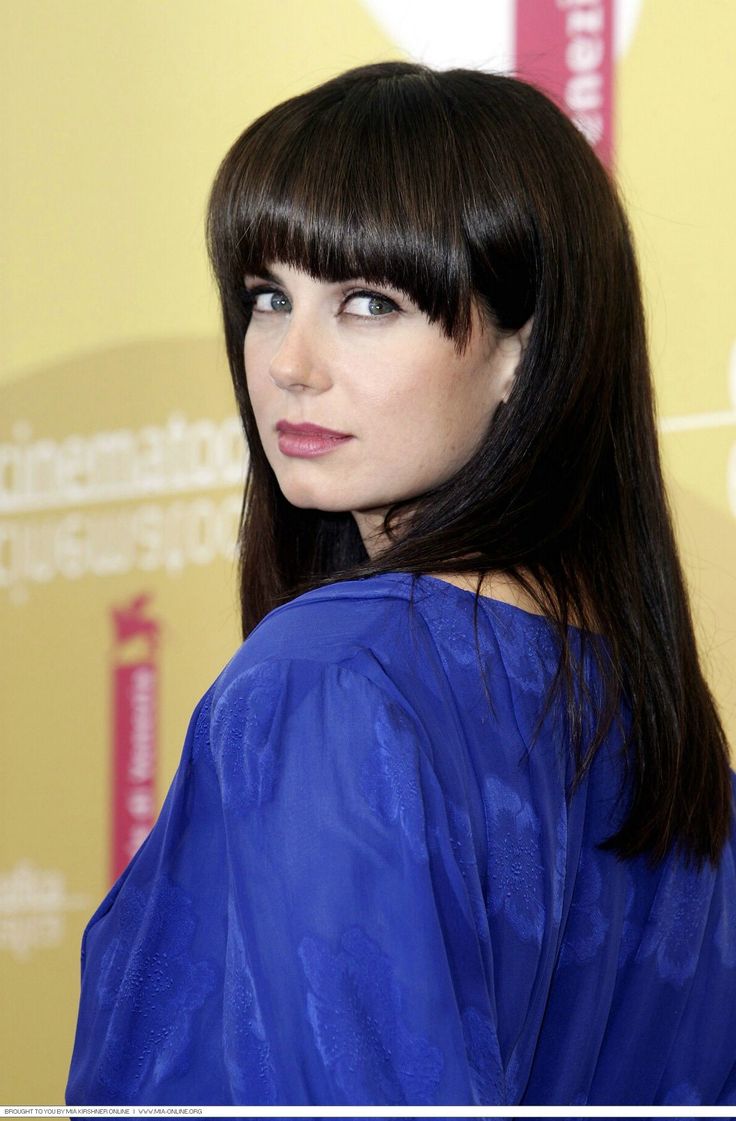
Mia Kirshner built an unconventional Hollywood career by deliberately avoiding the standard ingénue trajectory. From her daring independent film debuts in early 1990s Canada to anchoring cultural touchstones like The L Word and joining massive sci-fi franchises like Star Trek, Kirshner carved out a reputation for playing complex, deeply layered characters. Beyond acting, she established herself as an investigative writer and humanitarian, proving that an artist can redefine commercial success on their own terms.
Understanding her staying power requires looking past surface-level pop culture footprints. Her path combines rigorous classical training at McGill University, high-stakes auteur collaborations, and a persistent commitment to global humanitarian storytelling.
Early Life and Roots in Toronto
Born in Toronto, Ontario, on January 25, 1975, Kirshner grew up in a politically and culturally aware household. Her mother, Etti, worked as a schoolteacher, and her father, Sheldon Kirshner, was a journalist who wrote for The Canadian Jewish News. Her family background deeply influenced her worldview. Both sets of grandparents survived the Holocaust, instilling a historical consciousness that later spilled over into her creative and activist projects.
She attended Forest Hill Collegiate Institute before graduating from Jarvis Collegiate Institute. Showing an early drive for performance, she secured a talent agent at age twelve and began working professionally on Canadian television by fifteen, appearing in series like War of the Worlds and Dracula: The Series. Instead of moving immediately to Los Angeles after high school, she stayed in Canada to study Russian literature and the twentieth-century film industry at McGill University in Montreal, a grounding that shaped her analytical approach to script selection.
Breaking Conventions in Independent Cinema
Kirshner didn't wait around for traditional casting calls; she dove straight into gritty, challenging independent cinema. At eighteen, she made her feature film debut in Denys Arcand’s Love and Human Remains (1993), playing a dominatrix after convincing her father to sign a release waiver.
Her real breakthrough arrived the following year when she starred in Atom Egoyan’s critically acclaimed drama Exotica (1994). As Christina, an exotic dancer enmeshed in a labyrinth of psychological grief and obsession, Kirshner delivered a haunting, silent-strength performance. The film premiered to international acclaim at the Cannes Film Festival, instantly establishing her as a serious dramatic talent on the global stage.
Throughout the mid-to-late 1990s, she alternated between period pieces and dark thrillers. She appeared as Sarah Mohr in The Crow: City of Angels (1996) and played Kitty Scherbatsky in a 1997 film adaptation of Anna Karenina. These choices demonstrated an aversion to typecasting. She deliberately avoided playing the safe girlfriend character, opting instead for emotionally fractured or morally ambiguous figures.
Defining Television Eras: From 24 to The L Word
As television evolved into a cinematic medium in the 2000s, Kirshner landed roles in some of the decade's most talked-about shows.
The Cult-Favorite Terror of 24
In 2001, she entered the cultural zeitgeist as Mandy, the ruthless, cold-blooded assassin in the opening moments of Fox’s real-time thriller 24. Though her appearance spanned just a few strategic episodes across the series, her character's ability to seamlessly blend innocence with lethal menace left an indelible mark on fans.
Playing Jenny Schecter on The L Word
Her most high-profile television commitment came in 2004 when she was cast as Jenny Schecter in Showtime’s groundbreaking drama The L Word. For six seasons, Kirshner played the polarizing, intensely ambitious writer whose narrative arc shifted from a wide-eyed naive arrival to one of television's most complex anti-heroes.
The role demanded immense vulnerability and emotional stamina. While viewers frequently debated Jenny's erratic actions, industry critics recognized Kirshner's fearlessness in portraying a character who refused to pander to likability. This performance cemented her status as a fixture of 2000s television history.
Franchise Expansion and Genre Versatility
Following The L Word, Kirshner continued to pivot across genres without missing a beat.
- Sci-Fi Heritage: She joined the Star Trek universe as Amanda Grayson—Spock’s human mother—appearing in Star Trek: Discovery and later reprising the role in Star Trek: Strange New Worlds. She brought warmth and grounded maternal authority to a sci-fi legend.
- Cult Horror and Drama: She took on recurring roles as Isobel Flemming in The Vampire Diaries, played Kenya Rosewater in the Syfy series Defiance, and appeared in dark biographical projects like The Black Dahlia (2006), where she played the tragic Elizabeth Short.
Humanitarian Work and Investigative Writing
While many actors limit their public profiles to promotional tours, Kirshner channeled her platform into deep-dive journalism and human rights activism.
In 2007, she published I Live Here, a massive multimedia book project that she conceived, edited, and co-authored. She spent years traveling to war zones, refugee camps, and forgotten regions—including Chechnya, Juárez, and Malawi—documenting the harrowing real-life stories of displaced women and children. Collaborating with writers, photographers, and graphic designers, the book functioned as an artistic intervention. Proceeds from the project directly benefited Amnesty International and grassroots advocacy organizations.
She also narrated and voiced projects that highlighted systemic injustices, proving that her creative curiosity extended far beyond a Hollywood soundstage.
Common Misconceptions About Mia Kirshner's Career
Audiences often misunderstand certain aspects of her professional trajectory. Reviewing the reality behind common assumptions clarifies her choices:
- Myth: She vanished from acting after The L Word ended in 2009.
- Fact: Kirshner maintained a steady, high-volume output in television and independent film, transitioning smoothly from prestige cable dramas to major network sci-fi and holiday features.
- Myth: Her transition into activism was a secondary publicity sideline.
- Fact: Her humanitarian work is deeply rooted in her family's history as refugees and Holocaust survivors, driving multi-year field investigations long before social media advocacy became standard practice.
Frequently Asked Questions
What is Mia Kirshner best known for?
She is primarily known for playing Jenny Schecter on Showtime's The L Word and playing assassin Mandy in the Fox series 24. Sci-fi fans also recognize her as Amanda Grayson in the Star Trek franchise.
Is Mia Kirshner related to anyone famous in the media?
Her father, Sheldon Kirshner, was a prominent journalist for The Canadian Jewish News, and her younger sister, Lauren Kirshner, is an established writer who collaborated with her on humanitarian publishing projects.
Did Mia Kirshner write a book?
Yes, she compiled and edited I Live Here, an acclaimed collaborative book detailing the lives of refugees and displaced children across the globe, with proceeds supporting Amnesty International.
Where did Mia Kirshner study acting?
Rather than attending a traditional conservatory immediately after secondary school, she studied Russian literature and cinema history at McGill University in Montreal while already working professionally as a young actor in Canada.



