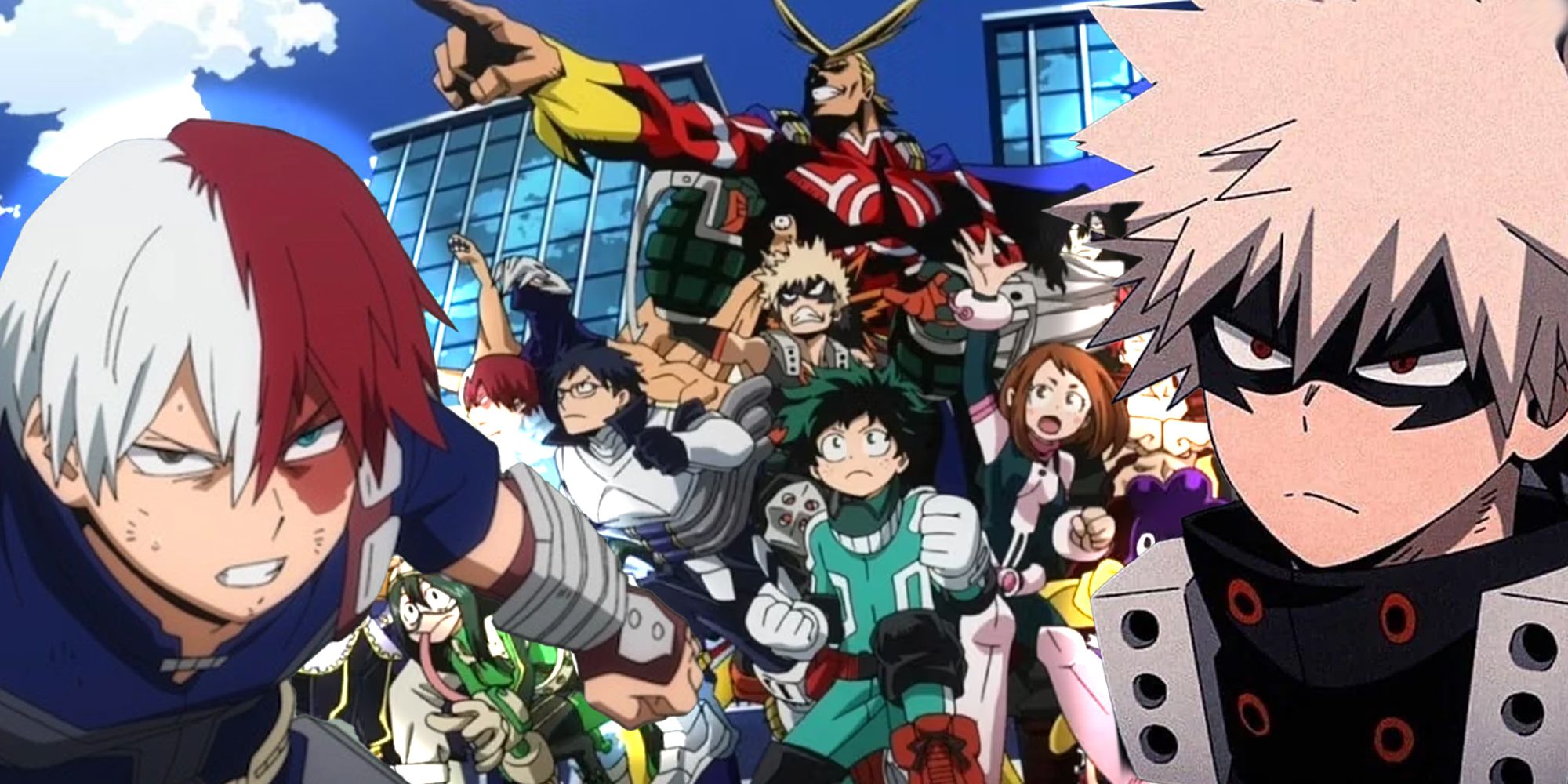
My Hero Academia challenges traditional shonen tropes by shifting how female characters handle power, identity, and personal endurance. While the genre often sidelines women into passive support roles, Kohei Horikoshi's roster builds a complex spectrum of heroines who redefine what strength looks like under systemic pressure. From pro heroes facing physical mutilation to students forging agency out of intellectual strategy, these figures dismantle old formulas.
Examine how characters like Mirko, Ochaco Uraraka, and Himiko Toga move past token representation. They anchor narrative turning points through distinct arcs of sacrifice, ideological conflict, and emotional grit.
Physical Power and Unyielding Grit: The Case of Rumi Usagiyama
Mirko stands as a physical powerhouse who rejects standard hero archetypes of cautious calculation. Her combat style relies on brutal physical output, direct confrontation, and sheer tenacity. During the Paranormal Liberation War arc, her solo assault on the hospital laboratory establishes a standard for physical resilience in the series.
When trapped and critically injured, she doesn't wait for a rescue. She cauterizes her own wounds and keeps fighting. This sequence redefines physical power in a shonen context. It strips away aesthetic perfection and replaces it with raw, functional survival. Her character proves that physical dominance isn't exclusive to male protagonists like All Might or Endeavor. Instead, it belongs to those willing to endure the highest threshold of pain.
Breaking the Mold of Support Roles
- Combat Autonomy: Mirko operates without a sidekick or a safety net, making decisions on the front lines.
- Refusal to Yield: Her body takes catastrophic damage, yet her psychological drive remains fixed on total eradication of the threat.
- Direct Confrontation: She bypasses political posturing among pro heroes, favoring immediate, decisive action.
Ideological Conflict and Empathy: Ochaco Uraraka's Evolution
Ochaco Uraraka starts with a grounded, economic motivation for becoming a hero, but her arc deepens into a profound exploration of societal empathy. While classic shonen protagonists conquer villains through pure force, Uraraka pivots toward understanding the systemic pain that creates antagonists like Himiko Toga.
Her final confrontations force her to look at the root causes of villainy. She addresses the neglected margins of society where individuals fall through the cracks of the hero system. By treating Toga not just as a monster to defeat, but as a person grappling with profound isolation, Uraraka redefines hero identity. True power, in her narrative, is the capacity to hold emotional space for society's outcasts without compromising one's core convictions.
Identity Forged in Opposition: Himiko Toga and Lady Nagant
Villains and anti-heroes in the series often carry the sharpest critiques of the hero society. Himiko Toga and Lady Nagant expose the hypocrisies of a world obsessed with public optics and order.
Toga's quirk, Transform, literalizes her struggle with identity. She literally takes on the physical form of those she loves, symbolizing a desperate search for belonging in a world that labeled her natural impulses as monstrous. Her narrative asks an uncomfortable question: how does a rigid society handle individuals who don't fit prescribed behavioral molds?
Similarly, Lady Nagant exposes the dark underbelly of the Public Safety Commission. As a former top sniper who executed state-sanctioned assassinations in secret, Nagant represents the collateral damage of institutional power. Her disillusionment and subsequent rebellion challenge the absolute morality of the pro-hero system.
Systemic Expectation -> Institutional Control -> Rebellion & Identity Reclamation
Strategic Intellect and Leadership: Momo Yaoyorozu
Power in My Hero Academia isn't just about output volume or destructive scale; it includes tactical brilliance. Momo Yaoyorozu embodies this through her Creation quirk, which demands vast scientific knowledge and rapid spatial calculation.
Despite early struggles with self-doubt, Yaoyorozu evolves into a natural field commander. Her leadership during crisis moments demonstrates that intellectual preparation and emotional composure are vital components of modern heroism. She organizes peers, executes complex containment plans, and bridges the gap between raw combat power and strategic execution.
Frequently Asked Questions
Which female character has the highest destructive output in the series?
Cathleen Bate, known as Star and Stripe, possesses the New Order quirk, making her pound-for-pound one of the strongest characters globally. Her ability to impose rules on reality grants her unmatched tactical dominance before her clash with Shigaraki.
How do female characters shift the narrative away from standard shonen tropes?
Many female arcs focus on emotional intelligence, systemic critique, and psychological endurance rather than just linear power scaling. Characters like Uraraka and Jiro bring personal stakes tied directly to community safety and individual expression.
Is physical strength the primary metric for female effectiveness in the series?
No. While characters like Mirko excel in physical combat, others like Recovery Girl, Nejire Hado, and Momo Yaoyorozu prove that support, tactical planning, and specialized utility are equally crucial to the overarching plot.
Why is Lady Nagant considered a vital character for the plot's themes?
Nagant acts as a narrative mirror to Deku, revealing the hidden corruption and moral compromises required to maintain the illusion of a peaceful hero society. Her redemption arc highlights the need for systemic reform.



