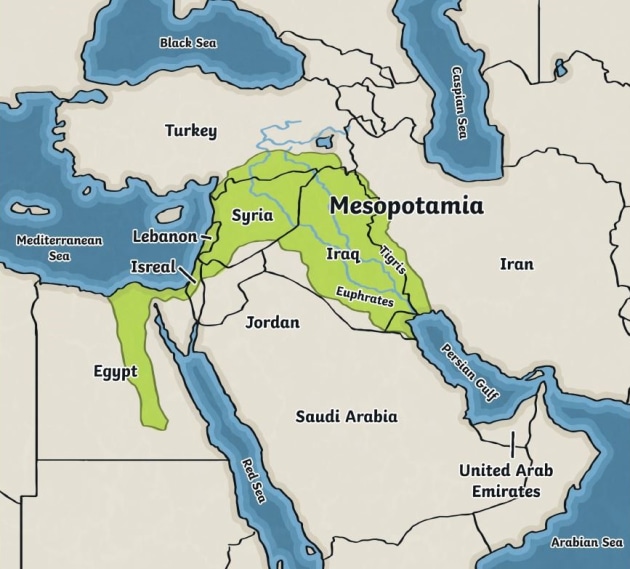
The social structure of ancient Mesopotamia was a rigidly stratified hierarchy organized like a pyramid. At the peak stood the king and the religious elite, while the vast base was supported by farmers, laborers, and enslaved people. This tiered arrangement emerged as hunter-gatherers transitioned into settled agricultural societies around the Tigris and Euphrates rivers, where managing irrigation systems and food surpluses required centralized administrative control.
Understanding this ancient hierarchy reveals how early human civilizations maintained order, distributed wealth, and organized labor. Unlike modern egalitarian societies, Mesopotamian social standing was determined by birth, occupation, and divine mandate. Let's break down the layers of the Mesopotamia social pyramid, examine the roles of each group, and explore how power functioned in the world's first cities.
The King and Royal Family
At the absolute peak of the social pyramid sat the king, known in Sumerian as the lugal, which literally translates to "big man." Originally, Mesopotamian cities were governed by assemblies of elders and priests, but as conflicts over land and water rights intensified, permanent military leaders emerged. Over time, these leaders consolidated power into hereditary monarchies.
The king wasn't just a political ruler; he was viewed as the earthly representative of the city-state's patron deity. This divine connection gave his decrees absolute authority. His primary responsibilities included:
- Military Defense: Leading troops into battle to protect city borders and conquer rival city-states like Ur, Lagash, or Uruk.
- Religious Duties: Overseeing major temple construction and performing sacred rituals to appease the gods and ensure agricultural fertility.
- Legal Administration: Enforcing laws and issuing legal codes, such as the famous Code of Hammurabi, which established standardized punishments across Babylonian society.
The royal family, including queens, princes, and princesses, shared in this immense privilege. Royal women often held significant economic power, managing large estates and operating independent businesses.
Priests and the Religious Elite
Just below the king—and occasionally rivaling his power—were the high priests and priestesses. In early Sumerian city-states, temples (ziggurats) served as the economic, political, and spiritual hubs of the community.
Priests controlled vast tracts of agricultural land surrounding the temples. Since common people believed the gods owned all land, farmers delivered their surplus crops directly to the temples as offerings and taxes. Priests then redistributed these resources to fund public works, feed workers, and finance trade expeditions.
Beyond administration, priests held a monopoly on literacy and science. They invented and maintained the cuneiform writing system, tracked astronomical events to predict seasonal flooding, and performed complex medical and magical rituals. Because they controlled the channels of divine communication, their influence over everyday citizens was profound.
Government Officials, Scribes, and Wealthy Merchants
The middle tiers of the social hierarchy comprised literate professionals, administrators, and commercial operators who kept urban centers functioning smoothly.
Scribes
Because very few people could read and write cuneiform on clay tablets, scribes were vital to the Mesopotamian state. They recorded grain harvests, drafted legal contracts, wrote letters for merchants, and logged royal decrees. Scribes underwent rigorous training in specialized schools called edubbas, and their skills granted them high social mobility and exemption from manual labor.
Wealthy Merchants
Mesopotamia lacked natural resources like timber, stone, and metal ores. To acquire these materials, long-distance merchants traveled across perilous trade routes to Anatolia, the Iranian plateau, and the Indus Valley. Successful merchants amassed substantial fortunes by trading textiles and surplus grain for luxury goods, forming an influential urban middle class.
Artisans and Craftspeople
Skilled laborers formed the backbone of Mesopotamian city life. These workers included:
- Metalworkers: Smiths who forged bronze weapons, tools, and intricate jewelry.
- Potters and Weavers: Mass producers of essential household goods and textiles, which served as a primary export.
- Builders and Architects: Master masons who designed and constructed towering ziggurats and defensive city walls.
Most artisans worked directly for the palaces or temples, receiving regular rations of grain, oil, and wool in exchange for their labor. While they enjoyed a higher social standing than common agricultural workers, they rarely accumulated generational wealth.
Farmers and Common Laborers
The vast majority of the Mesopotamian population—roughly 80%—consisted of farmers and rural laborers. They lived in small agricultural villages surrounding the walled city-states, toiling from sunrise to sunset to grow barley, wheat, dates, and sesame.
Their lives were dictated by the unpredictable flooding of the Tigris and Euphrates rivers. Farmers spent months digging and maintaining intricate networks of irrigation canals, dikes, and ditches. During the dry season, they harvested crops by hand using flint-bladed sickles.
While free farmers owned small plots of land or rented fields from the temple and nobility, they carried heavy tax burdens. They were required to surrender a significant portion of their harvest to the state and provide unpaid corvée labor to build roads, fortifications, and canals during the agricultural off-season.
Enslaved People
At the very bottom of the social pyramid were enslaved people (wardum for men, gemum for women). Slavery in ancient Mesopotamia was starkly different from the racially-based chattel slavery of later centuries. People typically entered servitude through three main avenues:
- Prisoners of War: Captured soldiers from rival city-states or foreign military campaigns.
- Debt Bondage: Free citizens who couldn't pay their debts could temporarily sell themselves or their family members into labor until the debt was worked off.
- Criminal Punishment: Enslavement was occasionally handed down as a legal penalty for specific offenses.
Enslaved individuals had basic legal rights under codes like Hammurabi's. They could own property, engage in business, marry free citizens, and eventually purchase their freedom. However, their day-to-day existence remained entirely subject to the will of their owners.
Frequently Asked Questions
Did women have rights in the Mesopotamia social pyramid?
Yes, women in ancient Mesopotamia enjoyed more legal rights than women in many subsequent ancient civilizations. Free women could own property, run independent businesses, initiate divorce in specific circumstances, and serve as priestesses or witnesses in court. However, society remained fundamentally patriarchal, and political leadership stayed almost exclusively in male hands.
How rigid was social mobility in ancient Mesopotamia?
While the social structure was deeply entrenched, absolute rigidity wasn't the rule. Talented individuals—particularly scribes, successful merchants, and skilled soldiers—could improve their standing. For example, a capable scribe could rise to high government administration, and a slave could eventually buy their freedom.
Why did the social pyramid develop in Mesopotamia?
The shift from nomadic hunter-gatherer bands to permanent agricultural settlements created consistent food surpluses. Managing these surpluses required specialized roles—such as administrators, soldiers, and religious leaders—who didn't farm directly. This division of labor naturally resulted in a hierarchical class structure where those controlling resources held political power.
What role did religion play in maintaining this social structure?
Religion served as the primary ideological glue holding the hierarchy together. Because the king and priests were viewed as intermediaries between the gods and the people, questioning the social order was treated as rebellion against the divine. This belief system ensured compliance across all economic classes without requiring constant military enforcement.



