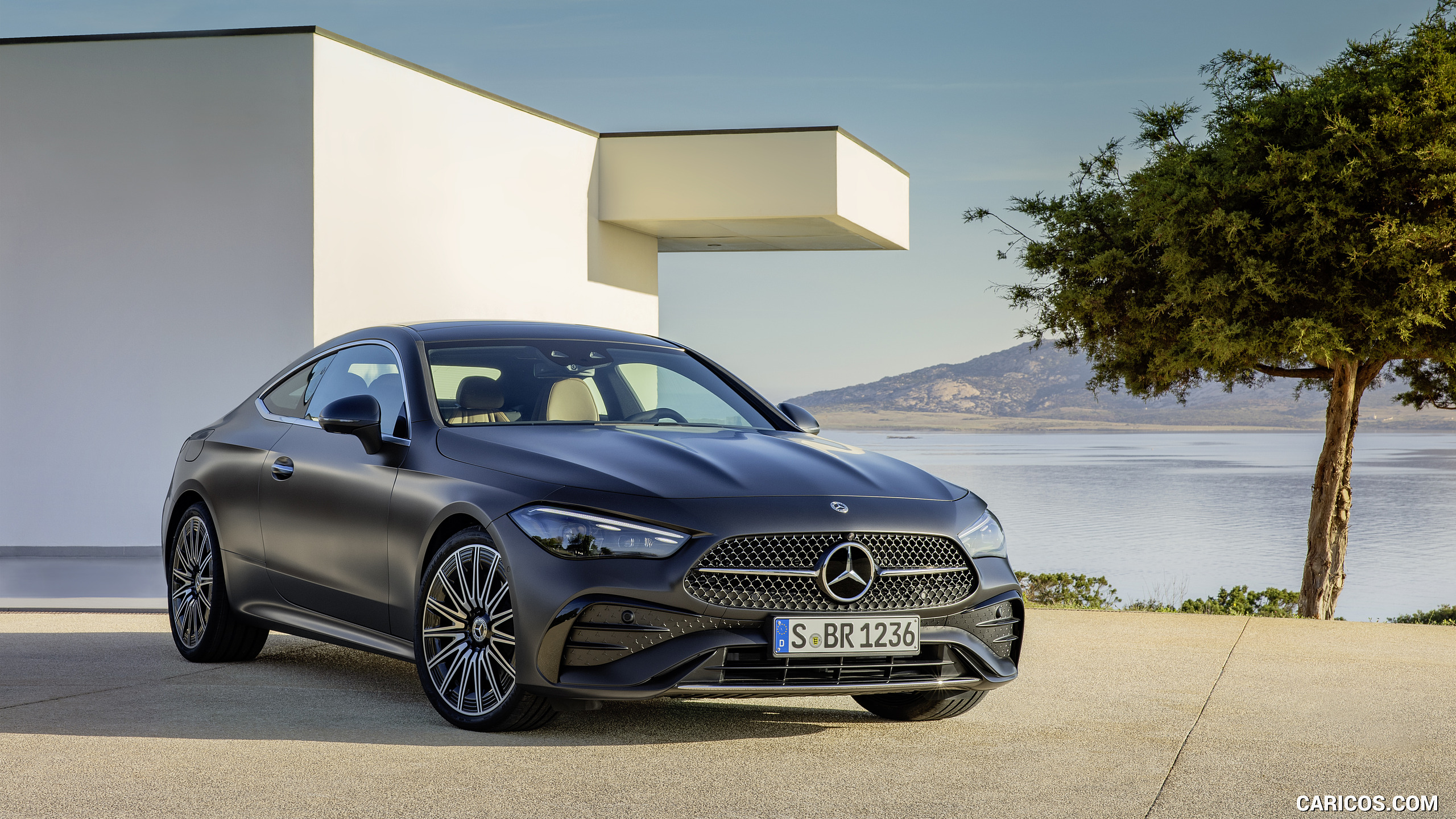
When people talk about the lifespan of an automotive icon, they often use obituary metaphors to look back at discontinued models, retired assembly lines, and bygone eras of internal combustion engineering. Mercedes obituaries serve as digital retrospectives honoring how legendary nameplates, pioneering safety features, and founding philosophies shaped modern transportation. Instead of mourning a passing, these historical tributes examine how past engineering benchmarks pave the way for future mobility.
The journey of Mercedes-Benz began in 1886 when Karl Benz secured the patent for the three-wheeled Motorwagen, widely recognized as the birth of the modern automobile. Coupled with Gottlieb Daimler and Wilhelm Maybach's simultaneous engine breakthroughs, these inventions laid a heavy foundation. When Daimler-Motoren-Gesellschaft and Benz & Cie. formally merged into Daimler-Benz AG in 1926, they unified the three-pointed star under a single banner of luxury and performance. Every vehicle class that followed—from early touring cars to contemporary electric flagships—carries forward this century-old DNA.
Milestone Vehicles That Shaped the Century
Looking back at the vehicles that defined generations reveals an engineering philosophy built on relentless evolution. Certain models didn't just sell well; they permanently changed what drivers expected from a passenger car.
- Mercedes-Benz 300 SL Gullwing (1954): Born from racing pedigree, this iconic coupe introduced direct fuel injection to a production vehicle alongside its famous upward-opening doors. It proved that performance engineering could double as high art.
- Mercedes-Benz W123 (1976): Widely regarded as an indestructible workhorse, this executive car built a reputation for bulletproof reliability. Many of these diesel variants still operate in rigorous climates across the globe today.
- Mercedes-Benz 190E (1982): Bringing downsized luxury and the revolutionary multi-link rear suspension to a wider audience, the 190-series proved that compact cars could offer the ride quality of a full-sized limousine.
- Mercedes-Benz S-Class W116 and W140: For decades, the S-Class has functioned as a rolling laboratory. Features like anti-lock braking systems (ABS) and electronic stability programs (ESP) debuted here before becoming universal industry standards.
The Evolution of Safety Architecture
Safety wasn't always a primary selling point in early automotive design. Early cars prioritized raw mechanical function over crash survival. That changed fundamentally in 1951 when Mercedes-Benz engineer Béla Barényi patented the crumple zone. By designing a rigid passenger cell surrounded by predetermined deformation zones, Barényi transformed crash physics.
Subsequent decades saw a rapid succession of life-saving milestones. In 1978, the brand introduced passenger car airbag systems to commercial fleets. By 2002, the introduction of PRE-SAFE technology allowed vehicles to anticipate imminent collisions milliseconds before impact, tensioning seatbelts and adjusting seats automatically. These systemic shifts proved that an automaker's legacy is measured just as much by lives protected as by units sold.
Navigating the Transition to Electric Mobility
As the automotive sector pivots away from fossil fuels, legacy manufacturers face an existential crossroads. The shift toward battery-electric platforms represents a massive structural change for a brand historically rooted in multi-cylinder internal combustion engines.
Mercedes-Benz approaches this transformation through dedicated vehicle architectures like the EQ lineup, spanning models from the compact EQT to the luxury EQS sedan. Integrating high-density battery packs while maintaining the brand's traditional cabin isolation and acoustic comfort requires a complete redesign of manufacturing workflows. Retaining high-end luxury standards in an era defined by software updates and silent electric powertrains remains the core challenge for modern designers in Stuttgart.
Frequently Asked Questions
Where did the name Mercedes originate?
The name comes from Mercédès Jellinek, the daughter of Emil Jellinek, an Austrian-Hungarian automobile entrepreneur who raced and marketed early Daimler vehicles. The name was officially registered as a trademark in 1902.
What was the first car produced under the unified brand?
Following the 1926 merger of Benz & Cie. and Daimler-Motoren-Gesellschaft, the first vehicles bearing the Mercedes-Benz badge debuted, combining the engineering prowess of both founding entities. You can explore Mercedes-Benz History for official archival documentation.
How do historical retrospectives influence modern vehicle design?
Digital tributes and retrospective obituaries of classic models help designers identify timeless aesthetic proportions—such as long hoods and distinct grille profiles—and adapt them seamlessly into modern electric architecture.
What was the significance of the 1936 Mercedes-Benz 260D?
The 260D was the world's first passenger car powered by a diesel engine, proving that compression-ignition engines could offer practical fuel efficiency for everyday drivers and commercial fleets alike.



