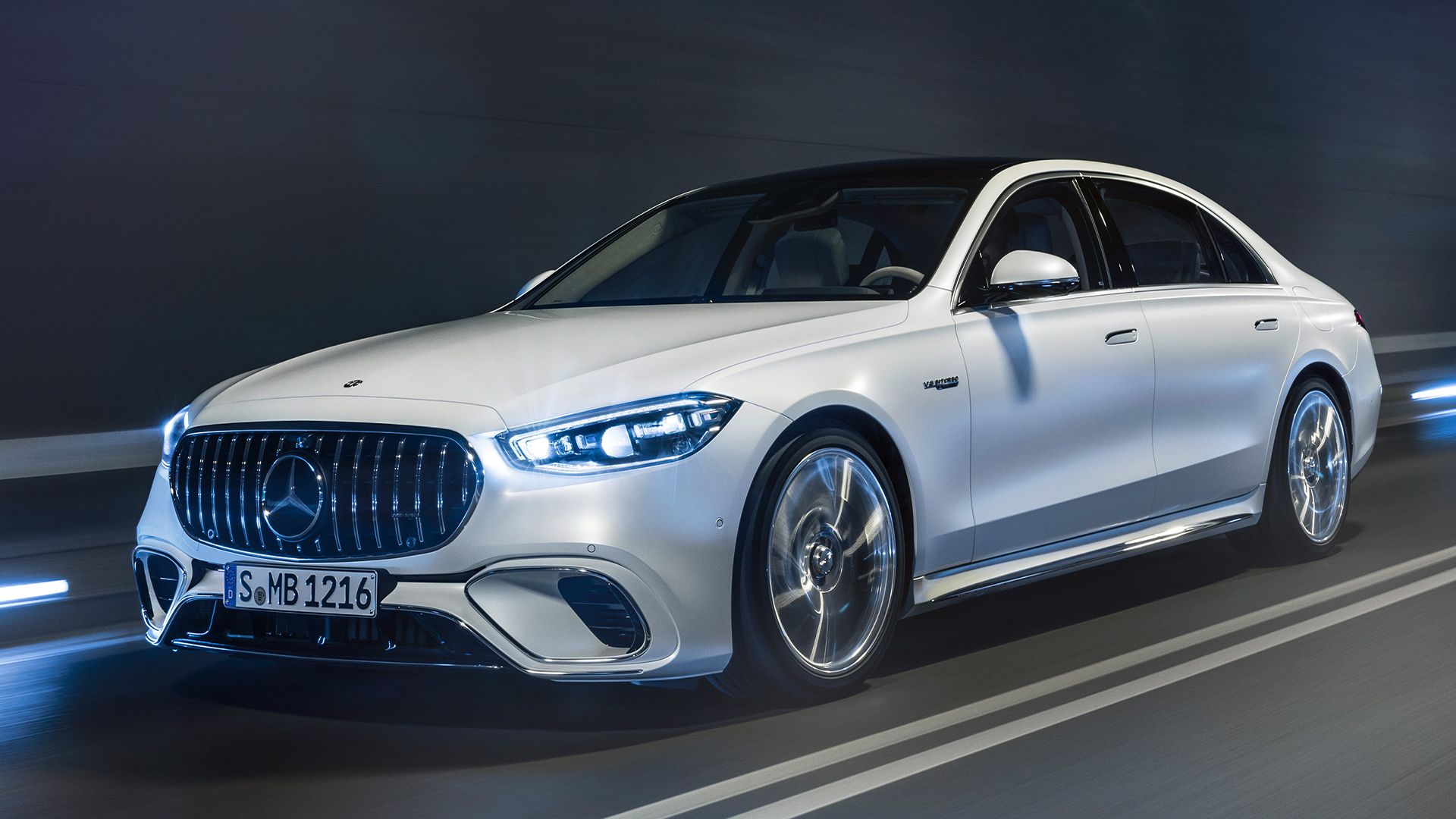
The Mercedes-Benz E55 AMG represents a specific high-water mark for German engineering. It blends brute force with everyday usability in a way modern performance cars rarely duplicate. During its production run across the W210 and W211 generations, this sedan proved that a luxury family car could outrun dedicated sports cars while maintaining quiet refinement on long highway drives.
Underneath the understated exterior lies a hand-built engine philosophy that defined an era of AMG development. If you're looking at buying, collecting, or simply understanding this modern classic, it helps to examine the exact engineering choices, performance figures, and mechanical quirks that make it legendary.
The Evolution of the E55 AMG
AMG’s transformation from an independent tuner to an official Mercedes-Benz subsidiary changed the performance landscape. The E55 AMG served as the flagship weapon of this transition, bridging old-school mechanical brawn with sophisticated chassis dynamics.
The W210 Era (1999–2002)
The W210 generation kicked off the mass-production era of the E55. Powered by a naturally aspirated 5.4-liter V8 engine, it pushed out 349 horsepower and 391 lb-ft of torque. It wasn't about forced induction; it relied on displacement, high compression, and instantaneous throttle response.
The W210 was subtly aggressive. It featured an aerodynamic body kit, distinctive monoblock wheels, and a lowered stance. While its styling now looks delightfully retro, its straight-line speed shocked contemporary sports car owners.
The W211 Era (2003–2006)
Mercedes-Benz blew the doors off the performance sedan market when they dropped a supercharged engine into the W211 E55 AMG. Fitted with a Lysholm-type twin-screw supercharger, the M113K engine produced a monstrous 469 horsepower and 516 lb-ft of torque.
Torque arrived almost instantly from idle, transforming the heavy executive sedan into a tire-smoking missile. Despite having numbers that dwarfed its predecessor, the W211 retained the quiet, leather-lined cabin and compliant highway ride expected from an E-Class.
Key Technical Specifications
When evaluating the W211 E55 AMG—the most sought-after iteration—the technical specifications reveal why enthusiasts still chase clean examples.
- Engine Type: M113 5.4-liter supercharged V8 (W211) / Naturally aspirated 5.4-liter V8 (W210)
- Horsepower: 469 hp at 6,100 RPM (W211)
- Torque: 516 lb-ft at 2,650–4,500 RPM (W211)
- Transmission: AMG Speedshift 5-speed automatic (W211) / 5-speed automatic (W210)
- Drivetrain: Front-engine, rear-wheel drive
- 0-60 MPH Time: Approximately 4.2 to 4.5 seconds
- Top Speed: 155 mph (electronically limited)
Driving Dynamics and Real-World Performance
Driving an E55 AMG requires a healthy respect for rear-wheel drive physics combined with immense low-end torque. When you stomp the throttle, the car squats slightly and pins you into your seat with unrelenting force.
Unlike modern turbocharged cars that experience a brief spool delay, the supercharged V8 delivers immediate thrust. The 5-speed automatic transmission—while lacking the lightning-fast gear changes of modern dual-clutch units—is brutally strong. It's built to handle heavy torque loads without breaking a sweat, holding gears when you want to play and shifting smoothly during city commutes.
Handling is surprisingly composed for a car weighing roughly 4,000 pounds. The AIRMATIC DC semi-active air suspension system adjusts damping rates dynamically. In Comfort mode, it absorbs potholes easily. Switch it to Sport or Manual mode, and body roll tightens up, allowing you to carve through twisty backroads with confidence.
Common Mechanical Issues to Watch For
If you're shopping for a used E55 AMG, you're buying a complex, high-performance luxury car from the 2000s. Maintenance costs won't match a standard economy car, but knowing what fails helps you avoid financial trouble.
- Supercharger Clutch and Pulley: The electromagnetic clutch on the supercharger can wear out over time, leading to a loss of boost. Listen for unusual squealing or rattling from the front of the engine bay.
- AIRMATIC Suspension Leaks: Rubber air struts degrade over time. If the car sags overnight in the driveway, you're looking at replacement struts or switching to a traditional coilover conversion kit.
- Intercooler Pump Failure: The stock Bosch intercooler pump is prone to failing. When it dies, intake air temperatures skyrocket, and the engine computer pulls timing to protect itself, resulting in a noticeable drop in power. Upgrading to a newer Pierburg pump fixes this permanently.
- Valeo Radiator Coolant Contamination: Early W211 models equipped with Valeo radiators can suffer from internal coolant leaks that contaminate the transmission fluid, destroying the transmission. Always verify if the radiator has been replaced or tested.
Buying Advice for Collectors and Enthusiasts
Finding a clean, un-modified E55 AMG is getting harder. Many examples fell into the hands of owners who skipped routine maintenance, leading to expensive repair bills.
Prioritize cars with comprehensive service binders. A thick folder of receipts showing oil changes every 5,000 miles, spark plug replacements (each cylinder has two plugs, meaning 16 plugs total), and suspension upkeep is worth paying a premium for. For deeper pricing and historical context, look over insights shared by Car and Driver.
Don't buy based on price alone. A cheap E55 AMG with deferred maintenance will quickly cost more than a pristine, well-documented specimen.
Frequently Asked Questions
Is the E55 AMG reliable?
Mechanically, the core engine and transmission are exceptionally robust and capable of lasting well past 200,000 miles if maintained properly. However, supporting electronics, suspension components, and cooling accessories require regular attention.
Which is better: the W210 or the W211 E55 AMG?
The W210 is simpler, lighter, and features a pure naturally aspirated engine bark, but it lacks the sheer face-melting acceleration of the supercharged W211. Most collectors prefer the W211 for its historic performance leap and modern cabin layout.
How much does it cost to maintain an E55 AMG?
If you perform basic maintenance yourself, costs are manageable. If you rely on specialized European mechanics, budget a few thousand dollars annually for preventative care, tires, premium fuel, and occasional component failures.
Can you modify the E55 AMG for more power?
Yes. The M113K engine in the W211 responds brilliantly to modifications. A smaller supercharger pulley, a larger heat exchanger, a tuned ECU, and upgraded cooling can push output past 550 horsepower with minimal risk to engine reliability.



