Choosing a metal roof for your home means balancing upfront costs against decades of weather resistance, and shopping through regional home improvement chains changes how you source materials. Menards supplies several styles of steel roofing panels, trim pieces, and fasteners tailored for residential projects, appealing to property owners who want to manage their own supply chain or hire an independent contractor.
When you evaluate steel roofing options at Menards, you need to understand panel profiles, gauge thickness, paint warranties, and the hidden costs of accessories like closure strips and specialized screws. This breakdown examines what you can actually buy, how pricing stacks up, and the critical installation details that separate a roof that lasts fifty years from one that leaks at the first major windstorm.
Understanding Menards Steel Roofing Options
Menards does not manufacture its own steel panels; instead, they stock products from regional manufacturers and private-label suppliers. The inventory typically spans exposed fastener panel systems and concealed fastener standing seam products.
Exposed fastener panels, often called corrugated or ribbed panels, represent the most common and budget-friendly choice in their aisles. These panels feature alternating ribs and flat sections, fastened directly through the face of the metal into the roof deck or purlins using screws with rubber neoprene washers.
Standing seam panels use a concealed fastening mechanism where the metal edges lock together, hiding the screws underneath the overlapping seams. This eliminates the risk of water leaking through deteriorated rubber washers around screw heads, though it requires more skill to install and carries a higher material cost.
Gauge thickness dictates structural rigidity and dent resistance. Residential steel panels typically range from 26-gauge to 29-gauge. Lower numbers indicate thicker steel. While 29-gauge panels cost less and handle lighter loads, 26-gauge steel provides superior resistance to hail, foot traffic, and wind uplift. For a deeper dive into metal specifications, you can review the Metal Roofing Alliance guidelines on material selection.
Cost Breakdown and Value Analysis
Steel roofing requires a higher initial investment than traditional asphalt shingles, but the extended lifespan changes the long-term financial picture. Material costs at Menards vary based on panel profile, paint finish, and current steel market fluctuations.
Exposed fastener panels generally range from $1.50 to $3.00 per square foot for the metal itself. Standing seam systems can push material costs to $4.00 to $8.00 per square foot or higher.
Beyond the panels, your budget must account for accessory components:
- Ridge caps and gable trim to seal the edges
- Valley flashing to manage water runoff
- Pipe boots and flashing kits for roof penetrations
- Specialized wood-to-metal screws with EPDM washers
- Underlayment rated for high-temperature metal installations
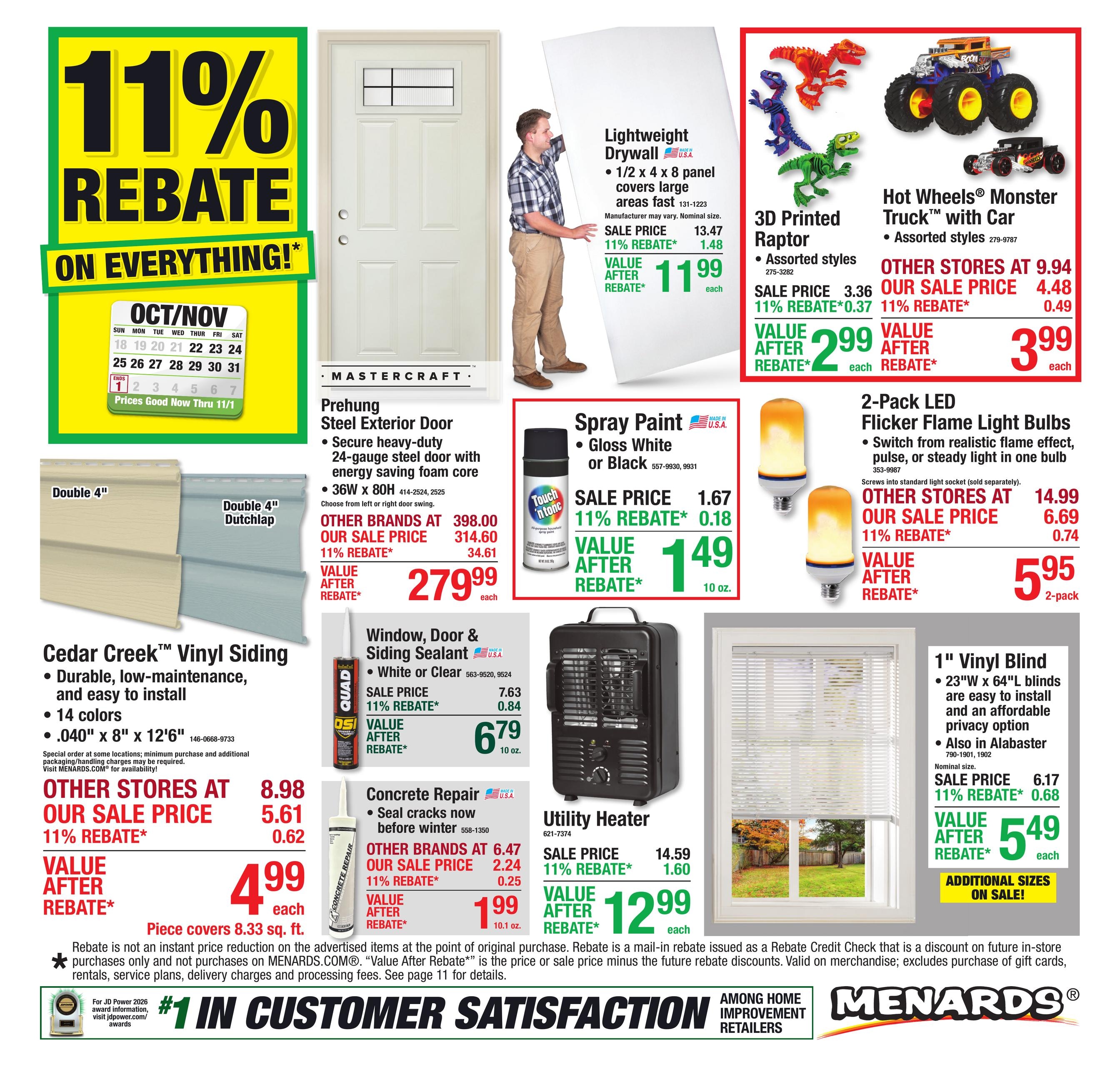
Rebates play a major role in Menards pricing strategy. Their regular 11% rebate promotion effectively discounts the total purchase price, but you must factor in the processing time and store-credit format of the refund when calculating your project budget.
Paint Systems and Weather Durability
The raw steel beneath your roof is protected by a multi-layer coating system that prevents rust and preserves color. Understanding paint chemistry helps you choose a panel that won't fade or chalk prematurely.
Economy panels often feature standard polyester paint systems. These options are budget-friendly and adequate for agricultural structures or utility sheds, but they tend to fade and lose gloss within ten to fifteen years under harsh sunlight.
Premium residential panels use PVDF (polyvinylidene fluoride) resin coatings, commonly known by brand names like Kynar 500. PVDF coatings offer exceptional color retention, chalk resistance, and thermal reflectivity. If you plan to stay in your home for decades, the upgrade to a PVDF coating is worth the investment.
Corrosion protection relies on metallic coatings applied to the steel core before painting. Look for Galvalume coatings, which combine aluminum and zinc to provide superior rust prevention compared to traditional galvanized steel. The National Roofing Contractors Association provides detailed technical resources on how different metallic coatings perform in varying regional climates.
Common Installation Mistakes to Avoid
Installing a steel roof requires precision, and small errors during setup lead to major issues down the road.
Over-tightening fastener screws is the most frequent mistake DIYers make. If you crush the rubber washer, the seal fails, creating an entry point for water. If you under-tighten the screw, the fastener can back out over time as the roof expands and contracts with temperature changes.
Incompatible metals cause accelerated galvanic corrosion. Never let untreated copper runoff drip onto steel panels, and ensure that all fasteners, flashing, and clips are made from compatible materials like stainless steel or coated carbon steel.
Inadequate ventilation traps moisture underneath the metal deck, leading to condensation and premature rotting of the roof sheathing. Always install proper ridge vents and soffit intake venting, paired with a high-temperature synthetic underlayment that acts as a moisture barrier.
Frequently Asked Questions
Can I install Menards steel roofing directly over old asphalt shingles?
Yes, many local building codes permit installing metal roofing over a single layer of existing asphalt shingles, provided the roof deck remains structurally sound. This approach saves demolition labor and disposal fees, though you should install furring strips or a specialized leveling underlayment to create a flat nailing surface.
How do Menards steel roofing warranties work?
Warranties are typically issued by the panel manufacturer rather than Menards directly. They usually split coverage into two parts: a substrate warranty against rust-through perforation (often 30 to 40 years) and a paint warranty against peeling, cracking, or excessive fading (typically 20 to 30 years). Always read the specific terms to check for prorated clauses.
Do I need special tools to cut steel roofing panels?
Yes, standard abrasive cutoff wheels or torches generate excessive heat that burns the paint edge and damages the protective Galvalume coating, leading to premature rust. Use electric nibblers, shear attachments for a power drill, or carbide-tipped metal-cutting circular saw blades designed for cool cuts.
How does steel roofing affect homeowner insurance rates?
Many insurance companies offer discounts on homeowner premiums if you install a Class 4 impact-resistant metal roof, as these systems withstand severe hail and wind damage far better than asphalt shingles. Contact your insurance provider before starting the project to confirm their specific discount criteria.



