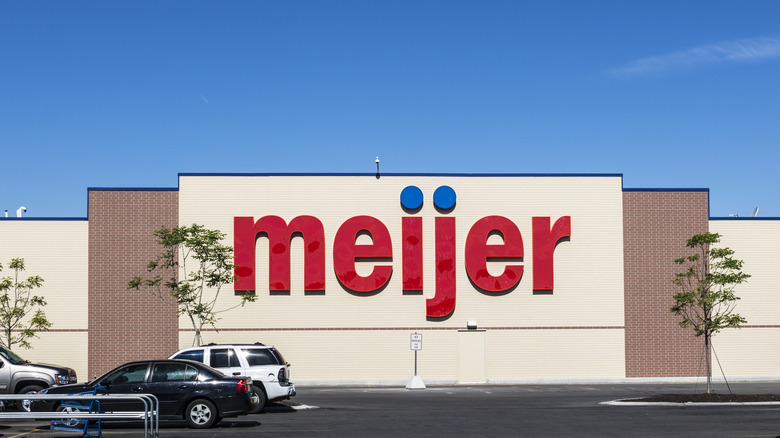
Meijer operates more than 500 retail outlets across six Midwestern states, anchoring its footprint through a disciplined real estate model that mixes massive supercenters with smaller, localized neighborhood concepts. Founded in Michigan in 1934, the family-owned enterprise pioneered the one-stop shopping supercenter format long before big-box consolidation reshaped modern commerce. Understanding how this regional powerhouse builds market share requires looking closely at its geographic spread, format diversification, and supply chain logistics.
The expansion strategy relies on careful regional density rather than rapid, coast-to-coast gambling. By clustering distribution centers near population hubs, the company controls logistics costs while maintaining fresh grocery supply lines. This structural blueprint explains how a regional player continues to compete against national giants without overextending its capital expenditure.
The Core Geographic Footprint
Meijer stores are primarily concentrated in six Midwestern states: Michigan, Ohio, Indiana, Illinois, Kentucky, and Wisconsin. Michigan serves as the dense home market, housing headquarters in Grand Rapids alongside a heavy saturation of both supercenters and fuel stations.
Expansion outside Michigan followed a contiguous path. Instead of jumping to distant markets, the company pushed outward into neighboring Rust Belt and Midwestern corridors where distribution routes could be shared.
- Michigan: The densest market with corporate roots, featuring hundreds of supercenters and express locations.
- Ohio and Indiana: Major growth zones featuring high-volume supercenters along major highway intersections.
- Illinois and Wisconsin: Strategic expansions capturing suburban and exurban shoppers around Chicago and Milwaukee.
- Kentucky: Extending the southern boundary to tap into distinct regional consumer preferences.
Growth plans target adjacent regions, such as preparations to enter Western Pennsylvania. This incremental border-state strategy keeps supply chain networks efficient. New stores typically open within a day's drive of existing regional distribution hubs to protect profit margins on perishable goods.
Multi-Format Store Strategy
A major engine behind the modern growth plan is format diversification. While the classic 160,000-square-foot supercenter remains the flagship, the company adapted to changing real estate availability and consumer preferences by introducing smaller footprints.
[Supercenter: ~160k sq ft] ---> [Grocery Format: 40k-75k sq ft] ---> [Market Format: ~40k sq ft]
The Supercenter Model
The traditional supercenter combines a full-scale grocery market with general merchandise, apparel, electronics, and home goods under one roof. These require significant acreage, usually positioned in growing suburban or rural-suburban transition corridors. They capture high average basket sizes because shoppers can complete multiple distinct errands in a single trip.
The Meijer Grocery Format
Launched to target denser suburban and urbanizing corridors, the standalone grocery format spans roughly 40,000 to 75,000 square feet. It strips away general merchandise categories to focus aggressively on fresh food, produce, bakery, and convenient meal solutions. This allows the brand to slip into urban infill locations where acquiring 20 acres for a supercenter is impossible.
Neighborhood Markets and Express Stations
Smaller market footprints and Meijer Express fuel stations capture high-frequency fill-in trips. Fuel stations anchor high-traffic corners, driving daily gasoline customers into immediate convenience retail purchasing. Meanwhile, neighborhood markets emphasize hyper-local product curation tailored to specific community demographics.
Supply Chain and Omnichannel Logistics
Physical store growth fails without robust backend infrastructure. The retailer invests heavily in omnichannel capabilities, merging physical shelves with digital inventory management. Curbside pickup and home delivery require high stock accuracy across thousands of SKUs, pushing the company to upgrade in-store wireless networks and warehouse automation.
Distribution centers operate as regional hubs. Trucks can service multiple stores within a tight radius, reducing transit times for perishable items like meat, dairy, and locally sourced produce. This localized logistics web minimizes food waste—a central pillar of the company's corporate sustainability targets—and keeps shelf out-of-stock rates low compared to competitors with centralized national shipping models.
Common Pitfalls in Regional Retail Expansion
Retailers expanding across state lines often stumble by ignoring local zoning hurdles, miscalculating consumer loyalty to incumbent regional chains, or overbuilding capital-heavy footprints. Meijer mitigates these risks through specific strategic constraints:
- Ignoring Zoning and Real Estate Realities: Attempting to force a massive supercenter into dense urban cores creates friction. Meijer avoids this by deploying its smaller grocery format for tighter footprints.
- Over-Expansion Beyond Logistics Reach: Opening stores too far from existing distribution hubs destroys margin efficiency. Growth remains contiguous, moving state-by-state rather than jumping across the country.
- Failing to Localize Assortment: Stocking identical products across Michigan and Kentucky ignores regional tastes. Market-format stores are explicitly designed to stock items tailored to individual communities.
Observing official Meijer Real Estate guidelines reveals that site selection relies on rigorous demographic modeling, traffic flow studies, and environmental impact assessments before ground is ever broken.
Frequently Asked Questions
How many states does Meijer operate in?
The retailer operates retail stores and fuel stations across six Midwestern states: Michigan, Ohio, Indiana, Illinois, Kentucky, and Wisconsin.
What is the difference between a Meijer Supercenter and a Meijer Grocery store?
A supercenter spans roughly 160,000 square feet and sells groceries alongside clothing, electronics, and home goods. A Meijer Grocery store is a smaller 40,000 to 75,000-square-foot format focused entirely on fresh food and everyday grocery needs.
Is Meijer a publicly traded company?
No. It remains a privately held, family-owned company headquartered in Grand Rapids, Michigan, allowing leadership to focus on long-term capital investments rather than quarterly Wall Street pressures.
Why does Meijer build its stores close to existing distribution centers?
Keeping new store locations within a day's drive of established logistics hubs ensures lower transportation costs, fresher produce on shelves, and efficient fleet utilization.



: Complete Survey Guide and Rewards](https://www.simpleeverydaymom.com/wp-content/uploads/2023/10/Pilgrim-Photo-Craft-for-Thanksgiving-image-559x1024.jpg)