Rumors surface online claiming that a complete Megalodon found preserved in ancient ice has been discovered by scientists. This idea captures the imagination, suggesting that an apex predator from millions of years ago might sit intact inside a glacier. In reality, these viral stories are entirely fictional. Paleontologists have never recovered a frozen, soft-tissue specimen of Otodus megalodon, and the laws of geology and biology make such a preservation nearly impossible.
The confusion stems from a mix of internet folklore, fictional writing, and misunderstandings about how the fossil record works. To understand why a frozen Megalodon doesn't exist, it helps to examine how shark biology interacts with ice, when these creatures actually lived, and what genuine fossil evidence scientists rely on.
Why a Frozen Megalodon Is Scientifically Impossible
Sharks possess skeletons made of cartilage rather than hard bone. When a shark dies, its cartilage rots away rapidly after scavengers strip the soft tissue. Only dense structures like teeth and occasional vertebrae survive long enough to undergo fossilization. Finding an entire body—let alone one with skin, muscle, and organs intact—requires extraordinary preservation conditions, such as rapid burial in fine-grained anoxic sediment.
Ice sheets and glaciers do not preserve ancient marine predators for millions of years. Glaciers move, grind, and crush the material trapped within them over long spans of time. Even if a prehistoric shark carcass had washed ashore during a cold period millions of years ago, dynamic glacial movement would have pulverized the remains long before modern researchers could unearth them.
The Timeline Mismatch: Megalodons and Glaciers
Another major flaw in the frozen Megalodon narrative is chronology. Scientific consensus indicates that Otodus megalodon went extinct approximately 3.6 million years ago. This extinction occurred during the Pliocene epoch, driven by global cooling, shifting ocean currents, and competition from new predators like early killer whales and great white sharks.
Large-scale continental ice sheets in the Northern Hemisphere did not expand significantly until roughly 2.6 million years ago, marking the beginning of the Quaternary glaciation periods. Because the Megalodon vanished a million years before the onset of extensive ice ages, the species never coexisted with the deep polar ice where these fictional discoveries are allegedly made.
- For a real look at ancient marine history, check out the Smithsonian National Museum of Natural History exhibits on prehistoric oceans.
- To read peer-reviewed research on ancient shark biology, visit Proceedings of the National Academy of Sciences.
What Real Megalodon Fossils Tell Us
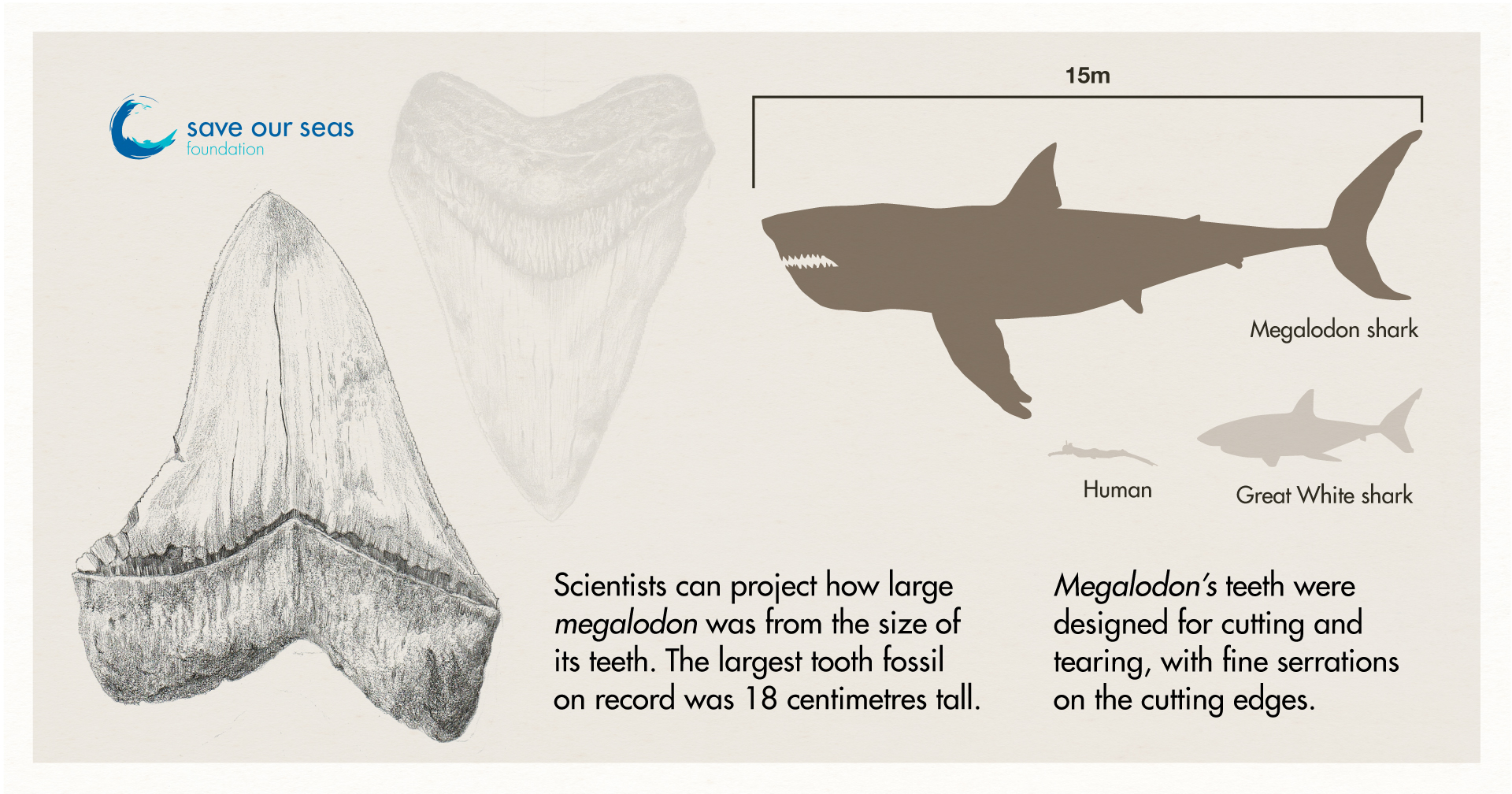
Without frozen specimens, researchers reconstruct the life of Otodus megalodon using teeth, rare vertebrae, and geochemical analysis. Because shark teeth contain stable isotopes, scientists can analyze calcium and phosphorus components to determine body temperatures. Recent findings published by institutions like the University of California, Los Angeles confirm that Megalodons were warm-blooded creatures, which allowed them to patrol diverse thermal zones across the globe.
Teeth also provide insights into their size and diet. Measuring up to seven inches long, these serrated teeth indicate an animal capable of preying on ancient whales, dolphins, and large marine mammals.
Common Misconceptions About Prehistoric Discoveries
Sensational headlines online often blur the line between science fiction and verified paleontology. Viral posts frequently mix up different prehistoric eras or misinterpret creative writing exercises as news reports. Recognizing these patterns helps separate internet myths from genuine scientific breakthroughs.
- Conflating extinction dates: Assuming creatures from millions of years ago survived into recent glacial epochs.
- Misinterpreting soft-tissue finds: Confusing the preservation of woolly mammoths—which lived during the Pleistocene—with creatures from much older geological periods.
- Trusting unverified sources: Relying on blog posts or fictional forums that lack citations from accredited scientific institutions.
Frequently Asked Questions
Did Megalodons ever swim in cold polar waters?
While Megalodons were warm-blooded, their primary fossil distributions concentrate in warm, temperate coastal and pelagic waters where their prey thrived. They did not inhabit deep polar ice zones.
Why do people think sharks can be frozen like mammoths?
Woolly mammoths and rhinos are frequently discovered intact in Siberian permafrost because they lived during the recent Ice Age, thousands of years ago. Megalodons lived millions of years earlier, long before permafrost formed in those regions.
Are complete Megalodon skeletons missing entirely?
Scientists have found partial associated sets of vertebrae and teeth, but a full skeleton has never been recovered because cartilage does not fossilize easily.
Could a Megalodon still be hiding in the deep ocean?
No. The deep ocean lacks the abundant marine mammal populations required to sustain a predator of that size, and their absence from the modern fossil and ecological record is absolute.