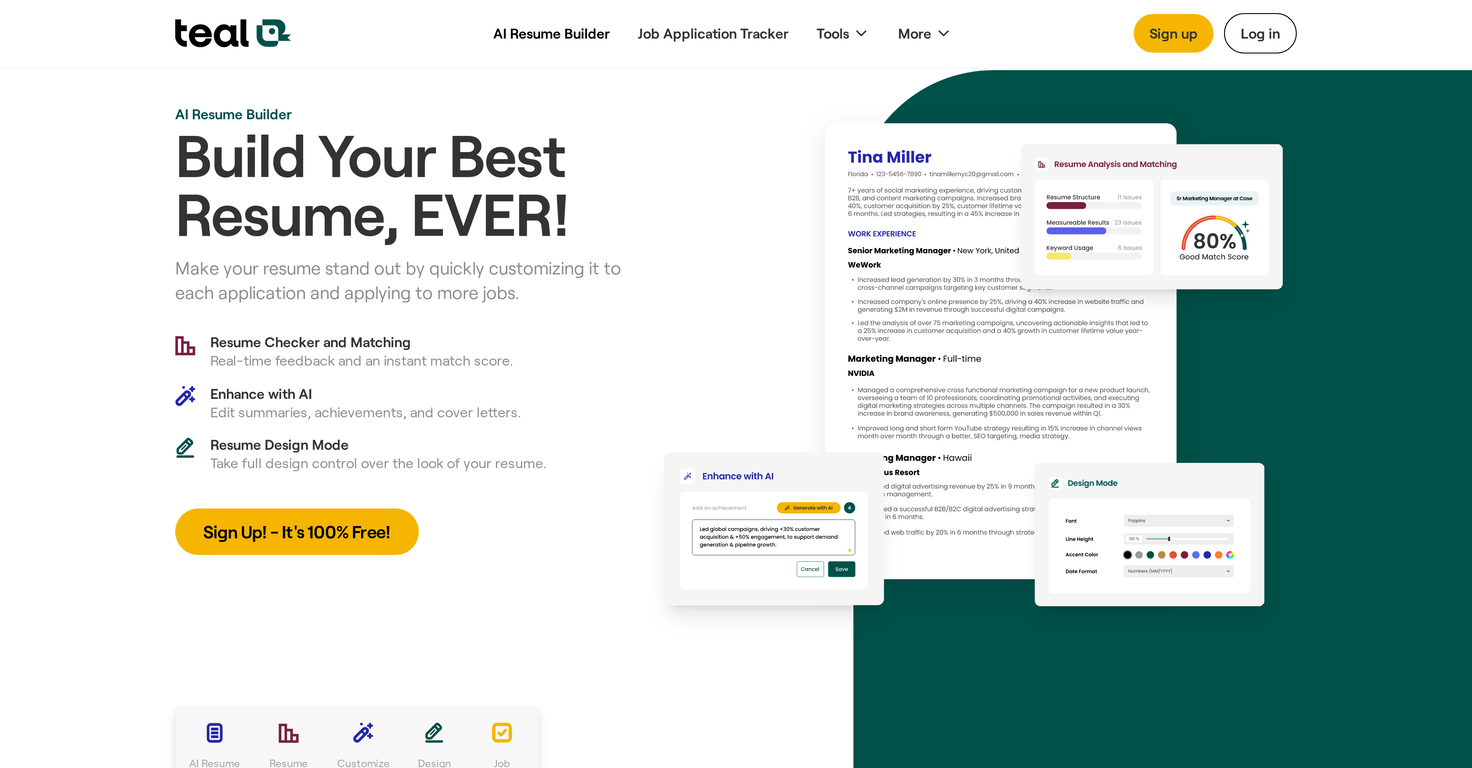
Landing a healthcare job starts with a document that proves you can handle both clinical tasks and front-office organization under pressure. A strong medical assistant resume bridges your hands-on patient care training with administrative reliability, showing clinic managers you're ready on day one.
Too many applicants list generic duties like "took vital signs" or "answered phones." To stand out, you need to show impact, highlight specific electronic health record systems, and format your layout so both human recruiters and automated tracking software can read it instantly. Let's break down how to build an application that gets interviews.
Anatomy of a High-Converting Resume
Recruiters spend seconds scanning an initial application. Your layout must guide their eyes straight to your most valuable qualifications. Stick to a clean, reverse-chronological format that highlights your career progression without clutter.
Contact Information and Professional Summary
Place your name, phone number, professional email address, and city/state at the top. Skip your full street address to maintain privacy.
Right below your contact details, include a three-line professional summary instead of an outdated objective statement. This short paragraph acts as your elevator pitch.
- For experienced professionals: Highlight years of clinical experience, specialty areas like pediatrics or cardiology, and core competencies.
- For entry-level candidates: Focus on your recent certification, clinical hours completed during your externship, and core soft skills like patient communication.
Formatting and Design Rules
Keep your design minimal and professional. Use standard fonts like Calibri or Arial set to 10 or 12 points, and leave ample white space.
- Length: Keep it to one page if you have under ten years of experience. Two pages work only for veterans with deep administrative and clinical achievements.
- File format: Save and submit your file as a PDF unless the job portal explicitly requests a Word document. PDFs lock your formatting in place.
- Avoid graphics: Fancy icons, columns, and rating bars confuse applicant tracking systems and lead to automatic rejection.
Detailing Work Experience and Clinical Skills
Your work experience section forms the core of your application. Don't just copy your job description from a manual. Instead, use action verbs and quantifiable results to show what you accomplished in past roles.
Writing Action-Oriented Bullet Points
Transform passive duties into active achievements by stating what you did and the result it produced.
- Weak: Answered phones and scheduled patients.
- Strong: Managed incoming scheduling requests for a four-provider family practice, cutting patient wait times by 12% over six months.
- Weak: Took vital signs and prepped exam rooms.
- Strong: Recorded vital signs, medical histories, and chief complaints for 25+ patients daily across a fast-paced multi-specialty clinic.
Highlighting Hard and Soft Skills
Modern clinics rely heavily on specific software and interpersonal competence. Split your skills section to cover both technical proficiencies and patient-facing abilities.
- Clinical competencies: Phlebotomy, EKG administration, specimen collection, medication administration, and sterilization protocols.
- Administrative proficiencies: Electronic health records management, insurance verification, medical billing, and appointment scheduling.
- Software familiarity: Mention specific platforms you know, such as Epic Systems or Cerner, rather than just writing "EHR software."
- Soft skills: Clear patient communication, empathy during high-stress moments, meticulous attention to detail, and strict adherence to HIPAA regulations.
Education and Certification Credentials
Your educational background and professional credentials validate your legal and practical ability to practice. Place this section near the top if you're a recent graduate, or toward the bottom if you have several years of field experience.
Listing Credentials Correctly
Always list your credential name, the issuing organization, and your renewal status. Employers look for recognized certifications to satisfy compliance and insurance requirements.
- Certified Medical Assistant: CMA credential issued by the American Association of Medical Assistants.
- Registered Medical Assistant: RMA credential from American Medical Technologists.
- Certified Clinical Medical Assistant: CCMA credential through the National Healthcareer Association.
Include your post-secondary certificate or diploma program, the name of the school, and your graduation year. If you graduated with honors or maintained a high GPA, feel free to note it.
Common Resume Mistakes to Avoid
Even qualified candidates miss out on interviews due to simple formatting errors or vague phrasing. Check your draft against these frequent pitfalls before hitting submit.
- Generic tailoring: Sending the exact same resume to a dermatology clinic and an urgent care center. Always mirror keywords from the specific job posting.
- Typos and grammatical errors: A single misspelled medical term signals a lack of attention to detail, which worries hiring managers who rely on you for accurate chart entries.
- Listing duties instead of results: Writing what the job required instead of what you actually achieved during your shift.
- Cluttered layouts: Using heavy colors, tables, or non-standard fonts that break applicant tracking software.
Frequently Asked Questions
Should I include unpaid externships on my resume?
Yes, especially if you're a recent graduate with limited paid experience. Treat your externship like a real job by listing the facility name, dates, clinical hours completed, and the specific tasks you performed under supervision.
How do I address a employment gap on my resume?
If you took time off for personal reasons, education, or caregiving, you can address it briefly in your cover letter or list it honestly in your work history. Focus on any continuing education or certifications you earned during that break.
Do I need to include a photo on my resume?
No. In most regions, including a photograph is discouraged because it can introduce unconscious bias into the hiring process. Stick strictly to text and professional qualifications.
How many bullet points should I write per job?
Aim for three to five punchy bullet points for each recent role. Focus on your most significant responsibilities and any measurable improvements you brought to the clinic's daily workflow.



