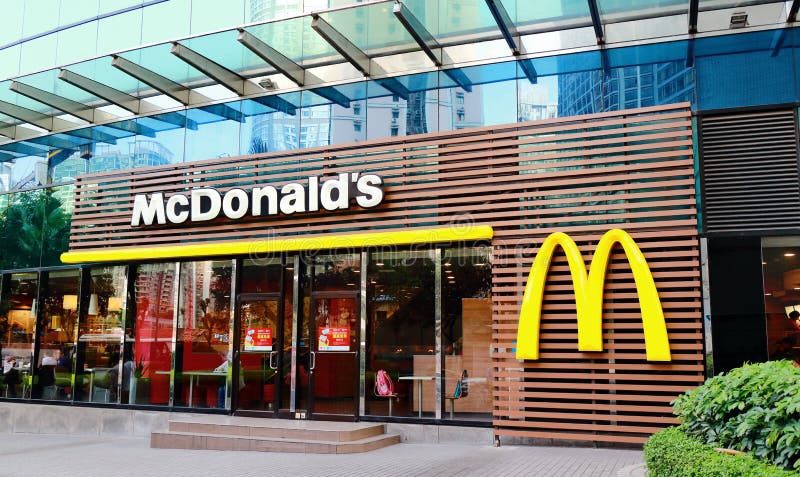
Store closures don't always mean a company is failing. When corporate giants prune their footprint, it's often a calculated move to maximize operational efficiency, pivot toward digital infrastructure, and protect long-term margins. The conversation surrounding McDonald's store rationalizations—particularly high-profile exits from retail partnerships and underperforming urban storefronts—reveals a fundamental shift in how the fast-food industry approaches physical real estate. Instead of chasing sheer rooftop count, leadership teams are leaning heavily into location intelligence, consumer mobility trends, and digital integration.
Examining these structural shifts requires looking past sensationalized headlines and looking directly at the data. Let's examine the economic realities, shifting consumer habits, and strategic pivots driving modern restaurant network optimization.
The Economics of Modern Footprint Reduction
For decades, the dominant playbook for fast-food expansion was simple: open as many doors as possible. More restaurants meant higher market saturation and easier customer access. However, rising labor costs, shifting real estate markets, and changing consumer routines upended this philosophy.
When McDonald's significantly scaled back its footprint inside Walmart stores—dropping from roughly 1,000 locations at its peak to a fraction of that number—critics misread the move as a sign of weakness. In reality, corporate financial reports highlighted that many of these in-store counters suffered from low sales volume relative to operating overhead. Maintaining a commercial kitchen requires expensive equipment, specialized staffing, and constant supply chain logistics. If foot traffic inside the host retailer shifts toward curbside pickup and online browsing, the restaurant inside takes a direct hit.
Pruning low-margin locations allows executive teams to reallocate capital toward high-return assets. This targeted downsizing protects overall brand health and ensures that every operating square foot pulls its financial weight.
Shifting Consumer Habits and the Digital Pivot
Consumer behavior has permanently shifted away from traditional dine-in and casual counter browsing toward speed, autonomy, and digital convenience. Mobile app ordering, third-party delivery integration, and friction-free drive-thrus command an increasingly large share of total revenue.
This digital evolution changes the ideal geometry of a restaurant. Traditional footprints featuring expansive dining rooms are giving way to compact layouts optimized for mobile pickups and delivery drivers. When customers order via smartphone, the physical proximity of a dining room matters far less than the efficiency of the kitchen and the speed of the drive-thru lane.
As a result, brands are deliberately exiting legacy spaces that lack drive-thru capabilities or mobile-friendly pick-up infrastructure. The goal isn't to retreat from the market, but to upgrade the customer experience by focusing investments on units capable of handling high-volume digital throughput.
Location Intelligence and Demographic Targeting
Modern retail expansion relies heavily on advanced geospatial analytics. Corporations don't guess where to open or close stores; they analyze foot traffic heatmaps, mobile GPS pings, local median incomes, and regional e-commerce adoption rates.
Data shows that corporate closures are rarely distributed evenly. Urban centers with high real estate costs often experience faster rationalization when lease renewals spike, whereas suburban and highway-adjacent locations with strong drive-thru volume remain heavily protected. Similarly, regions with rapid adoption of digital grocery services often see shifts in fast-food performance. When consumers abandon brick-and-mortar retail trips in favor of curbside delivery, physical retail partners lose the captive foot traffic that once sustained in-store food counters.
Key Factors Guiding Network Optimization
- Drive-Thru Accessibility: Units lacking efficient vehicle stacking or dedicated delivery windows face immediate closure pressure.
- Lease and Labor Economics: Rising operational expenses in dense metropolitan areas force brands to close units where profit margins fall below corporate thresholds.
- Digital Integration Potential: Stores capable of supporting multi-lane drive-thrus, digital kiosks, and dedicated delivery parking receive capital upgrades, while legacy counters do not.
Common Misconceptions About Corporate Restructuring
When a major brand announces widespread closures, observers frequently jump to incorrect conclusions about brand health. Understanding retail strategy requires separating superficial narratives from operational reality.
Many analysts mistake routine lease expirations and strategic footprint consolidation for financial distress. In reality, large franchises continually evaluate their portfolio to eliminate cannibalization—the phenomenon where two company-owned stores sit too close together and split the same customer base. Closing one underperforming unit often boosts the sales volume of a nearby sister location, resulting in higher net profitability for the franchisee.
Another misconception is that physical contractions signal a permanent retreat from growth. Successful market leaders routinely execute a "shrink to grow" strategy. By shedding dead weight, brands free up liquidity to fund technology upgrades, remodel existing high-volume locations, and expand into emerging international markets with stronger tailwinds.
Frequently Asked Questions
Why do fast-food chains close stores if their overall revenue is growing?
Corporate revenue is an aggregate metric that doesn't reflect individual store performance. Even highly profitable brands have individual locations plagued by high rent, shifting neighborhood demographics, or poor layout constraints. Pruning underperforming units improves average unit volume across the remaining network.
How do delivery apps impact physical restaurant locations?
Delivery apps reduce the necessity for large dining rooms. Because a significant portion of orders now leave the building via delivery couriers or carryout customers, brands prioritize smaller footprints with dedicated pickup windows over traditional dine-in spaces.
What happens to the real estate left behind after a restaurant closes?
Disused commercial spaces inside retail hubs or standalone lots are typically re-leased to alternative tenants, converted into ghost kitchens, or repurposed by the host retailer for expanded inventory storage or curbside pickup staging.
Are store closures a sign of declining brand popularity?
Not necessarily. While changing consumer tastes can impact sales, the vast majority of planned closures are portfolio optimizations designed to cut operational friction, eliminate redundant locations, and fund technological improvements.


