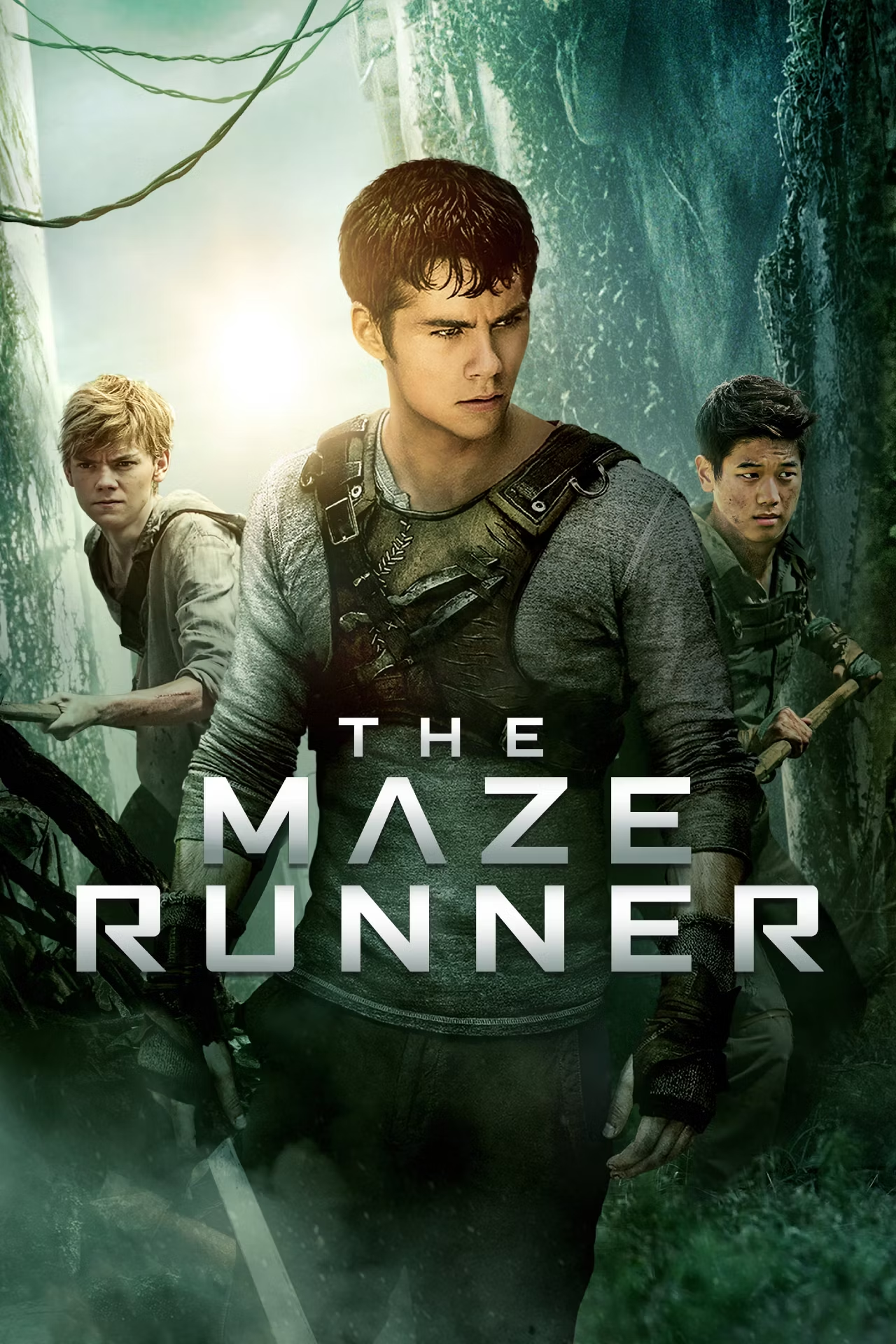
When The Maze Runner hit theaters in 2014, Hollywood was deep into a cycle of young-adult dystopian adaptations. While heavyweights like The Hunger Games and Divergent dominated the conversation, director Wes Ball's modest $34 million production carved out a distinct identity. It wasn't based on a video game—despite persistent online confusion stemming from its labyrinthine setting and survival mechanics—but rather on James Dashner's 2009 bestselling novel. Instead of relying on sprawling exposition, the film dropped viewers straight into a concrete box alongside an amnesiac teenager named Thomas, creating an immediate sense of claustrophobia and urgent momentum.
Over three main installments, the franchise pulled in nearly $950 million globally against a combined production budget of $157 million. It secured its place as the fourth-highest-grossing young-adult book adaptation series in cinematic history, sitting comfortably behind Harry Potter, The Twilight Saga, and The Hunger Games. Yet, its cultural footprint goes beyond box office returns. The trilogy proved that high-concept sci-fi could succeed on tighter budgets through disciplined practical effects, grounded physical stunt work, and a distinct aesthetic that separated it from the glossy dystopias of its peers.
Breaking Down the Trilogy Structure
The franchise evolved rapidly across its three theatrical releases: The Maze Runner (2014), Maze Runner: The Scorch Trials (2015), and Maze Runner: The Death Cure (2018). Each film shifted genres, moving from a closed-room mystery thriller into a wide-open survival epic.
The first film operates like a survival-horror puzzle box. The Gladers live in an enclosed courtyard surrounded by shifting stone walls, governed by strict rules and a terrifying nocturnal threat known as Grievers. By keeping the perspective strictly tied to Thomas's point of view, the movie forces the audience to decode the rules of the environment alongside the characters. There's no voiceover explaining the collapse of human civilization; you only learn what the terrified teenagers discover.
Once the walls fall, the second installment flips the formula entirely. The Scorch Trials abandons the enclosed maze for a sun-scorched, post-apocalyptic wasteland. The characters realize that escaping the initial enclosure was only the beginning of a larger experiment orchestrated by the World Catastrophe Killzone Department (WCKD). This entry leans heavily into zombie-adjacent thriller tropes, featuring infected humans known as Cranks, and transitions the narrative from a localized escape plan into a desperate flight across ruined cities.
The final chapter, The Death Cure, brings the narrative full circle by turning into a high-stakes heist and rebellion film. Production delays—notably a severe on-set injury sustained by star Dylan O'Brien—pushed the release to January 2018. Despite the multi-year gap between the second and third films, the finale delivered a cohesive conclusion that prioritized character survival over neat, fairy-tale resolutions.
Why Viewers Confuse It with a Video Game
A recurring thread in discussions about the franchise is its distinct video-game logic. The setup of the first movie mimics classic level-based survival titles. Characters wake up in a neutral spawn zone, gather resources, study enemy patterns during timed cycles, and venture into a shifting map where death carries permanent consequences.
This structure wasn't an accident of adaptation. Modern dystopian fiction heavily borrows spatial design principles from interactive media. The Grievers function much like boss encounters, requiring coordinated teamwork and specific items to defeat. The transition from the safe zone of the Glade into exterior sectors mirrors progression mechanics found in open-world survival games. While mobile spin-off games eventually hit app stores, the cinematic trilogy's kinetic pacing and environmental design naturally invite comparisons to controller-driven experiences.
Production Realities and Stunt Work
Unlike many contemporary blockbusters that relied heavily on green-screen soundstages, director Wes Ball prioritized physical locations and practical builds. The massive ivy-covered maze walls constructed in Baton Rouge, Louisiana, gave the young cast tangible surfaces to scale, run through, and hide behind.
This commitment to physical authenticity defined the action choreography. The running sequences weren't just filler; they symbolized the central theme of relentless forward momentum under extreme psychological pressure. When production on the final film faced its unexpected shutdown due to injury, the studio and crew waited nearly a year to ensure Dylan O'Brien could safely complete his physical stunts, preserving the continuity of action style established in the first two outings.
Common Misconceptions About the Franchise
- Myth: The movies are a direct, scene-for-scene translation of the books.
- Reality: Screenwriter T.S. Nowlin and director Wes Ball made massive structural changes, particularly regarding how telepathy is handled and how the organization WCKD operates. Fans of the novels often found the cinematic timeline streamlined for better theatrical pacing.
- Myth: The franchise ended because it flopped commercially.
- Reality: While The Death Cure grossed less domestically ($58 million) than its predecessors, its international pull remained strong, crossing $288 million worldwide against a $62 million budget, turning a reliable profit for 20th Century Fox before the Disney acquisition closed.
Frequently Asked Questions
Do I need to read the books to understand the movies?
No. The films simplify several complex sci-fi elements from James Dashner's novels to keep the narrative moving forward. While the books offer deeper lore regarding the Flare virus and the origins of WCKD, the cinematic trilogy stands entirely on its own.
Are there any prequels or additional movies in the series?
The core trilogy concludes Thomas's story arc. While Dashner wrote prequel novels like The Kill Order and The Fever Code exploring how the world fell apart, 20th Century Fox (now 20th Century Studios) has not adapted those specific storylines into feature films.
Why did the third movie take so long to release?
Production on The Death Cure was halted in March 2016 after lead actor Dylan O'Brien suffered significant injuries during an action sequence. Filming resumed in early 2017 after a lengthy recovery period, shifting the scheduled release date from 2017 to January 2018.
Is WCKD good or evil?
Within the narrative, WCKD operates under the utilitarian belief that extreme measures are necessary to find a cure for a global pathogen destroying humanity. However, their ethical boundaries are entirely compromised, as they subject immune teenagers to lethal trials without consent, cementing them as the primary antagonists.



