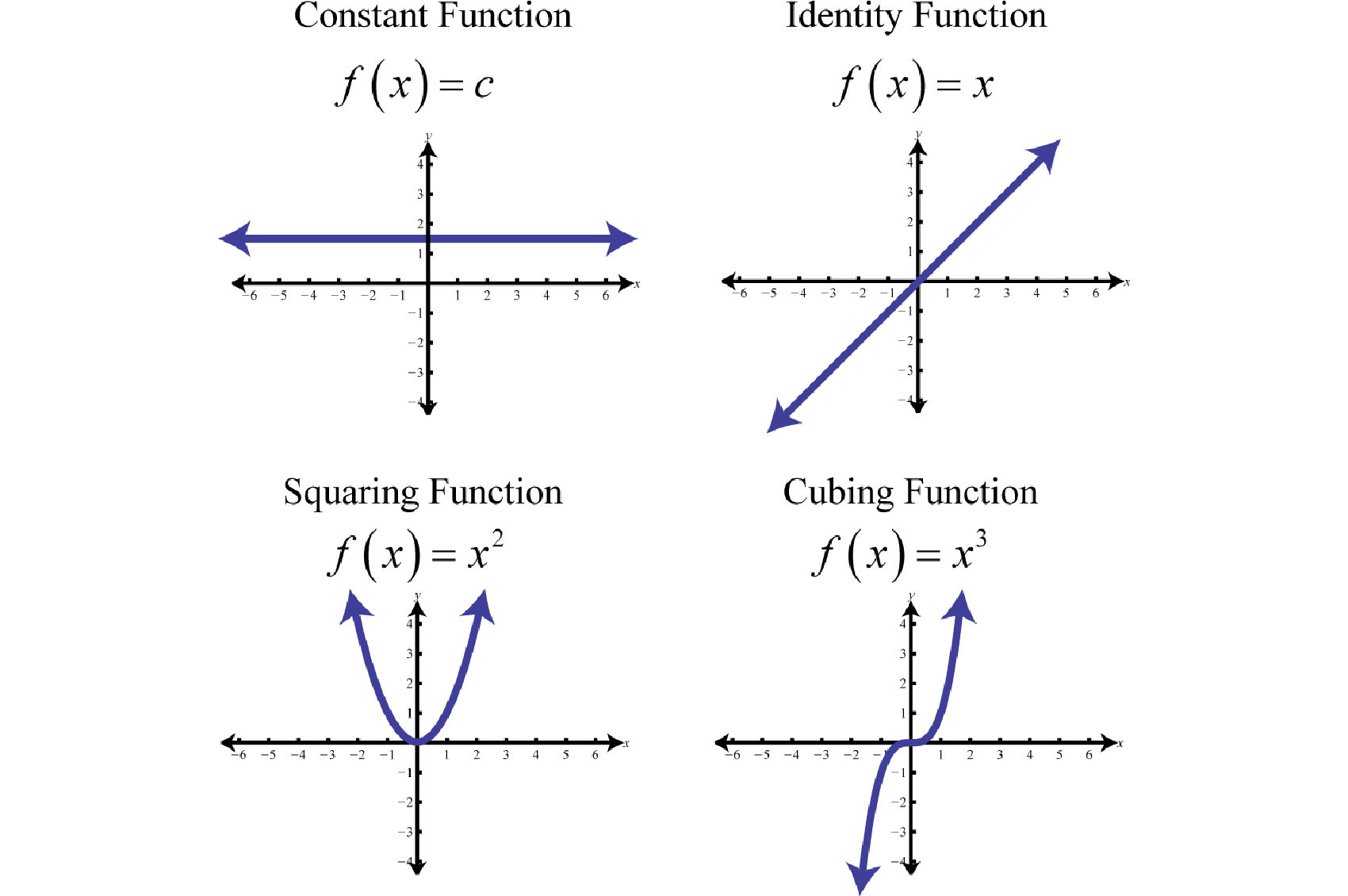
A mathematical function is a formal rule that assigns exactly one output to each input from a specified set. Far from being confined to textbooks, this precise mapping mechanism acts as the invisible framework governing physics, engineering, and digital systems. Whether you're calculating orbital mechanics or rendering 3D graphics, functions translate abstract logic into predictable, physical reality.
Understanding how these relationships operate requires looking beyond basic arithmetic into set theory, calculus, and computational modeling. This guide breaks down the core definition of mathematical functions, explores their structural types, and examines how they power modern technology.
The Core Definition: Sets, Inputs, and Outputs
At its most fundamental level, a function is a special type of relation. In set theory, given a domain (the set of permissible inputs) and a codomain (the set of potential outputs), a function maps every element in the domain to exactly one element in the codomain.
If you have a set of numbers $X$ and a set $Y$, a function $f: X \rightarrow Y$ establishes a strict rule. No input can produce multiple outputs within a single-valued function. This determinism is what makes mathematics reliable for scientific inquiry.
- Domain: The complete set of all possible input values ($x$).
- Codomain / Range: The set of actual output values produced by the function.
- Uniqueness: Each input maps to one and only one output.
Consider a simple algebraic rule like $f(x) = 2x + 3$. If your input $x$ is $4$, the function evaluates strictly to $11$. It can never simultaneously equal $12$ or $15$. This eliminates ambiguity and allows engineers to rely on formulas when building bridges or programming flight control software.
Types of Mathematical Functions
Functions take many forms depending on how inputs relate to outputs. Categorizing them helps mathematicians and scientists select the right model for specific physical phenomena.
Linear and Polynomial Functions
Linear functions feature a constant rate of change, graphed as a straight line. They appear in basic cost estimations, uniform motion calculations, and simple linear regressions.
Polynomial functions incorporate powers of variables, such as quadratic ($x^2$) or cubic ($x^3$) terms. Quadratic functions describe parabolic trajectories, which are essential for calculating projectile motion under gravity as detailed in NASA's Beginner's Guide to Aeronautics.
Exponential and Logarithmic Functions
Exponential growth models situations where the rate of change is proportional to the current value, common in population dynamics and financial compound interest. Logarithmic functions invert this process, scaling down massive numbers into manageable ranges, as seen in the Richter scale for earthquake magnitudes.
Trigonometric Functions
Sine, cosine, and tangent functions model periodic phenomena. Sound waves, alternating electrical currents, and planetary orbits rely on periodic oscillation. Engineers use these functions to analyze wave interference and signal processing in telecommunications.
How Mathematical Functions Shape the Physical World
Abstract formulas become powerful when applied to real-world measurements and physical laws. Physics relies entirely on differential equations—functions that involve rates of change—to describe how systems evolve over time.
Quantum Mechanics and Wave Functions
In subatomic physics, the state of a physical system is described by a wave function, often denoted by the Greek letter psi ($\psi$). According to NIST's Physics Laboratory, these probability amplitudes allow physicists to predict the statistical behavior of electrons and photons. Without complex-valued mathematical functions, semiconductor design and modern electronics wouldn't function.
Algorithms and Computer Science
Every piece of software runs on programmatic functions. When you execute a search query or navigate using GPS, background algorithms execute millions of discrete mathematical operations per second. Graph theory functions calculate the shortest driving routes, while cryptographic functions secure digital banking transactions using modular arithmetic and prime factorization.
Common Misconceptions About Mathematical Functions
People often misunderstand how functions work outside academic contexts. Clearing up these confusions makes it easier to apply mathematical thinking correctly.
- Confusing relations with functions: Not every relation is a function. If an input can produce multiple outputs simultaneously, it fails the vertical line test and is merely a relation.
- Assuming math is static: Functions describe change. Calculus was invented specifically to analyze continuous motion, not static numbers on a grid.
- Viewing abstraction as useless: Abstract spaces and higher-dimensional functions often find unexpected practical applications decades later, such as matrix algebra powering modern machine learning.
Frequently Asked Questions
What is the difference between a domain and a range?
The domain is the complete set of all allowed input values you can feed into a function. The range is the actual set of output values the function produces given those inputs.
Why must a function have only one output per input?
If an input produced multiple outputs, calculations would become ambiguous. Determinism ensures that running the same model under identical conditions always yields identical, verifiable results.
How are functions used in machine learning?
Machine learning models use optimization functions, such as cost or loss functions, to measure error. Algorithms adjust internal weights iteratively to minimize this error, allowing computers to recognize patterns in images or text.
Can a function have multiple inputs?
Yes. Multivariable functions take several inputs—such as temperature, pressure, and humidity—to calculate a single output, like a weather forecast model.


