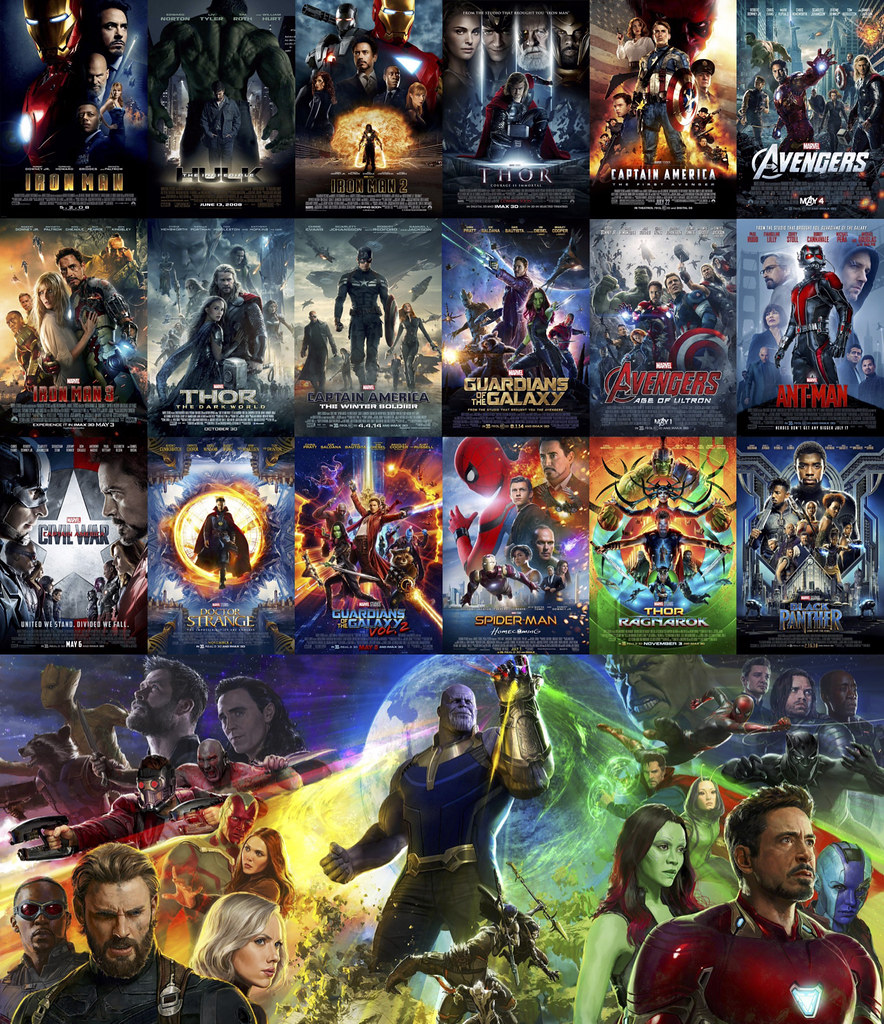
Navigating the sprawling continuity of the Marvel Cinematic Universe requires tracking how dozens of interconnected films weave across decades of in-universe and real-world history. Starting with a single grounded superhero experiment in 2008, the franchise expanded into a multi-tiered cosmic and multiversal blueprint that forever changed Hollywood blockbuster production.
Structuring this massive narrative requires looking past simple release dates to understand chronological placement, phase shifts, and how individual character arcs build toward massive crossover events. Mapping out these structural pillars clarifies how Marvel sustained momentum when other shared universes collapsed under their own weight.
The Foundations: Phase One and Grounded Origins
The initial phase of the franchise established a formula that balanced grounded character flaws with high-stakes sci-fi elements. Iron Man (2008) introduced Tony Stark, setting a template where witty dialogue and vulnerable human motivations anchored fantastical comic book concepts. Instead of starting with a cosmic threat, Marvel focused on personal accountability, corporate espionage, and weapons proliferation.
Expanding this foundation required introducing contrasting tones before assembling the team. The Incredible Hulk (2008) and Thor (2011) tested mystical and scientific extremes, while Captain America: The First Avenger (2011) anchored the historical roots of the timeline in World War II.
[Iron Man (2008)] ──> [Thor (2011)] ──> [Captain America (1945/2011)] ──> [The Avengers (2012)]
When The Avengers hit theaters in 2012, it proved that serialized storytelling across separate franchises could yield a cohesive blockbuster. Director Joss Whedon synchronized disparate character voices, turning what could have been a messy commercial gimmick into a cultural milestone that grossed over $1.5 billion globally.
Expansion and Espionage: Phase Two Realism
Following the initial team-up, Phase Two needed to prevent franchise fatigue by shifting genres. Captain America: The Winter Soldier (2014) discarded traditional superhero tropes for a 1970s-style political thriller, examining government surveillance, preemptive security, and institutional corruption.
Simultaneously, Guardians of the Galaxy (2014) blew the cosmic doors wide open. By leaning into retro pop soundtracks, obscure characters, and galactic humor, Marvel proved audiences would follow characters completely detached from Earth's immediate politics.
- Iron Man 3 (2013) tackled post-traumatic stress and identity crises.
- Thor: The Dark World (2013) introduced the concept of Infinity Stones, laying structural groundwork for future cosmic conflicts.
- Avengers: Age of Ultron (2015) highlighted the internal friction and hubris plaguing the team, setting up ideological fractures.
These entries avoided repetitive plotting by altering the genre expectations of each sequel, ensuring the universe felt lived-in rather than assembly-line manufactured.
The Ideological Divide and Civil War
As the roster expanded, maintaining ideological harmony became impossible. Captain America: Civil War (2016) fractured the Avengers over government oversight through the Sokovia Accords. Rather than relying on an external CGI villain to drive the conflict, the film forced heroes to battle their own ethical dilemmas and past grievances.
This internal rift crippled Earth's defenses right as cosmic threats converged. Introducing mystical dimensions via Doctor Strange (2016) and expanding galactic lore through Guardians of the Galaxy Vol. 2 (2017) stretched the tapestry of the universe to its absolute limits, preparing viewers for an inevitable collision.
The Infinity War and Endgame Climax
The culmination of the first twenty-two films hinged on Thanos, a villain whose motivations shifted the narrative focus from simple conquest to existential equilibrium. Avengers: Infinity War (2018) broke traditional Hollywood conventions by allowing the antagonist to win, wiping out half of all life and leaving the surviving heroes in genuine despair.
Avengers: Endgame (2019) resolved this decade-long arc through a high-stakes time heist. By revisiting key moments from past films, the narrative honored its own history while providing definitive exits for foundational characters like Iron Man and Captain America. Its massive global box office return underscored how deeply audiences invested in serialized, long-form character growth.
Evolution into the Multiverse Saga
With the Infinity Saga concluded, the franchise pivoted toward multiversal mechanics and television integration. Projects like WandaVision (2021) and Loki (2021) utilized streaming platforms to explore grief, bureaucratic time enforcement, and alternate realities.
Managing continuity across both feature films and episodic television introduced fatigue risks, forcing Marvel to reevaluate pacing and quality control. Yet, entries like Spider-Man: No Way Home (2021) demonstrated that nostalgic crossovers could still succeed when anchored by emotional stakes rather than hollow fan service.
Common Timeline Misconceptions
Viewers often trip over specific chronological placements due to flashbacks, parallel storytelling, and cosmic pacing. Avoiding these common tracking errors keeps the narrative coherent.
- Release Order vs. Chronological Order: Watching films strictly by release date differs from in-universe chronology. For instance, Captain America: The First Avenger takes place almost entirely during World War II, decades before modern entries.
- The Blip Gap: The five-year jump between Infinity War (2018) and Endgame (2023) alters the aging and status of characters across subsequent shows and films set in the current era.
- Multiversal Variance: Events depicted in alternate timelines or variant universes do not always alter the primary sacred timeline unless explicitly stated by narrative gatekeepers like the Time Variance Authority.
Frequently Asked Questions
Should I watch the Marvel movies in release order or chronological order?
First-time viewers benefit most from release order, as it preserves the original theatrical rollout, post-credit teasing, and gradual introduction of complex lore. Chronological order works well for repeat viewings or specialized timeline deep dives.
Where does Black Widow fit into the timeline?
Black Widow (2021) is chronologically set immediately after the events of Captain America: Civil War (2016), exploring Natasha Romanoff's past before her appearance in Infinity War.
How do Disney+ TV shows impact the movie timeline?
Shows like Loki, WandaVision, and The Falcon and the Winter Soldier directly set up major cinematic shifts, particularly regarding the multiverse and mantle successions. Skipping them can leave gaps in character motivations during crossover films.
Why did Phase Four shift toward the Multiverse?
After defeating Thanos, the narrative exhausted its immediate cosmic threats. Introducing the multiverse allowed writers to raise the stakes infinitely, explore variant versions of legacy characters, and reset narrative boundaries for upcoming phases.



