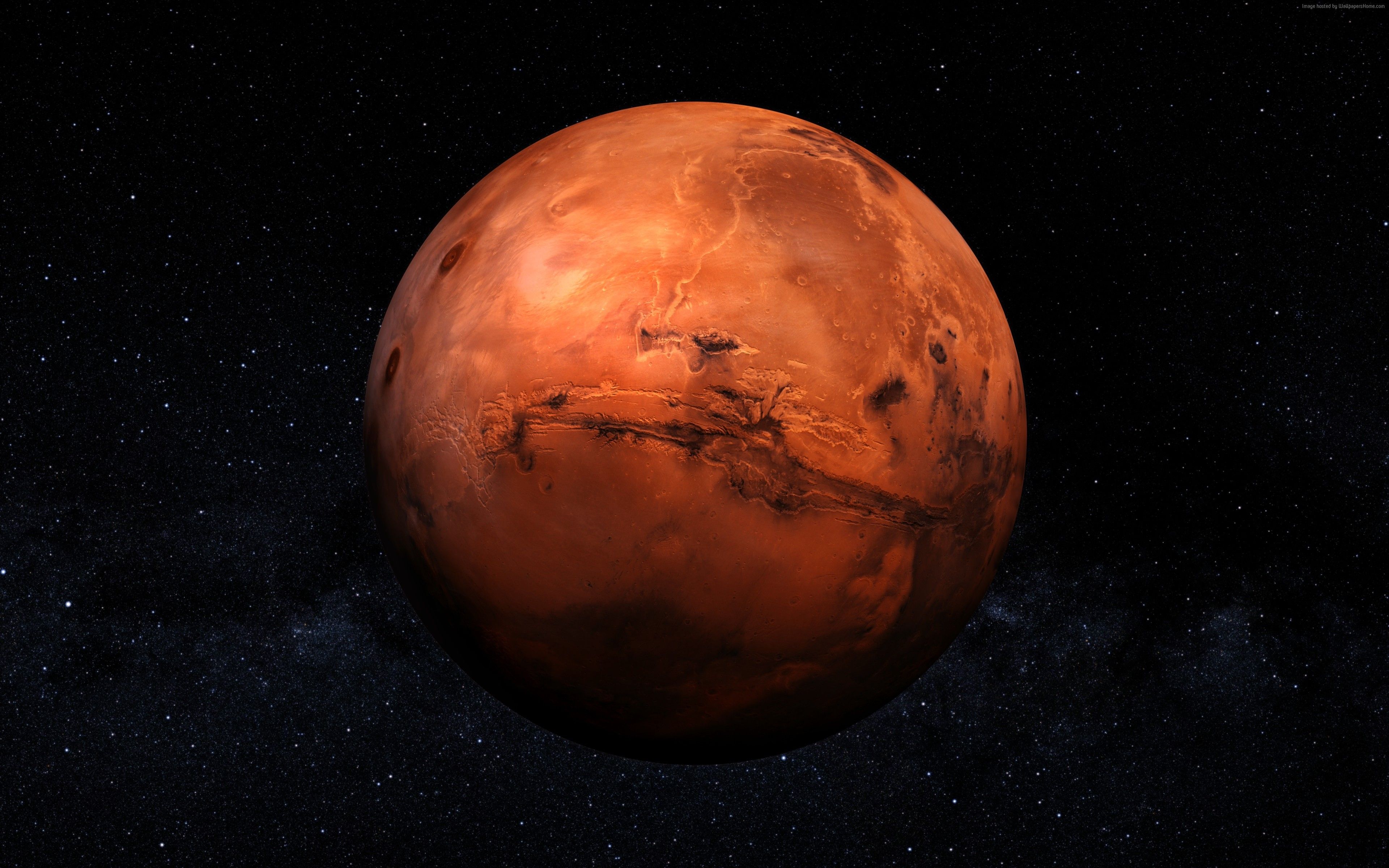
When modern space agencies point rovers at the Martian regolith, they're hunting for fossilized microbial life, ancient riverbeds, and subsurface ice. But an alternative subculture of esoteric thinkers views the Red Planet through an entirely different lens. The concept of the Mars Merkaba Thedford framework blends sacred geometry, ancient mystery school traditions, and planetary mysticism. Instead of treating Mars as a dead, rust-covered rock, this perspective frames it as a resonant node within a wider cosmic grid, pointing toward hidden energetic portals waiting beneath the surface crust.
To understand why this niche concept captures attention, you have to look past standard planetary science and examine how symbolists interpret space. A merkaba—traditionally visualized as a three-dimensional star tetrahedron spinning in opposite directions—represents a vehicle of light, consciousness, and dimensional travel in various esoteric philosophies. When applied to Mars via theoretical constructs like the Thedford framework, proponents argue that planetary bodies generate geometric fields that interact directly with human consciousness. This article breaks down what the Mars Merkaba Thedford theory actually proposes, how it intersects with sacred geometry, and why modern planetary exploration reveals starkly different physical truths.
The Intersection of Sacred Geometry and Planetary Fields
Sacred geometry assumes that basic geometric patterns govern all physical and metaphysical reality. From the golden ratio found in sunflower seeds to the toroidal fields pulsing around stars, shape and frequency are viewed as inseparable. Within esoteric cosmology, planets aren't just lumps of rock and gas floating in random orbits; they are stable nodes maintaining specific harmonic frequencies.
The merkaba structure specifically involves counter-rotating energy fields. When theorists map this geometric concept onto Mars, they suggest a few core principles: Further reporting by Bloomberg highlights comparable perspectives on the subject.
- Resonant Nodes: Specific topological features on Mars—such as the massive Tharsis volcanic plateau or the deep canyon system of Valles Marineris—are viewed as terrestrial alignment points where planetary energy concentrates.
- Dimensional Gateways: Rather than physical doors cut into rock, a celestial gateway in this context describes a shift in frequency, allowing consciousness or subtle forces to interface with different dimensional layers.
- The Red Planet Frequency: Iron oxide gives Mars its signature red hue, and esoteric frameworks often attribute metaphysical properties to iron as a magnetic conductor, linking the planet's physical composition directly to energetic conductivity.
Examining the Claims Against Physical Martian Science
While esoteric literature paints a vivid picture of cosmic architecture, planetary scientists working with data from NASA and the European Space Agency document a vastly different reality. Understanding both viewpoints helps clarify why the Mars Merkaba Thedford concept remains purely in the realm of philosophy rather than empirical science.
Physical data from orbiters like the Mars Reconnaissance Orbiter show that Mars lacks a global intrinsic magnetic field. Without a molten core driving a dynamic dynamo effect similar to Earth's, Mars cannot sustain the complex magnetospheric shields required to anchor energetic toroidal fields in the manner described by sacred geometry models. The canyons and volcanoes are impressive volcanic and tectonic features, formed by ancient mantle plumes and crustal stretching rather than geometric design.
Yet, cultural fascination persists because Mars has long served as a mirror for human imagination. From Percival Lowell's mistaken canals to modern science fiction, humanity projects its desire for higher intelligence and cosmic connection onto our nearest planetary neighbor.
Practical Takeaways for Astroculture Enthusiasts
If you're exploring the intersection of modern astronomy and esoteric philosophy, keeping a balanced perspective ensures you can appreciate both the science and the symbolism.
- Differentiate Myth from Measurement: Enjoy sacred geometry and esoteric frameworks as philosophical tools for creative thinking, but rely on peer-reviewed planetary geology for factual data about Mars.
- Study Real Martian Topography: Familiarize yourself with actual geological landmarks like Olympus Mons and Gale Crater to appreciate the genuine grandeur of planetary evolution.
- Explore the History of Space Mythology: Read up on how humanity's perception of Mars has shifted from the blood-red god of war in antiquity to a target for robotic habitation today.
You can learn more about how planetary missions uncover actual geological history by visiting the NASA Mars Exploration Program. For broader context on how cultural narratives shape space exploration, check out resources from the Smithsonian National Air and Space Museum.
Frequently Asked Questions
What does the term Merkaba mean in esoteric traditions?
The word originates from ancient Hebrew mysticism, translating roughly to "chariot." In modern esoteric teachings, it refers to a divine light vehicle purported to transport or connect human consciousness between dimensions.
Is the Mars Merkaba Thedford framework a recognized scientific theory?
No. It is an esoteric and philosophical concept rather than a peer-reviewed scientific model. Mainstream astronomy and planetary science find no evidence of energetic gateways or conscious geometric grids on Mars.
Why is Mars associated with sacred geometry?
Because of its distinct color, historical visibility in the night sky, and prominent geological formations, Mars has historically attracted symbolic interpretations from various philosophical and astrological traditions.
Where does the name Thedford come from in this context?
In esoteric discourse, specific names often become attached to particular theoretical frameworks, syntheses, or interpretive lenses created by modern writers exploring alternative history and planetary mysticism.



