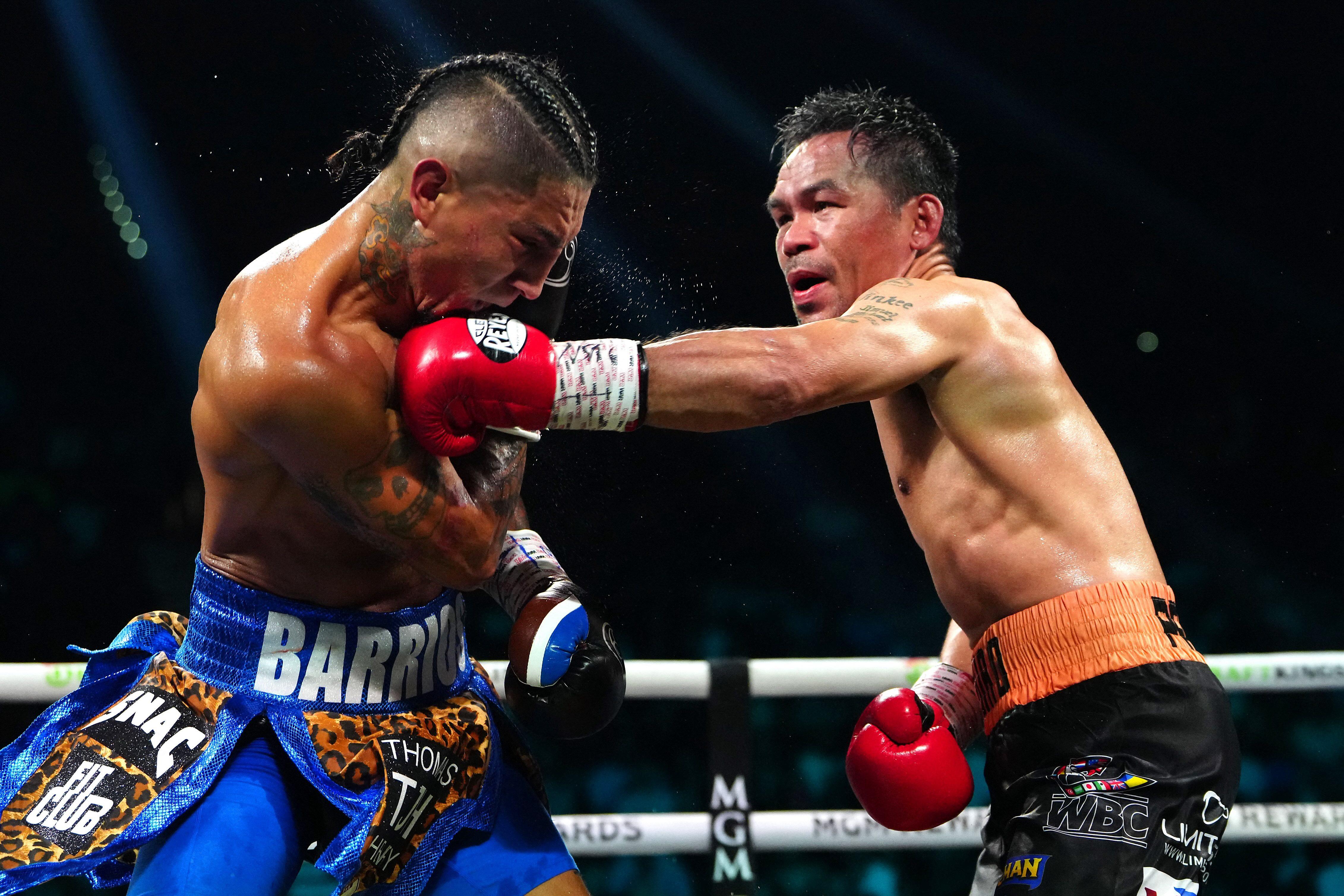
Manny Pacquiao's boxing legacy rests on a foundation that no other fighter in combat sports history has replicated. Securing world titles across eight distinct weight divisions, his career spans four decades of elite competition. Behind his legendary status are concrete numbers: a professional record of 62 wins, 8 losses, and 3 draws, featuring 39 knockout victories.
Starting as a raw, underweight teenager fighting on the streets of General Santos City, Pacquiao built a career defined by blistering southpaw hand speed and exceptional tactical evolution. Understanding the real magnitude of his career requires looking past standard promotional hype to examine the weight classes conquered, the signature rivalries, and the historical statistical markers that set him apart.
The Eight-Division Milestone
The defining statistical achievement of Manny Pacquiao's career is his capture of recognized world championships in eight separate weight classes. This feat stands alone in boxing history. To put this in perspective, most fighters peak within a single two-pound window. Pacquiao moved upward through divisions where he faced naturally larger, heavier opponents who held distinct physical reach advantages.
- Flyweight (112 lbs): Captured his first major world title on December 4, 1998, stopping Chatchai Sasakul.
- Super Bantamweight (122 lbs): Claimed the IBF belt on short notice against Lehlo Ledwaba in June 2001.
- Featherweight (126 lbs): Dominated Mexican icon Marco Antonio Barrera in November 2003.
- Super Featherweight (130 lbs): Won a split decision over Juan Manuel Márquez in 2008.
- Lightweight (135 lbs): Stopped David Díaz in June 2008 to claim the WBC strap.
- Light Welterweight (140 lbs): Defeated Ricky Hatton via a second-round knockout in 2009.
- Welterweight (147 lbs): Overwhelmed Miguel Cotto in a masterclass performance in November 2009.
- Super Welterweight / Junior Middleweight (154 lbs): Outpointed Antonio Margarito in November 2010 to secure a belt at his highest weight threshold.
Moving up nearly 42 pounds from his professional debut weight while retaining his elite hand speed and punching power remains an anomaly in modern sports science.
Defining Rivalries and Era-Defining Fights
Statistical volume alone doesn't explain a legend; the caliber of opposition defines it. Pacquiao built his legacy by fighting the best fighters of his era, often serving as the smaller man.
The Márquez Tetralogy
Few matchups in boxing history match the tactical chess match and sheer volatility of Pacquiao versus Juan Manuel Márquez. Across four fights (a draw, two narrow wins for Pacquiao, and a sixth-round knockout loss in 2012), both men pushed each other to their physical limits. This rivalry proved that Pacquiao's aggressive style came with calculated risks against elite counter-punchers.
Crossing Divisions to Face Legends
Pacquiao didn't wait for legends to drop down; he hunted them at their peaks or natural weight classes. His demolition of Oscar De La Hoya in 2008 forced the "Golden Boy" to retire on his stool, shifting the pay-per-view landscape of the sport. Similarly, his 2019 victory over an undefeated Keith Thurman at age 40 made him the oldest welterweight champion in boxing history, showcasing longevity that defied biological norms for lower-weight fighters.
You can explore comprehensive fighter profiles and historical match breakdowns via BoxRec.
Style Evolution: From Wild Brawler to Master Tactician
Early in his career, Pacquiao was known as a reckless, one-dimensional southpaw who relied purely on overwhelming volume and raw power. Under the guidance of trainer Freddie Roach at the Wild Card Boxing Club, Pacquiao underwent a technical transformation.
- The Right Hook: Roach added a sharp, snapping right hook to complement his legendary straight left hand, giving opponents no safe angle.
- Footwork and Angles: Instead of moving in a straight line, Pacquiao learned to step outside his opponent's lead foot, creating openings against orthodox fighters.
- Pace Management: As he aged into his thirties, he learned to select his spots rather than throwing triple-digit punches every round, preserving his stamina for championship stretches.
Common Misconceptions About Pacquiao's Career
When analyzing boxing history, casual observers often repeat myths regarding weight classes and competition levels.
- The "Catchweight" Myth: Critics sometimes point out that several of Pacquiao's welterweight fights took place at catchweights (such as 142 or 144 pounds). However, these limits were frequently negotiated to level the playing field against naturally larger opponents who rehydrated far past the standard welterweight limit on fight night.
- The Retirement Narrative: Unlike many champions who stay past their prime and suffer consecutive devastating losses, Pacquiao remained competitive into his mid-40s, culminating in a high-level return to the ring against Mario Barrios.
For official athletic commission records and sanctioning body histories, consult the World Boxing Council.
Frequently Asked Questions
How many weight classes did Manny Pacquiao win world titles in?
Manny Pacquiao won recognized world titles in eight distinct weight divisions, ranging from flyweight (112 pounds) to junior middleweight (154 pounds).
What is Manny Pacquiao's professional boxing record?
He finished his primary career and subsequent bouts with a professional record of 62 wins, 8 losses, and 3 draws, with 39 wins coming by way of knockout.
Did Manny Pacquiao fight Floyd Mayweather Jr.?
Yes. They met on May 2, 2015, in Las Vegas, in what became the highest-grossing pay-per-view event in combat sports history, with Mayweather winning a unanimous decision.
What was Manny Pacquiao's signature punch?
His straight left hand from the southpaw stance was his primary weapon, supplemented later in his career by a devastating check hook and rapid multi-angle combinations.



