Living in the Flint Hills means keeping a close eye on the sky during spring and summer. When a tornado warning drops for Manhattan, Kansas, you don't have time to second-guess your shelter plan or look up evacuation procedures. Understanding local risk factors, recognizing warning signs, and knowing where to go can protect you and your family when severe weather strikes.
Understanding Tornado Risk in Riley County
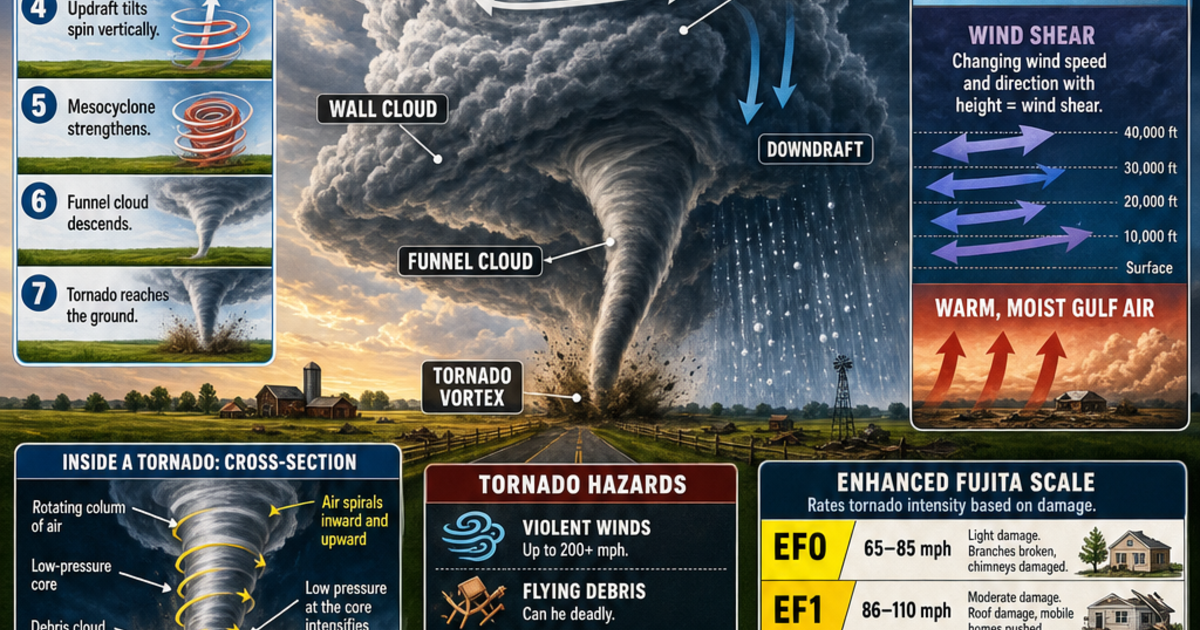
Manhattan sits squarely in a region prone to volatile atmospheric shifts. Warm, moisture-rich air flowing north from the Gulf of Mexico frequently collides with dry, cooler air dropping from the Rocky Mountains over the Great Plains. This clash creates the unstable atmospheric conditions necessary for supercells and severe rotation.
While people often picture flat plains when thinking of Kansas tornadoes, the local topography around Manhattan—marked by rolling hills, river valleys, and bluffs—can complicate wind patterns, though it offers no physical barrier against violent winds. The peak season for severe weather runs from April through June, though tornadoes can develop at any time of year if atmospheric ingredients align.
Immediate Steps When a Tornado Warning is Issued
A tornado watch means conditions are right for severe storms to form. A tornado warning means a tornado has been radar-indicated or spotted on the ground, requiring immediate action.
- Move to the lowest level. Head straight to a full basement or a subterranean storm shelter. If you live in a multi-story apartment building or a home without a basement, go to a windowless interior room on the lowest floor, such as a bathroom, hallway, or walk-in closet.
- Put layers between you and the outside. Cover yourself with heavy blankets, mattresses, or sleeping bags to shield against flying debris. Put on a bicycle helmet or hard hat if you have one nearby to protect your head.
- Secure your pets. Keep a leash or a secure carrier right next to your shelter spot. Scared animals bolt, and finding them during a chaotic weather event is dangerous.
- Monitor live local updates. Keep a battery-powered or hand-crank NOAA Weather Radio nearby, or check trusted local forecasting sources like the National Weather Service Topeka office, which covers Riley County.
Common Safety Mistakes to Avoid
Panic and outdated myths often lead people into dangerous situations during high-wind events. Keep these realities in mind:
- Never seek shelter under a highway overpass. This is a dangerous myth. Overpasses create a wind-tunnel effect that actually increases wind speeds and debris velocity, leaving you completely exposed.
- Don't try to outrun a tornado in a vehicle. If you're driving and spot a tornado, trying to outpace it on local roads is risky. If traffic jams or flying debris trap you, abandon the vehicle for a sturdy building. As a last resort, get out, lie flat in a low ditch or depression, and cover your head.
- Don't stay in mobile homes. Manufactured and mobile homes offer very little resistance to high-winds. Even tied-down units can flip or disintegrate during an EF-2 or stronger tornado. Identify a permanent nearby structure or designated community shelter well before storm season begins.
Building a Practical Emergency Go-Kit
If a tornado strikes your neighborhood, municipal utilities like water, electricity, and gas can go down for days. A well-stocked emergency kit keeps you self-sufficient while first responders clear roads. Pack these essentials into an easy-to-carry waterproof container:
- One gallon of water per person per day for at least three days.
- Non-perishable food items that require no cooking or refrigeration, along with a manual can opener.
- A battery-operated or hand-crank flashlight and extra batteries.
- A fully charged portable power bank to keep cell phones alive.
- A comprehensive first-aid kit, prescription medications, and personal hygiene supplies.
- Cash, copies of important identification documents, and insurance paperwork stored in a waterproof pouch.
Preparing Your Home and Property
Mitigating storm damage starts long before a siren sounds. Walk your property to identify potential wind hazards. Dead tree limbs hanging over your roof should be trimmed back. Patio furniture, trash cans, and garden tools can easily become lethal projectiles in high winds, so secure or store them inside a garage or shed when severe weather approaches.
If you own your home, consider retrofitting your roof with hurricane-style clips or straps to tie the roof framing more securely to the walls. Homeowners looking to invest in maximum protection can consult local contractors regarding certified in-ground or above-ground safe rooms built to FEMA standards.
For local emergency directives, preparedness updates, and community resources, consult the official Riley County Emergency Management portal.
Frequently Asked Questions
Are there public tornado shelters in Manhattan?
Most commercial buildings, apartment complexes, and standard neighborhoods rely on private basements or interior rooms because designated municipal public storm shelters are limited. During widespread emergencies, Riley County Emergency Management coordinates with local agencies to open temporary group shelters if evacuations are necessary. Always identify the safest structural core in your immediate building before a storm hits.
How much warning time do tornadoes usually provide in Kansas?
Lead times vary significantly. Thanks to advanced radar technology operated by the National Weather Service, the average warning time across the United States is around 13 to 15 minutes. However, rain-wrapped tornadoes or fast-moving nocturnal storms can strike with little to no advance warning, which is why monitoring continuous weather alerts is critical.
What should I do if I am caught on Kansas State University campus during a warning?
Students and staff should immediately move away from glass windows and exterior walls. Find interior stairwells, core hallways, or designated severe weather safe areas posted within campus buildings. Pay close attention to official K-State emergency notification channels and outdoor alert sirens.
Does Kansas have a second tornado season in the autumn?
Yes. While spring and early summer experience the highest frequency of severe weather, Kansas occasionally experiences a secondary peak in October and November. Fall storm systems bring strong wind shears that can trigger sudden, fast-moving severe weather outbreaks under cooler atmospheric conditions.



