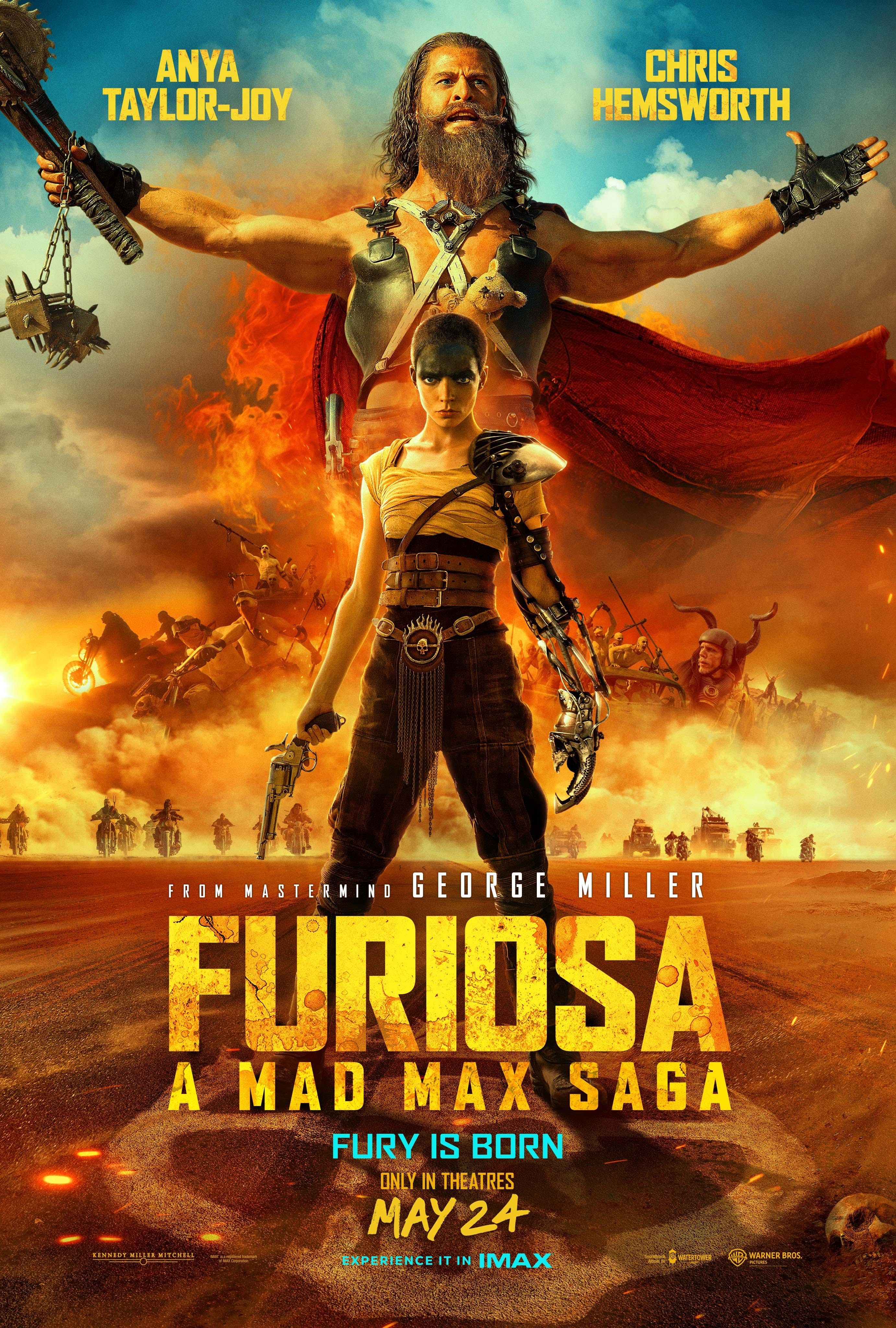
George Miller's Mad Max franchise redefined action cinema by turning rusted steel, roaring V8 engines, and barren deserts into characters of their own. Spanning over four decades, the series charts a trajectory from low-budget exploitation filmmaking in late-1970s Australia to gargantuan cinematic spectacles. The vehicles aren't just props; they're mechanical manifestations of survival, decay, and societal collapse.
Understanding the franchise requires looking past the leather jackets and mohawks to examine how engineering, automotive culture, and cinematic stunt work collided on screen. From the police Interceptor to the war rigs of the wasteland, the franchise uses machinery to anchor its relentless momentum and world-building.
The Genesis of Wasteland Engineering
When the original Mad Max hit theaters in 1979, it arrived on a shoestring budget of roughly 400,000 Australian dollars. Director George Miller, a former emergency room doctor, witnessed firsthand the brutal toll of car crashes on Australian highways. That visceral trauma infused the film's frantic editing and vehicular choreography.
The setting is a near-future Australia experiencing severe societal breakdown due to a global energy crisis. Law enforcement is stretched thin, paving the way for violent motorcycle gangs to terrorize remote highways. Max Rockatansky starts as a patrol officer for the Main Force Patrol (MFP), driving modified Pursuit Specials designed to run down high-speed offenders. As reported in latest articles by Reuters, the results are widespread.
Instead of relying on CGI, Miller and his crew used real stunt drivers, authentic muscle cars, and closed public roads. This grounded approach gave the action a weight and danger that modern digital effects struggle to replicate. Every screech of rubber and crunch of metal felt earned and catastrophic.
The Interceptor and the Evolution of the Road Warrior
The undisputed star of the franchise's first two chapters is the 1973 Ford Falcon XB GT Coupe, modified into the Pursuit Special—commonly known as the Interceptor. With its menacing front nose cone, blown supercharger protruding through the hood, and matte-black finish, the car became an instant cultural icon.
Mad Max (1979)
In the inaugural film, the Interceptor is a sleek weapon of law and order. It represents the last vestige of institutional control before civilization completely unravels. Max uses it to hunt down gangs like the Nightrider and Toecutter's crew, establishing the vehicle as a symbol of solitary vengeance.
Mad Max 2: The Road Warrior (1981)
By the second installment, society has collapsed entirely following a global nuclear war. The Interceptor returns, but it's battle-scarred, fitted with auxiliary fuel tanks in the back, and modified for desert warfare. Max operates as a nomadic survivor trading fuel for survival. When the vehicle is ultimately destroyed in a brutal ambush by Lord Humungus's marauders, it marks the definitive death of Max's old life.
Expanding the Wasteland Sandbox
As the budgets grew, so did the scale of the machinery. Mad Max Beyond Thunderdome (1985) introduced Bartertown, a settlement fueled by methane gas harvested from pig excrement. While the film leaned slightly more into traditional Hollywood adventure tropes, it maintained a fascination with jury-rigged transport, featuring vehicles powered by everything from steam to camel-drawn carts.
Decades later, Mad Max: Fury Road (2015) recalibrated the genre entirely. Miller spent years designing thousands of storyboards before filming, creating a kinetic masterpiece that functions as a continuous, feature-length chase sequence.
The vehicles in Fury Road reflect the resourcefulness of Immortan Joe's Citadel. The Gigahorse—a Frankenstein creation built from two 1959 Cadillac Coupe de Villes stacked on top of each other with twin V8 engines—exemplifies the tyrannical excess of the wasteland's warlords. Meanwhile, the War Rig serves as a rolling fortress designed to transport precious water and gasoline across treacherous terrain.
Behind the Practical Stunt Work
What separates Mad Max from standard Hollywood action fare is its commitment to practical stunts. According to production notes from Warner Bros., over eighty distinct vehicles were built for Fury Road, and nearly ninety percent of the stunts were executed physically on location in the Namib Desert.
Stunt coordinators engineered roll cages, reinforced suspensions, and safety harnesses capable of withstanding high-speed collisions in deep sand. Stunt performers launched themselves across moving trucks using heavy-duty sway poles, a technique inspired by traditional circuses and refined for cinema. This dedication to physical reality creates a tangible sense of peril. When a vehicle flips or explodes, the audience feels the concussive force because the explosion is genuinely happening on set.
Common Misconceptions About the Franchise
- It's a continuous chronological narrative: Many viewers assume the films follow a strict linear timeline with the same aging protagonist. In reality, the films function more like campfire legends told about a mythic wandering hero, with shifting technological levels and ambiguous temporal gaps between entries.
- The Interceptor survives the apocalypse intact: The vehicle undergoes radical transformations between the first and second films, reflecting Max's descent from a functioning officer of the law into a feral survivor.
- It is purely dystopian sci-fi: George Miller has frequently noted that the apocalyptic elements were simply a narrative device to strip away modern conveniences and examine core human behavior under extreme pressure.
Frequently Asked Questions
What car was used as the original Mad Max Interceptor?
The iconic vehicle was a 1973 Ford Falcon XB GT Coupe, modified specifically for the film by stunt coordinator and mechanic Murray Smith. It featured a fiberglass nose cone and a dummy Mooneyham 6-71 supercharger shell mounted to the intake manifold.
Was George Miller a filmmaker before making Mad Max?
No. Miller trained and worked as a medical doctor in Sydney before transitioning to filmmaking. His medical background heavily influenced the graphic, realistic injuries and vehicular trauma depicted throughout the franchise.
Are the stunts in Mad Max: Fury Road CGI?
While digital tools were used to remove safety wires, clean up desert backgrounds, and enhance skies, the vast majority of crashes, flips, and collisions were performed live with real stunt drivers and specialized rigging.
Where can I watch the Mad Max series?
The films are distributed by Warner Bros. and are available to stream or rent across various digital platforms, including Apple TV and Prime Video.



