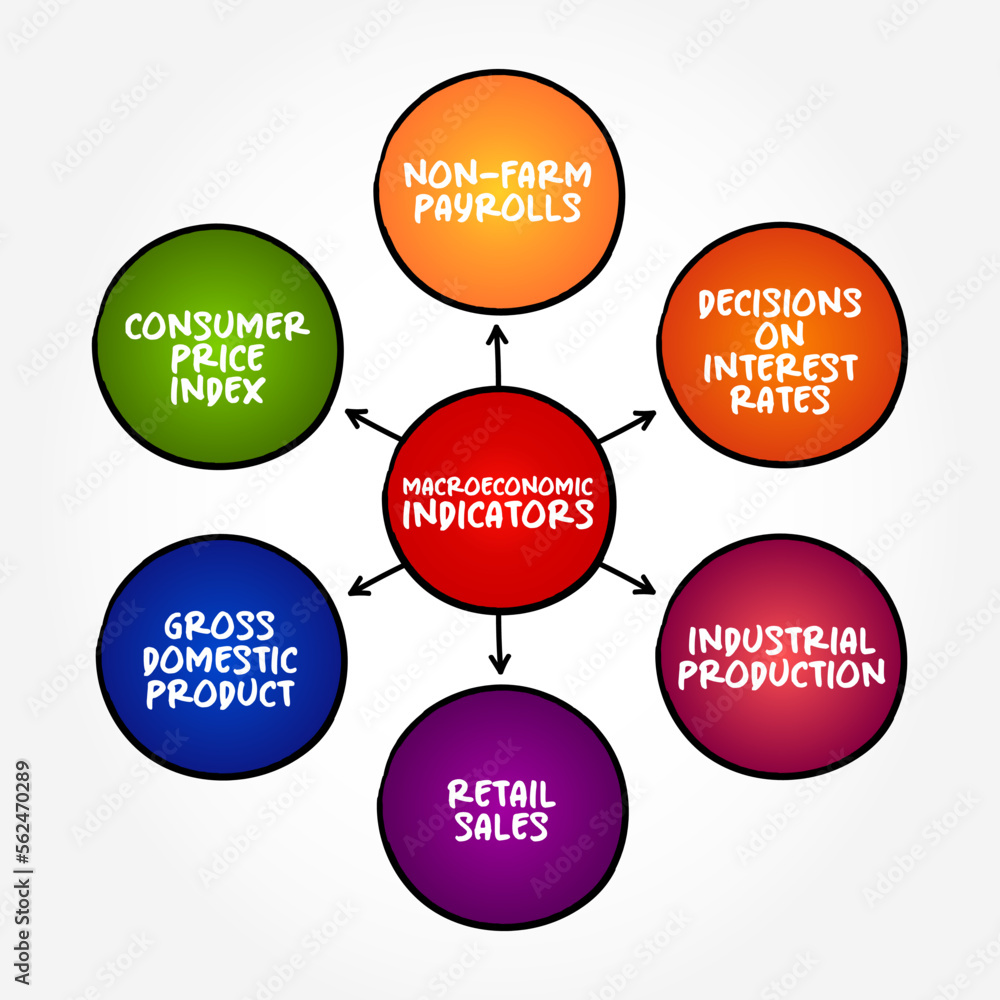
Macroeconomics looks at the entire economic machine rather than individual households or single companies. It tracks broad indicators like total national output, overall price levels, and nationwide employment to understand how countries grow, suffer recessions, and manage financial stability. When central banks adjust interest rates or governments pass spending bills, they rely on macroeconomic principles to steer the ship.
Understanding this field requires looking past daily financial headlines and grasping how core metrics interconnect. If you've ever wondered why a central bank raises rates to fight inflation or how a drop in consumer spending triggers a broader slowdown, you're already asking macroeconomic questions. Let's break down how the system operates, how economists measure its health, and how policy decisions ripple through everyday life.
The Core Metrics of Economic Health
Economists monitor three primary indicators to judge whether an economy is thriving, sputtering, or overheating. These metrics form the dashboard that policymakers use when deciding whether to step on the economic gas pedal or apply the brakes.
Gross Domestic Product (GDP)
Gross Domestic Product measures the total monetary value of all finished goods and services produced within a country over a specific period. It serves as the ultimate scorecard for national economic output.
GDP breaks down into four main components: consumer spending, business investment, government expenditures, and net exports. Consumer spending typically makes up the largest share in developed nations, meaning that everyday purchases by households drive most economic momentum. Economists look at real GDP, which adjusts for inflation, to see if an economy is genuinely producing more stuff rather than just experiencing higher prices.
Inflation and the Purchasing Power of Money
Inflation tracks how fast the general price level for goods and services rises over time, which directly reduces what a single currency unit can buy. A moderate, predictable inflation rate of around two percent per year is common in stable economies, as it encourages spending and investment rather than hoarding cash.
Unchecked inflation destroys savings and hurts fixed-income earners. Central banks measure inflation using indexes like the Consumer Price Index, which tracks a basket of common consumer goods, and the Personal Consumption Expenditures price index. When prices spike too quickly, central banks typically step in to cool demand.
Unemployment Dynamics
The unemployment rate measures the percentage of the labor force that is jobless, available, and actively looking for work. It doesn't count people who have given up looking or those stuck in part-time jobs when they want full-time work.
Low unemployment feels great for workers because companies compete for talent by raising wages. Yet, if joblessness drops too low, labor shortages can push wages up so fast that businesses raise prices, sparking wage-price spirals. Economists track the natural rate of unemployment to find the sweet spot where joblessness is low without igniting runaway inflation.
Monetary Policy vs. Fiscal Policy
Governments and central banks use two main toolkits to manage the business cycle: monetary policy and fiscal policy. While they share the same goals of stable prices and steady growth, different institutions pull the levers.
Monetary Policy and Central Banks
Monetary policy is controlled by a nation's central bank, such as the Federal Reserve in the United States or the European Central Bank. Central banks manage the money supply and set benchmark interest rates.
When an economy slips into a recession, the central bank cuts interest rates. Cheaper borrowing costs encourage businesses to invest in new projects and consumers to buy homes and cars, injecting life back into economic activity. Conversely, if inflation heats up, the central bank raises rates to make borrowing expensive, slowing down spending and cooling off price pressures. For more details on how central institutions operate, you can check the Federal Reserve overview on monetary policy.
Fiscal Policy and Government Budgets
Fiscal policy involves government taxation and spending decisions. Elected officials write these policies into law through national budgets and legislative packages.
During a downturn, governments can run a budget deficit by spending money on infrastructure projects or sending relief checks to households. This direct injection of cash boosts aggregate demand when the private sector is hoarding money. When the economy overheats, governments can raise taxes or trim spending to pull money out of circulation.
Major Economic Schools of Thought
Macroeconomics isn't a monolith. Economists disagree on how economies self-correct and how much government intervention is necessary. Understanding these foundational schools helps explain why policymakers often clash over the right response to a crisis.
Classical and Neoclassical Economics
Classical economists argue that free markets naturally correct themselves over time. If a recession hits, wages and prices will drop until everything clears, restoring full employment without needing government rescue packages. Neoclassical thought builds on this by emphasizing rational consumer choices and mathematical modeling to predict market behavior.
Keynesian Economics
Developed by John Maynard Keynes during the Great Depression, Keynesian economics argues that free markets don't always self-correct quickly enough to prevent widespread suffering. During severe downturns, private demand collapses, and businesses stop investing. Keynesians argue that governments must step in with public spending to bridge the gap until private demand recovers.
Monetarism
Championed by Milton Friedman, monetarism places the money supply at the center of macroeconomic performance. Monetarists believe that inflation is always and everywhere a monetary phenomenon caused by printing too much money. They advocate for steady, predictable growth in the money supply rather than active fine-tuning of interest rates or government spending.
Common Economic Misconceptions
People often misunderstand how macroeconomic forces translate into everyday reality. Clearing up these myths makes it easier to spot sound policy from political noise.
- National debt works like household debt: Countries issue debt in their own currencies and rarely face the strict retirement deadlines that families do. While high debt-to-GDP ratios matter for long-term stability, sovereign governments can service debt over generations.
- Low unemployment is always universally good: While job growth helps workers, ultra-low unemployment often triggers severe wage inflation, forcing central banks to slam the brakes with high interest rates that can induce recessions.
- Trade deficits mean a country is losing: A trade deficit simply means a nation imports more physical goods than it exports, often because domestic consumers have strong purchasing power and foreign investors eagerly pour money into local assets.
Frequently Asked Questions
What causes a recession?
Recessions typically start when a major shock hits the economy, such as a financial panic, a spike in energy prices, or aggressive interest rate hikes by central banks meant to stop inflation. This shock causes businesses and consumers to pull back spending, leading to falling output and rising layoffs.
How does international trade affect macroeconomics?
Trade allows countries to specialize in producing goods where they hold a comparative advantage. Imports can lower prices for local consumers, while exports support domestic manufacturing and service sectors. Exchange rates tie these trade flows together, shifting global competitiveness as currencies rise and fall in value.
Why can't central banks keep interest rates at zero forever?
Keeping interest rates at zero for too long removes the cost of capital, which encourages reckless risk-taking, asset bubbles in housing or stocks, and eventually unanchored inflation that destroys the value of savings.
What is stagflation?
Stagflation is a rare and painful economic condition where stagnant economic growth combines with high unemployment and high inflation at the same time. Traditional monetary tools struggle here because raising rates to fight inflation can worsen unemployment, while cutting rates to fix joblessness can make inflation worse.



