Luxor sits on the east bank of the Nile River as the world's greatest open-air museum. Built upon the ruins of ancient Thebes, the pharaohs' capital during the height of their empire between the sixteenth and eleventh centuries BCE, the city divides neatly into two distinct archaeological zones. The East Bank holds the massive sanctuaries of the living, while the West Bank harbors the hidden tombs of the dead. If you're planning a trip to Egypt, understanding how to navigate this ancient landscape separates a rushed tourist bus tour from a profound historical experience.
Most visitors arrive via a domestic flight from Cairo or a multi-day Nile cruise docking right along the corniche. You don't need weeks to see the highlights, but rushing through in a single afternoon leaves you exhausted and overwhelmed by the sheer scale of sandstone and hieroglyphs. Below is a practical breakdown of what to see, how to avoid common tourist traps, and how to experience Luxor without burning out in the desert heat.
The East Bank: Temples of the Living
The East Bank of Luxor represents the realm of the sun, creation, and daily religious life in ancient Thebes. This is where pharaohs demonstrated their divine right to rule through monumental architecture and massive public festivals.
Karnak Temple Complex
Covering over two hundred acres, Karnak isn't just a single temple; it's a vast sprawling city of shrines, pylons, and obelisks built over a period of fifteen hundred years. To explore the bigger picture, check out the detailed article by Lonely Planet.
- The Hypostyle Hall: Walking through this hall feels like standing inside a petrified forest of stone. One hundred and thirty-four colossal sandstone columns tower overhead, their bell-shaped capitals carved with delicate lotus and papyrus motifs.
- The Sacred Lake: A deep rectangular basin where temple priests once purified themselves before performing dawn rituals for Amun-Ra.
- The Open-Air Museum: A quieter section holding reconstructed shrines from earlier pharaohs that were dismantled and used as core fill for later pylons.
Give yourself at least three hours here. Hire a certified local guide at the gate rather than joining a massive tour group so you can set your own pace through the Hall of Records and the Festival Hall of Thutmose III.
Luxor Temple
Located right in the modern downtown area, Luxor Temple was dedicated to the rejuvenation of kingship rather than a specific single god. It served as the southern terminus for the ancient Opet Festival, an annual event where divine statues were barged down from Karnak to unite the earthly king with his divine essence.
- The Avenue of Sphinxes: A nearly two-and-a-half-kilometer processional way lined with hundreds of human-headed and lion-headed sphinxes connecting Luxor Temple directly to Karnak.
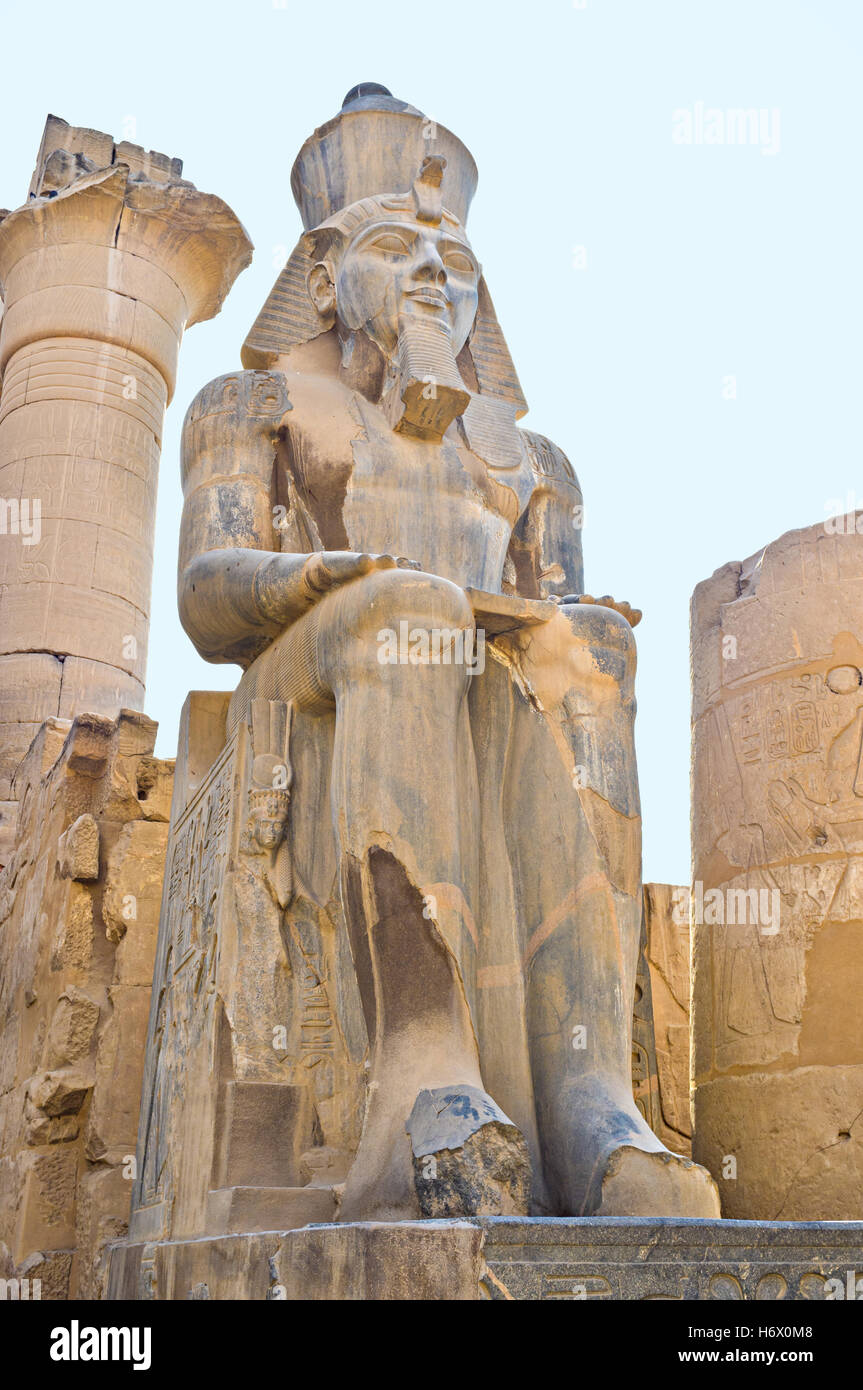
- Ramesses II Pylon: The monumental gateway guarded by colossal seated statues of the pharaoh and the surviving pink granite obelisk. Its twin once left Egypt and now stands proudly in the Place de la Concorde in Paris.
- The Abu Haggag Mosque: Built directly into the medieval and Roman ruins of the ancient temple courtyard, this active mosque proves Luxor has remained a living settlement across millennia.
Visit Luxor Temple late in the afternoon just before sunset. As dusk settles, the floodlights turn on, casting dramatic shadows across the reliefs and giving the sandstone a golden amber glow.
The West Bank: Realm of the Afterlife
Crossing the Nile by public ferry or private motorboat brings you to the West Bank, a stark, arid landscape framed by the jagged limestone peaks of the Theban Hills.
Valley of the Kings
Hidden deep in a desolate valley, sixty-three royal tombs are burrowed deep into the rock. Ancient architects deliberately chose this secluded desert canyon to foil tomb robbers, though nearly all were plundered in antiquity except for the famous tomb of Tutankhamun.
- General Ticket Rules: Your standard entry ticket grants access to any three tombs from a rotating list. Tombs like Ramesses IV, Ramesses IX, and Merenptah feature remarkably intact painted ceilings and long descent corridors.
- Special Ticket Tombs: You'll need separate, more expensive tickets for the tombs of Seti I, Ramesses V/VI, and Tutankhamun. The tomb of Seti I is the crown jewel of the valley, featuring brilliant, pristine wall reliefs across multiple underground chambers.
- Photography Rules: You can buy a designated camera pass at the ticket office if you want to shoot without flash using your phone inside the tombs.
Temple of Hatshepsut at Deir el-Bahari
Carved into the sheer limestone cliffs, the mortuary temple of Egypt's most famous female pharaoh looks startlingly modern with its clean colonnaded terraces. Hatshepsut declared herself king and built a terraced sanctuary that celebrated her divine birth and successful trade expeditions to the distant land of Punt. Walk up the central ramp slowly and examine the remarkably preserved painted reliefs depicting trading ships laden with myrrh trees and exotic animals.
Colossi of Memnon
These twin towering sixty-foot statues of Amenhotep III sit right beside the main road on the floodplains. Originally guarding the pharaoh's vanished mortuary temple, they earned fame in the Greco-Roman world when an earthquake cracked the northern statue, causing it to emit a musical whistling sound at sunrise. Roman tourists carved dozens of ancient Greek and Latin graffiti inscriptions into the stone legs, praising the mythical hero Memnon.
Practical Planning and Common Mistakes
A successful trip to Luxor requires navigating desert temperatures, persistent local vendors, and strict timing schedules.
- Beat the Heat: Summer temperatures easily exceed 105 degrees Fahrenheit. Schedule all heavy outdoor exploration, especially the Valley of the Kings and Karnak, for early morning between 6:00 AM and 10:00 AM.
- Transportation Strategy: Book a reliable local driver for the West Bank day trip. Taxis waiting at the ferry landing often quote inflated prices or attempt detours to overpriced alabaster workshops unless you negotiate a fixed rate beforehand.
- Currency and Cash: Always keep crisp Egyptian pound banknotes in small denominations for tipping bathroom attendants, ticket inspectors, and boat drivers. Many ticket booths and local shops do not reliably process international credit cards.
- Dress Appropriately: Luxor is a conservative cultural hub. Both men and women should wear lightweight, breathable clothing that covers shoulders and knees out of respect for local customs and religious sites.
For official updates on ticket pricing, opening hours, and site closures, check the Ministry of Tourism and Antiquities portal before you travel. You can also review current travel safety updates through the U.S. Department of State Egypt Country Information page.
Frequently Asked Questions
How many days should I spend in Luxor?
Plan for a minimum of two full days. Dedicate one full morning to the East Bank temples and afternoon felucca sailing on the Nile, and reserve a separate morning for the West Bank tombs and Hatshepsut's temple. Three days allows a slower pace or a day trip north to Abydos and Dendera.
Can I visit the Valley of the Kings without a tour guide?
Yes, you can explore independently by taking a taxi or rental car from the West Bank ferry dock. However, hiring a licensed Egyptologist at the visitor center transforms unlabelled stone walls into vivid stories of ancient mythology, weighing of the heart ceremonies, and royal burial rites.
Which tombs are worth visiting in the Valley of the Kings?
The standard ticket usually covers tombs like Ramesses IV, Merenptah, and Tassili or KV11 (Ramesses III), which feature deep, colorful corridors. If your budget allows, buying the extra ticket for Ramesses V/VI offers some of the most vibrant astronomical ceiling paintings in the entire necropolis.
Is it safe to take a hot air balloon ride over Luxor at sunrise?
Hot air balloon flights over the West Bank at dawn are extremely popular and operate daily weather permitting. Book exclusively through well-reviewed, licensed operators that adhere to strict aviation safety standards and morning wind clearance checks.



