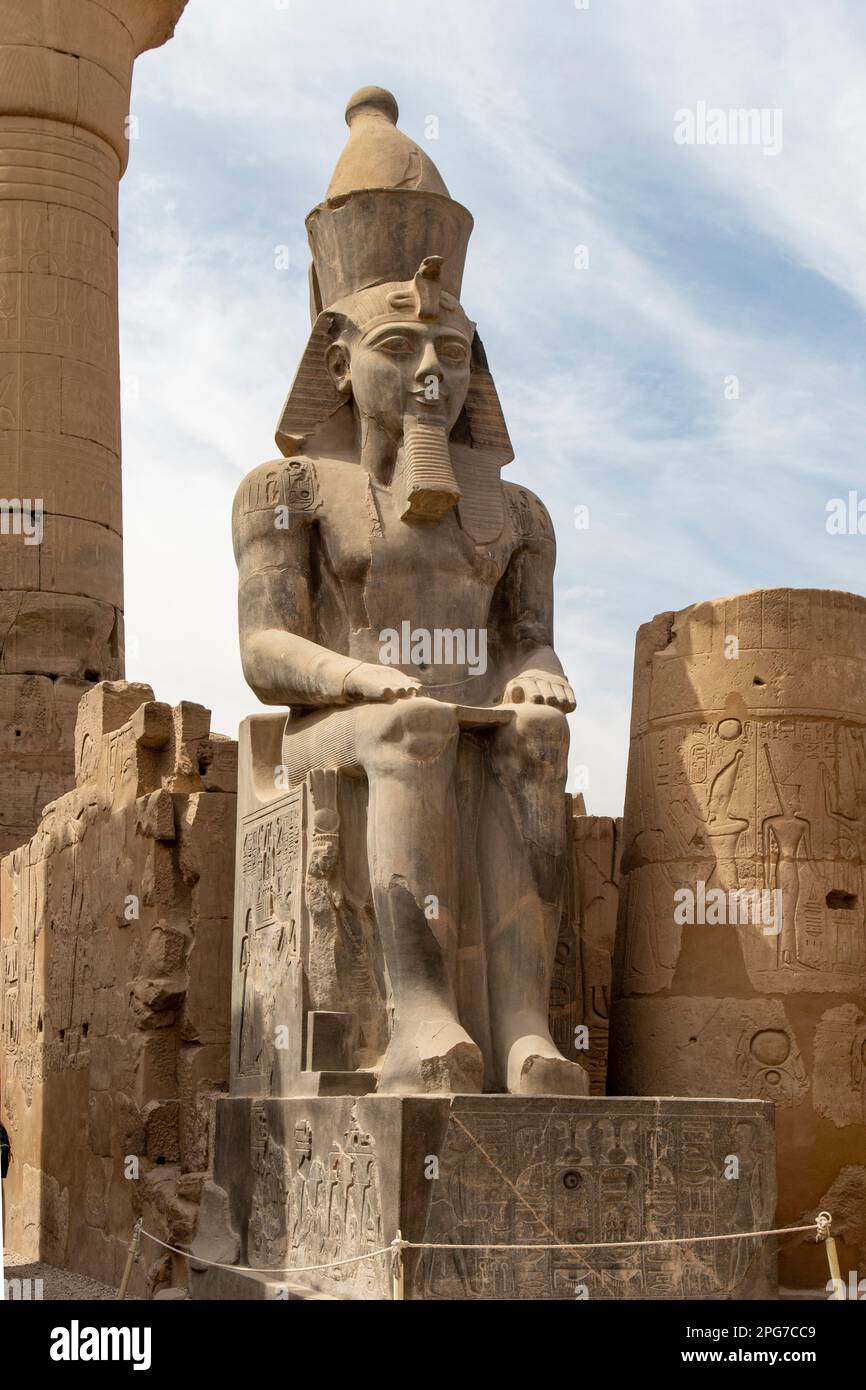
Understanding Luxor: Definition and Origins
Luxor is a modern city in southern Egypt built upon the ruins of ancient Thebes, the political and religious capital of the Egyptian New Kingdom. The word Luxor derives from the Arabic term al-quṣūr, meaning "the palaces" or "fortresses," which refers to the massive stone monuments left behind by ancient pharaohs. Ancient Egyptians originally called the city Waset, while the Greeks named it Thebes. Today, historians define Luxor not merely as a geographic location, but as an open-air museum holding some of the most concentrated archaeological treasures on Earth.
Positioned along the east and west banks of the Nile River, Luxor functioned as the primary cult center for the god Amun-Ra. Its monuments were designed to project divine order, royal authority, and eternal legacy into stone. To grasp why this site remains a focal point of historical study, we must examine how a regional settlement evolved into an imperial capital and why its architectural blueprint survived millennia.
The Rise of Thebes: From Local Town to Imperial Capital
The prominence of Luxor began long before the New Kingdom era. During the Old Kingdom, the area operated as a modest administrative outpost. Political fragmentation during the First Intermediate Period changed its trajectory when local rulers unified Egypt from the south.
- The Middle Kingdom Foundation: Mentuhotep II reunified the country during the Eleventh Dynasty, elevating Thebes to regional prominence.
- The New Kingdom Golden Age: Spanning the Eighteenth through Twentieth Dynasties (roughly 1550 to 1069 BCE), Thebes transformed into an international imperial hub.
- The Cult of Amun-Ra: Local deity Amun merged with the sun god Ra, securing vast wealth and land donations that funded massive civic and religious building projects.
Pharaohs poured gold, tribute, and labor into the city. According to records from the Egyptian Ministry of Tourism and Antiquities, this concentration of wealth allowed architects to scale stone construction to unprecedented heights, establishing Thebes as the undisputed heart of the empire.
The Dual Landscape: Living Cities and Eternal Tombs
A defining characteristic of ancient Luxor is its geographical split across the Nile, reflecting Egyptian beliefs about life, death, and cosmic rebirth.
+-------------------------------------------------------+
|                    THE NILE RIVER                     |
|                                                       |
|   East Bank (The Living)      West Bank (The Dead)    |
|   - Karnak Temple Complex     - Valley of the Kings   |
|   - Luxor Temple              - Mortuary Temples      |
|   - Daily Rituals             - Ancestral Cults       |
+-------------------------------------------------------+
The East Bank: Temples of Light and Kingship
The East Bank represented the realm of the living and the rising sun. Here stand the Karnak and Luxor temples, connected historically by a three-kilometer-long Avenue of Sphinxes. Luxor Temple, initiated by Amenhotep III and expanded by Ramesses II, served as the setting for the Opet Festival. During this annual celebration, statues of the divine triad—Amun, Mut, and Khonsu—traveled from Karnak to Luxor Temple to reaffirm the pharaoh's divine right to rule.
The West Bank: The Horizon of Eternity
Across the river, where the sun set behind the limestone cliffs, lay the necropolis. The Valley of the Kings and the Valley of the Queens house subterranean rock-cut tombs carved for monarchs like Tutankhamun, Hatshepsut, and Ramesses the Great. These spaces were engineered to protect the royal mummy and guide the soul through the hazards of the underworld toward eternal dawn.
Common Misconceptions About Luxor and Thebes
When studying ancient Egyptian capitals, people often run into persistent myths. Clarifying these points prevents historical confusion:
- Misconception 1: Luxor and Thebes are entirely different places. In reality, Luxor is simply the modern Arabic name for the site that the ancient Greeks called Thebes and the ancient Egyptians called Waset.
- Misconception 2: Pyramids dominate the landscape of Luxor. Unlike Giza, Luxor features zero true pyramids. Its monumental architecture centers entirely on pylon temples, hypostyle halls, and hidden rock-cut shaft tombs.
- Misconception 3: The city was abandoned after the New Kingdom. While its political power waned as capitals shifted to Memphis, Alexandria, or Cairo, Luxor remained continuously populated through Greco-Roman, Coptic, and Islamic eras.
Frequently Asked Questions
What does the name Luxor actually mean?
The name originates from the Arabic word al-quṣūr, which translates to "the palaces" or "the castles," reflecting the profound impression that towering pharaonic ruins made on early Arab explorers.
Why was Luxor so important to ancient Egyptians?
It served as the religious epicenter of the empire and home to Amun-Ra, the king of gods. Controlling Luxor meant controlling the religious legitimacy required to rule all of Egypt.
How did the ancient Egyptians build such massive monuments without modern machinery?
Builders utilized copper chisels, wooden mallets, stone pounders, and extensive ramp systems, relying on the seasonal Nile flood cycle to transport heavy sandstone blocks from quarries near Gebel Silsila.
What is the difference between Karnak and Luxor temples?
Karnak was a vast, sprawling state sanctuary dedicated primarily to Amun-Ra over centuries by multiple pharaohs, whereas Luxor Temple was focused more intimately on the divine rejuvenation of kingship. Comprehensive details are maintained by the UNESCO World Heritage Centre.



