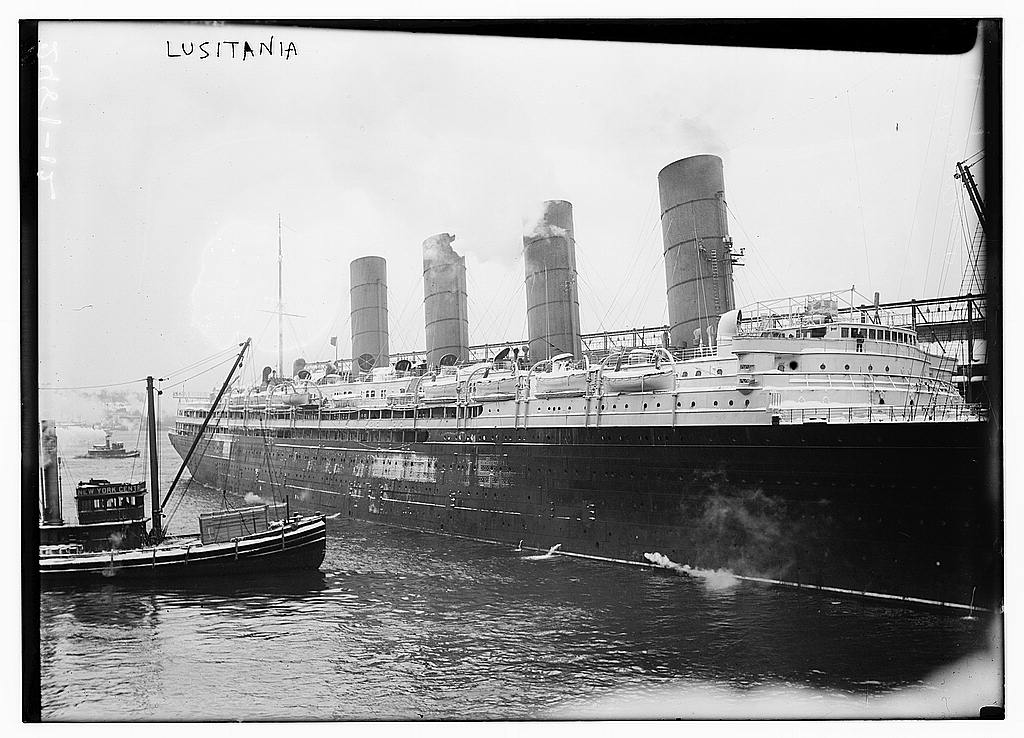
On the afternoon of May 7, 1915, a single torpedo fired from a German U-boat struck the British ocean liner RMS Lusitania off the southern coast of Ireland. Within eighteen minutes, the magnificent "Greyhound of the Seas" slipped beneath the waves, taking 1,198 lives with her, including 128 Americans. While popular myth often casts this tragedy as the immediate catalyst that dragged the United States into World War I, the historical reality is far more complex. The attack shocked global public opinion, redefined modern naval warfare, and transformed civilian safety, but it took nearly two more years of geopolitical friction before America officially entered the conflict.
Understanding the disaster requires looking beyond the emotional shockwave to examine the naval strategies, intelligence failures, and political pressures that shaped May 1915. This breakdown explores why the ship sank so quickly, how leaders reacted, and what the tragedy actually meant for the trajectory of the Great War.
The Strategic Trap: Blockades and U-Boats
By 1915, Europe was locked in a brutal stalemate. Great Britain leveraged its massive surface fleet to enforce a tight naval blockade, cutting off food, fuel, and industrial supplies from reaching German ports. Germany, unable to challenge the British Royal Navy directly on equal terms, turned to a terrifying new weapon: the Unterseeboot, or U-boat.
Operating beneath the surface, these submarines could bypass surface blockades and sink merchant shipping. In February 1915, Berlin declared the waters surrounding the British Isles a war zone, warning that any allied merchant vessel encountered would be destroyed without warning.
- The German Warning: Just weeks before the final voyage, the Imperial German Embassy in Washington placed newspaper advertisements directly alongside passenger sailings for the Lusitania, cautioning travelers that ships flying the British flag were legitimate targets in the declared war zone.
- The Cargo Controversy: The Lusitania was a civilian passenger liner, but it was also registered as an auxiliary cruiser and carried roughly 4,200 cases of rifle ammunition and artillery shells in its cargo hold. This cargo gave Germany a propaganda justification, though international maritime law still required the safety of passengers and crew before destruction.
Minutes to Disaster: The Attack Off Kinsale
Captain Walther Schwieger of the German submarine U-20 spotted the massive four-funnel liner through his periscope at 1:20 p.m. on May 7. Misjudging the ship's speed and maneuvering angles, Schwieger fired a single gyroscopic torpedo from roughly 700 meters.
The torpedo struck the starboard side right behind the bridge at 2:10 p.m. A muffled explosion was immediately followed by a second, far more violent blast. Decades of historical debate have centered on that second explosion; while coal dust or residual steam lines played a part, historians generally agree that the detonation ignited the small-arms ammunition stored inside the forward hold.
- Power Failure: The blast severed steam lines and knocked out the ship's electrical grid within minutes, plunging interior corridors into darkness and preventing the wireless room from operating at full capacity.
- The List: Because power failed, the ship's massive steam turbines couldn't be reversed to stop the vessel, and water rushed in unchecked. The severe starboard list made launching lifeboats on the port side nearly impossible, turning the evacuation into a catastrophic scramble.
- The Death Toll: Out of 1,959 people on board, 1,198 perished. Many passengers succumbed to hypothermia in the frigid Celtic Sea, while others went down with the ship as it vanished in less than twenty minutes.
Why the Sinking Didn't Immediately Spark War
When news reached New York and Washington, public outrage was swift and fierce. Former President Theodore Roosevelt denounced the action as piracy and demanded immediate military retaliation. Yet, President Woodrow Wilson refused to rush into the conflict.
[Public Outrage] ---> [Diplomatic Protests & Notes] ---> [Temporary German Backdown] ---> [Continued U.S. Neutrality]
Wilson's restraint stemmed from several pragmatic realities:
- Divided Domestic Sentiment: Millions of American citizens were recent immigrants or first-generation Americans. Irish Americans deeply mistrusted Britain, German Americans sympathized with the Central Powers, and a massive segment of the public simply wanted no part of a bloody European war.
- The Principle of Diplomacy: Wilson believed the United States could act as a moral arbiter. Instead of declaring war, he sent a series of sharp diplomatic notes demanding reparations and a cessation of unrestricted submarine warfare.
- German Retreat: Fearing that the United States would enter the conflict, Berlin quietly ordered its U-boat commanders to spare passenger liners, buying nearly two years of fragile diplomatic breathing room.
Common Historical Misconceptions
Popular culture often oversimplifies the chain of events leading to American involvement in World War I. Clearing up these misconceptions provides a sharper view of the era:
- Myth: The Lusitania sinking caused the U.S. to declare war the next month.
- Fact: The U.S. remained officially neutral for nearly two years after the disaster. It wasn't until April 1917—prompted by the resumption of unrestricted submarine warfare and the interception of the Zimmermann Telegram—that Congress voted for war.
- Myth: The ship was completely defenseless and carried zero war materials.
- Fact: While designed as a luxury liner, its construction was subsidized by the British Admiralty for wartime conversion, and it carried war munitions, which Germany used to justify the legality of the target under wartime blockades.
Frequently Asked Questions
Did the captain of the Lusitania ignore safety warnings?
Yes, Captain William Thomas Turner received multiple Admiralty warnings regarding active U-boat activity off the southern coast of Ireland. He reduced speed in foggy conditions and failed to follow zigzagging evasive maneuvers, though naval authorities also failed to provide promised destroyer escorts.
How many Americans died in the disaster?
Out of the 128 American citizens aboard the liner, 128 lost their lives. Their deaths became the focal point of American newspaper headlines and galvanized anti-German sentiment.
Why did the ship sink so fast if only one torpedo hit?
The single torpedo caused structural compromise, but the secondary explosion inside the cargo hold blew open watertight bulkheads. Furthermore, the ship's forward momentum kept water rushing into open portholes, dragging the bow down rapidly.
What role did propaganda play after the sinking?
Allied governments, particularly Britain, weaponized the tragedy. Posters depicting drowning mothers and children were printed by the thousands to fuel enlistment drives and shift global sympathy away from the Central Powers. You can explore more archival details via the National Museums Liverpool.



