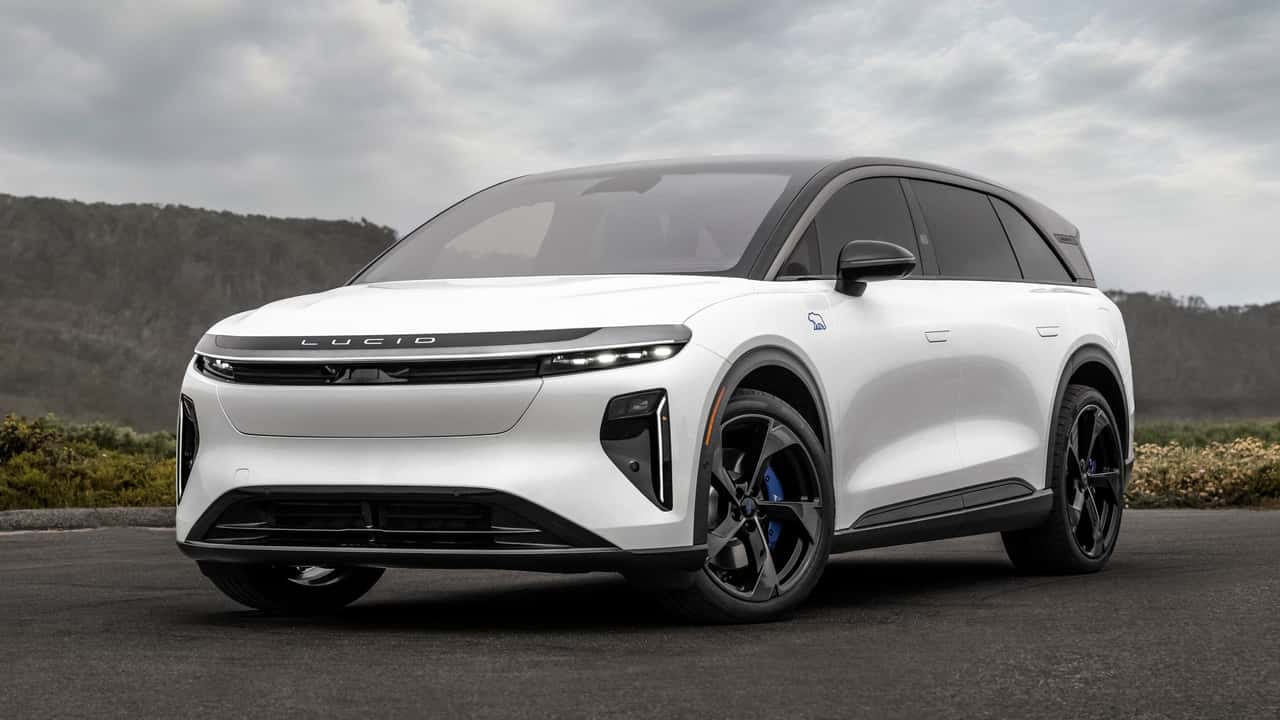
Lucid Motors didn't start as a traditional car company. It began in 2007 under the name Atieva, operating quietly in Silicon Valley as a battery and electric powertrain supplier. That technical foundation shaped the brand's trajectory from component engineering to creating the Lucid Air, a luxury electric sedan designed to challenge established German executive cars.
The transition from a Silicon Valley startup to an active volume manufacturer required a massive industrial pivot. By building its proprietary Advanced Manufacturing Plant 1 (AMP-1) in Casa Grande, Arizona, the company brought high-tech powertrain development and large-scale assembly together. This evolution transformed a boutique software and engineering concept into a real-world assembly line producing world-class electric vehicles.
The Silicon Valley Origins and Atieva Roots
Long before the first production vehicle rolled onto a test track, the company focused entirely on the invisible engineering of electric mobility. Founded by Bernard Tse, Sam Weng, and Tarik Rashid in California, Atieva built its reputation designing advanced battery packs.
- Powertrain Expertise: The engineering team designed lightweight, compact electric motors and battery systems that caught the attention of global suppliers.
- The Formula E Era: Atieva supplied standardized battery packs for the early seasons of the international Formula E racing series, proving its thermal management and energy density under extreme track conditions.
- The Pivot to Cars: In 2016, the company rebranded as Lucid Motors and shifted its focus from supplying parts to building a complete luxury sedan that could outperform existing internal combustion and electric benchmarks.
Bringing in Peter Rawlinson—former Chief Engineer of the Tesla Model S—as Chief Technology Officer and later CEO accelerated this transformation. Rawlinson pushed the team to shrink electric drive units so effectively that the entire motor, transmission, and inverter could fit inside a small travel suitcase.
Engineering the Lucid Air: Packing Power into Space
The core philosophy behind the Lucid Air centered on interior space maximization wrapped in an aerodynamic exterior footprint. Traditional electric vehicle packaging often sacrificed cabin room due to bulky mechanical layouts. Lucid solved this by miniaturizing its in-house powertrain components.
For example, the drive units achieved an exceptional power-to-weight ratio. This allowed engineers to carve out a massive cabin space comparable to full-size luxury sedans while maintaining the nimble exterior dimensions of a mid-size car.
Aerodynamics played an equally critical role in achieving industry-leading range milestones. Through extensive wind-tunnel testing, the Lucid Air achieved a low drag coefficient, which directly contributed to EPA-rated ranges exceeding 500 miles on select variants.
Building AMP-1: The Casa Grande Manufacturing Leap
Designing a high-performance luxury sedan in California is a distinct challenge from building tens of thousands of them to strict quality standards. To bridge that gap, Lucid selected Casa Grande, Arizona, for its first greenfield automotive manufacturing facility, known as AMP-1.
- Greenfield Advantages: Building from scratch allowed Lucid to integrate advanced manufacturing layouts, optimized automation, and energy-efficient systems without retrofitting legacy assembly lines.
- In-House Integration: The factory houses core manufacturing processes, including body-in-white welding, paint shops, general assembly, and precision powertrain integration.
- Capacity Scaling: Following multi-phase expansions, the facility significantly expanded its footprint and production capabilities to support both the Lucid Air lineup and subsequent vehicle programs like the Lucid Gravity SUV.
Official announcements and factory updates highlight the strategic importance of this Arizona hub. By centralizing manufacturing in North America while maintaining deep R&D roots in Silicon Valley, the company established a direct pipeline from digital design workstations to physical assembly floors.
Overcoming Startup Realities and Production Scaling
Transitioning from a prototype-focused technology firm to a high-volume carmaker is notoriously difficult. Lucid faced several severe hurdles along the way.
- Supply Chain Disruptions: Global component shortages during the early 2020s constrained initial delivery timelines, forcing the company to revise production targets downward.
- Capital Intensity: Scaling vehicle production demands immense financial backing. Lucid secured long-term support from major investors, notably Saudi Arabia's Public Investment Fund, ensuring the runway needed to fund ongoing factory expansions and new model launches.
- Market Positioning: Competing against entrenched luxury automakers and high-volume electric vehicle pioneers required aggressive brand positioning, leading to expanded retail studio footprints in major metropolitan areas.
Navigating these obstacles required strict prioritization. Rather than rushing low-margin vehicles to market, management focused on high-end variants like the Dream Edition and Sapphire performance trims before scaling broader volume configurations.
Frequently Asked Questions
What was Lucid Motors called originally?
The company was founded in 2007 under the name Atieva. It initially specialized in advanced battery technology and electric powertrains for commercial clients and racing series before rebranding to Lucid Motors in 2016.
Where is the Lucid Air manufactured?
The Lucid Air is manufactured at Lucid's dedicated greenfield facility, AMP-1, located in Casa Grande, Arizona. Research and development continue to be anchored in Silicon Valley, California.
Who is the CEO of Lucid Motors?
Peter Rawlinson serves as the CEO and Chief Technology Officer of Lucid Motors. He previously served as the chief engineer for the Tesla Model S before joining Lucid to spearhead the engineering of the Lucid Air.
How did Lucid achieve over 500 miles of range?
Lucid achieved this milestone through proprietary, in-house powertrain miniaturization, high-efficiency battery management systems, and an aerodynamic exterior design that minimizes drag. These combined factors reduce energy consumption per mile compared to typical industry averages.


