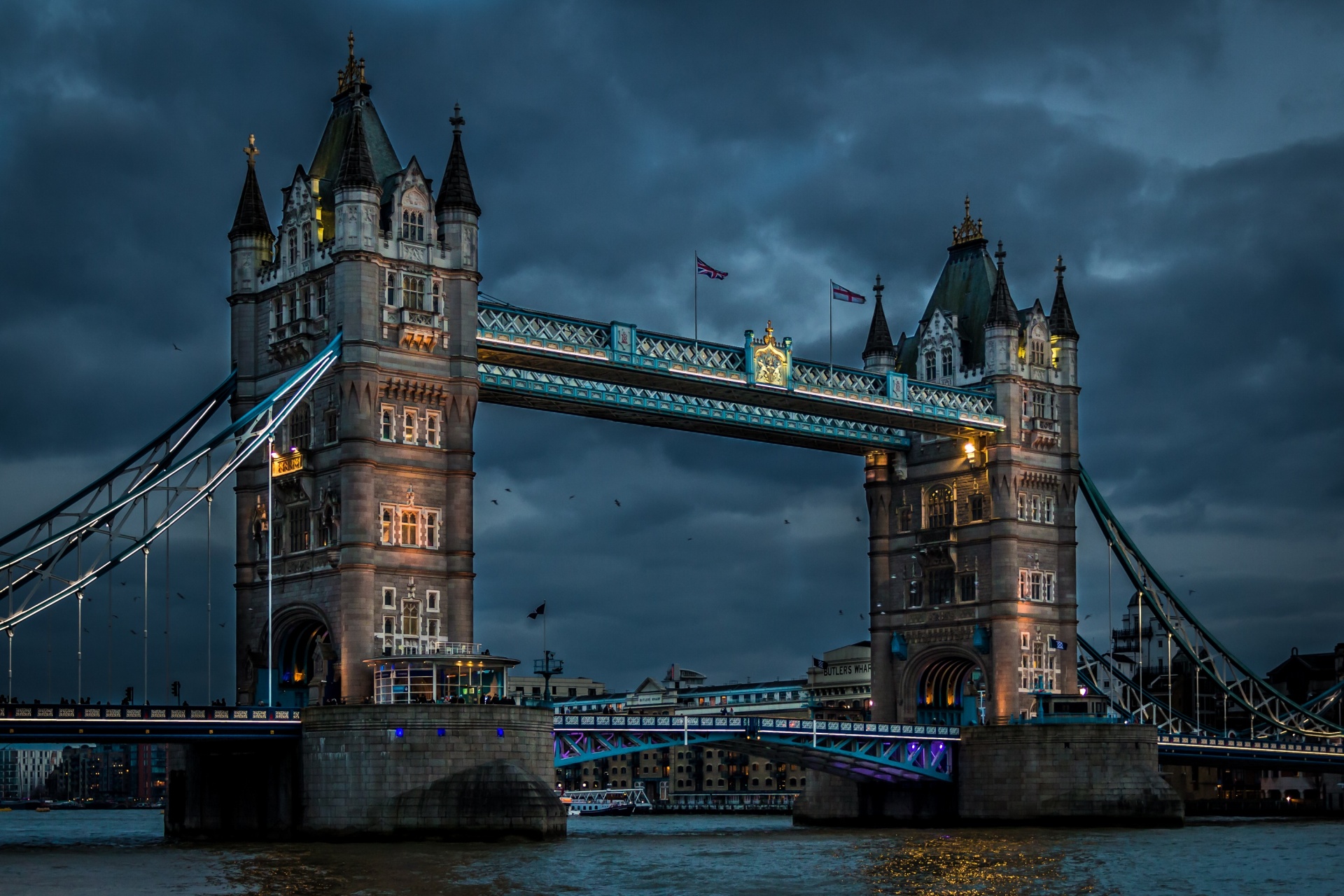
Purchased for $2.46 million in 1968, the historic 1831 London Bridge spans a desert canal in Lake Havasu City, Arizona. Contrary to popular urban legend, the American entrepreneur who bought it didn't mistake it for Tower Bridge. Robert P. McCulloch knew exactly what he was acquiring: a structurally sound granite exterior that he used to anchor a master-planned community in the Sonoran Desert.
The structure sitting over the Bridgewater Channel today is an authentic piece of British infrastructure, but its transoceanic voyage required a clever engineering hybrid of 19th-century stonework and modern concrete. Understanding how a massive stone crossing moved from the River Thames to the American West reveals a defining chapter in mid-century real estate development and civil engineering.
Why London Sold Its Famous Bridge
By the mid-20th century, John Rennie's 1831 stone arch bridge across the Thames couldn't handle contemporary traffic loads. Decades of heavy vehicle use caused the heavy granite structure to sink into the soft London clay at a rate of an inch every decade.
The City of London realized the crossing required replacement. Instead of demolishing the structure completely, officials decided to list it for sale in 1968. Additional insights into this topic are explored by Associated Press.
Enter Robert P. McCulloch, an oil chain-saw tycoon and land developer who had recently purchased 3,300 acres of remote desert shoreline along Lake Havasu. McCulloch needed a powerful marketing hook to draw prospective retirement property buyers to an isolated corner of Arizona. When his real estate agent, Robert Plumer, suggested bidding on the London Bridge, McCulloch seized the opportunity to create an instant tourist destination.
The Logistics of Disassembly and Transport
Moving a 130,000-ton stone bridge across the Atlantic Ocean required meticulous documentation and unusual shipping solutions. Construction crews in London didn't just knock the structure down. Every single exterior granite facing block was carefully labeled, numbered, and cataloged before removal.
Workers stripped off roughly 10,276 exterior granite blocks, leaving behind the inner core. These heavy stones were transported to a quarry in Devon, England, where workers sliced off about six inches from each block to reduce shipping weight while keeping the original weathered face intact.
Shipping costs could easily have derailed the project. Plumer negotiated a deal with a shipping line that had a newly built cargo vessel making its maiden voyage from the United Kingdom to America empty. McCulloch paid the ship's operating expenses for the trip, securing cheap transport for the granite blocks. The ship sailed through the Panama Canal to the Port of Long Beach, California. From there, trucks hauled the blocks overland to the desert site in Lake Havasu City.
Engineering the Arizona Reconstruction
Rebuilding the bridge in the Arizona desert involved a clever structural workaround. Reconstructing the entire bridge out of solid, heavy granite would have been structurally impractical and prohibitively expensive.
Engineers poured a modern, hollow core made of reinforced concrete. Workers then used the numbered granite blocks as a masonry veneer wrapped around this concrete skeleton. This hybrid method slashed the bridge's total weight from 130,000 tons down to 30,000 tons while providing robust earthquake and traffic resistance.
Dry Land Construction
One of the most unusual aspects of the project is that workers built the bridge on dry land. Contractors erected the structure over a flat patch of desert sand between the mainland and Pittsburgh Point.
Only after the masonry work finished did excavation crews dig out the Bridgewater Channel directly beneath the arches. Flooding the channel separated Pittsburgh Point from the mainland, turning it into an artificial island and giving the bridge a body of water to cross.
On October 10, 1971, the Lord Mayor of London officially rededicated the structure in a ceremony attended by thousands of spectators and a flotilla of boats.
Common Misconceptions About the Move
Pop culture and urban legends have warped several details regarding the relocation. Clarifying these points separates historical fact from fiction:
- The Tower Bridge Confusion: A persistent myth claims McCulloch thought he was buying the iconic Tower Bridge with its famous twin Gothic towers. Historical records show McCulloch received exact blueprints and specifications; he deliberately bought Rennie's understated arch bridge because it fit his budget and logistical scope.
- Is it a hollow film set? Some visitors assume the bridge is a superficial facade. While the interior is hollow to accommodate utilities and maintenance, the exterior load-bearing veneer consists of genuine 1830s British granite. It functions as a standard, active municipal roadway supporting daily vehicle and pedestrian traffic.
- Did it sink in Arizona? Internet rumors occasionally claim the bridge is sinking into the desert sand. Unlike its time on the soft clay of the River Thames, the Arizona structure rests on stable concrete footings anchored into solid desert earth.
Frequently Asked Questions
Can you still drive across the London Bridge in Arizona?
Yes. The structure remains an active, open thoroughfare for cars, cyclists, and pedestrians connecting mainland Lake Havasu City to the island. Traffic rules and speed limits apply just like any standard municipal bridge.
What happened to the rest of the original London Bridge?
Only the exterior granite facing stones made the trip to Arizona. The internal brickwork and core materials from the 1831 structure were auctioned off or discarded in England during the dismantling process.
Why does the granite look dark in some spots?
The dark coloring on parts of the stone comes from decades of soot, industrial pollution, and London fog accumulated while the blocks stood over the River Thames. Cleaning crews left much of this patina intact to preserve the historical authenticity of the stone surface.
How much did the total project cost?
While the winning bid to purchase the bridge from the City of London was roughly $2.46 million (£1.02 million), shipping, land excavation for the Bridgewater Channel, and the concrete reconstruction brought the total investment closer to $7 million by the time it opened in 1971.
For comprehensive visitor guidelines, local events, and parking tips, check the Go Lake Havasu Tourism Office. To examine historic architectural drawings of the original 19th-century span, view the Historic American Engineering Record.
This video provides a detailed visual breakdown of how the historic bridge was dismantled in England and reconstructed in the Arizona desert.



