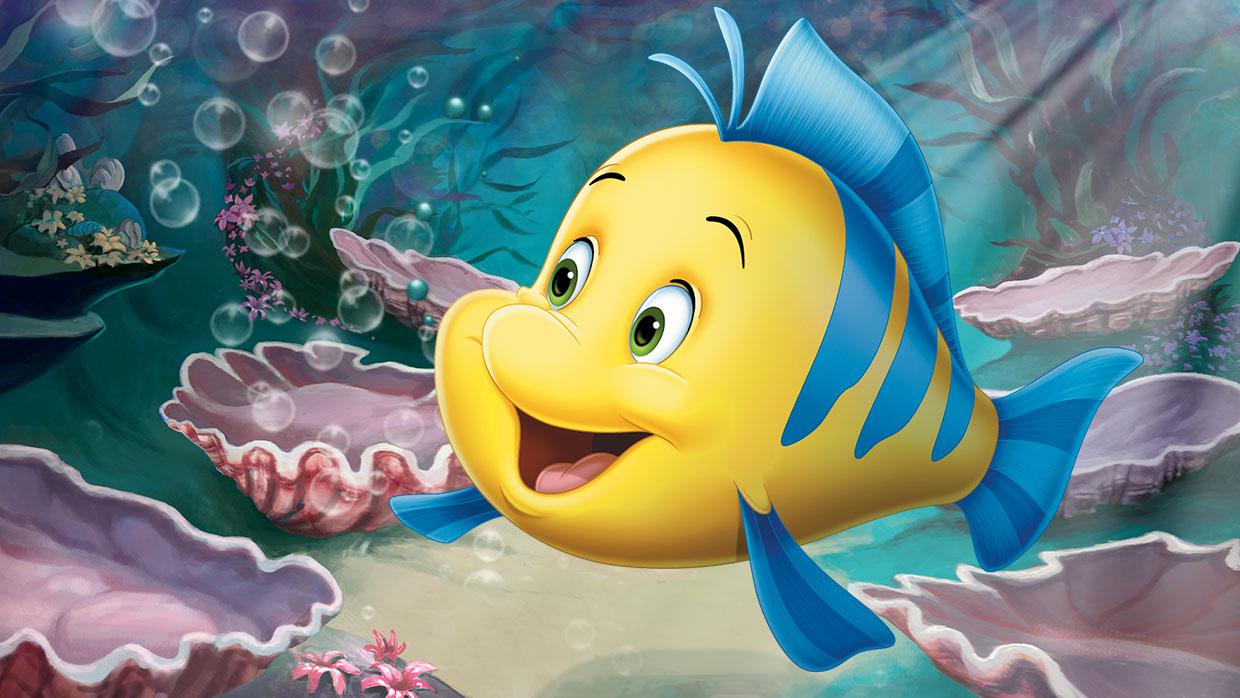
When Disney released The Little Mermaid in 1989, the studio revived its animated musical formula by looking to the ocean floor. While Ariel captured headlines with her fiery red hair and booming voice, her yellow-and-blue companion became something quieter and more enduring. Flounder didn't just fill space on screen; he redefined the classic animated sidekick, shifting the archetype from purely comedic relief to an emotional anchor for the audience.
You'll find that Flounder's transformation from a bottom-dwelling flatfish into an iconic piece of pop-culture symbolism rests on careful character design, precise vocal direction, and a deliberate narrative function. Let's break down how a cautious little fish managed to leave such a lasting mark on animation history.
The Design Evolution: Bridging Marine Biology and Animation
Animators face a tough challenge when turning real marine animals into expressive cartoon characters. Real flounders are famously asymmetrical, resting flat on the ocean floor with both eyes staring upward from one side of their head. Sticking strictly to biology would have made an eye-to-eye conversation with Ariel awkward at best.
Instead, the design team blended realistic textures with humanized anatomy. They kept the distinctive flattened body shape and bright blue-and-yellow stripes—nodding to reef fish aesthetics rather than literal benthic flatfishes—while giving him large, expressive eyes and mobile fins.
- The shape: A compact, flat silhouette allowed animators to keep him close to Ariel in tight underwater framing without crowding the shot.
- The motion: Unlike Sebastian's stiff, clickety-clack crab movements, Flounder moved with a soft, rolling wave action that mirrored underwater currents.
- The expression: Animators used subtle fin twitches and head tilts to convey hesitation, fear, and excitement without giving him human hands or shoulders.
This blend gave viewers a creature that felt physically anchored to the sea while remaining relatable enough to share emotional beats with human-like merfolk.
Narrative Function: The Emotional Mirror
In fairy tales, characters often speak their inner thoughts aloud. Disney's 1989 adaptation took a more visual approach, using Flounder to externalize Ariel's internal conflicts. When Ariel swims through her grotto filled with human treasures, Flounder's nervous glances and cautious body language act as the audience's surrogate caution.
He isn't a scolding voice like Sebastian; he's a willing accomplice who is terrified of the consequences. That dynamic creates powerful storytelling tension. When Flounder reluctantly follows Ariel into sunken shipwrecks or faces down a massive shark, his bravery isn't born out of fearlessness. It's rooted entirely in loyalty.
You see this most clearly in how the character handles danger. He hesitates, trembles, and tries to swim away, only to turn right back around when Ariel needs him. That vulnerability made him instantly endearing to viewers who knew what it felt like to follow a friend into risky territory just to be supportive.
Cultural Resonance and Modern Pop Culture Symbolism
Over three decades after his debut, Flounder's silhouette functions as shorthand for nostalgic marine fantasy. From theme park merchandise to modern aquatic conservation campaigns, his image bridges the gap between cartoon imagination and real-world ocean appreciation.
Marine educators often note that fictional characters like Flounder spark early childhood interest in real marine ecosystems. Even though his colors and behavior are stylized, he introduces young viewers to the concept of reef-dwelling diversity. According to the National Oceanic and Atmospheric Administration, public engagement with marine life often begins through media representation, making beloved characters vital entry points for ocean literacy.
Furthermore, pop culture has adopted the "Flounder archetype" to describe the ultimate loyal friend—someone who lacks the ambition or power of the main protagonist but provides the steady emotional foundation required for the hero's journey to succeed.
Behind the Voice: Crafting Character Through Sound
A character's physical design only carries them halfway. Christopher Daniel Barnes brought a specific vocal texture to the original film, balancing youthful anxiety with unwavering warmth. His line delivery avoided the overly polished sheen of traditional fairy tale sidekicks, injecting natural stumbles and high-pitched cracks that sounded like a real kid rather than a polished voice actor.
Subsequent adaptations, including Disney's live-action remake, experimented with different voice actors and hyper-realistic visual styles, but the core appeal remained unchanged. The character's cultural staying power proves that audiences don't always connect with the loudest voice or the grandest powers in the room. Sometimes, they connect with the friend who stays quiet, stays close, and watches your back when the tides get rough.
Frequently Asked Questions
What kind of fish is Flounder based on?
Despite his name, Disney's Flounder doesn't look like a real-life benthic flounder, which is a bottom-dwelling flatfish with both eyes on one side of its head. Animators took inspiration from colorful tropical reef fish, giving him bright yellow-and-blue vertical stripes and a standard fish anatomy to make him visually appealing and easy to animate.
Why is Flounder named Flounder if he doesn't look like one?
The name was chosen early in production by writers and animators who wanted a simple, fish-themed name that sounded slightly clumsy and endearing. While real flounders camouflage in sand, the name stuck because it rolled off the tongue easily alongside names like Sebastian and Ariel.
How did Flounder's design change for the live-action movie?
The 2023 live-action adaptation shifted away from the brightly colored cartoon style toward a photorealistic juvenile fish. While this sparked online discussions about balancing realism with classic character design, it maintained his core color palette and his role as Ariel's constant companion.
Is Flounder considered a major character or just comic relief?
While he serves comedic moments, film historians view Flounder primarily as an emotional anchor. He lacks the rigid authority of Sebastian or the loud comedy of Scuttle, functioning instead as a quiet mirror for Ariel's deepest ambitions and fears.


