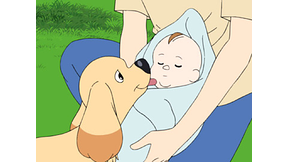
Albert Einstein's status as a towering global icon of science is secure, yet parts of his personal history remained tightly locked away for decades. Among the most compelling pieces of that hidden past is the existence of his firstborn child, Lieserl Einstein. Born out of wedlock before Einstein achieved fame, Lieserl vanished from historical records almost as quickly as she arrived. For a long time, biographers knew nothing about her, leaving a profound gap in the early timeline of one of history's most celebrated minds.
The true story of Lieserl only emerged in 1986 when a batch of private letters between a young Einstein and his fellow student and future wife, Mileva Marić, surfaced in a descendant's attic. These correspondences exposed a hidden chapter marked by societal pressure, career anxieties, and a tragic disappearance that researchers still debate today.
The Discovery of the Missing Letters
Before the mid-1980s, official biographies of Albert Einstein recorded only two children from his first marriage: his sons Hans Albert and Eduard. That narrative shifted permanently when a granddaughter of Einstein and Marić discovered a collection of roughly 54 love letters exchanged between the couple during their university years at the Zurich Polytechnic.
Buried inside these handwritten pages were tender, anxious, and deeply human questions from a 22-year-old Einstein who had just learned he was a father. The letters offered a raw look at an era when an unplanned pregnancy carried severe social consequences, especially for young academics trying to secure professional footing in Switzerland and the Austro-Hungarian Empire. Further analysis by Bloomberg explores related views on the subject.
Birth and Early References in 1902
In late 1901, Mileva Marić left her studies in Zurich and returned to her parents' home in Novi Sad, Serbia, to give birth away from the prying eyes of academic circles. At the time, Einstein was living in Bern, Switzerland, working toward a permanent position at the Federal Patent Office.
On February 4, 1902, Einstein wrote a letter responding to the news of the birth:
"You see, it has really turned out to be a Lieserl, as you wished. Is she healthy and does she already cry properly? What kind of little eyes does she have? Whom of us two does she resemble more? Who is giving her milk? Is she hungry? ... I love her so much and I don't even know her yet!"
The name Lieserl was likely a diminutive pet name rather than a formal legal first name, though historians have debated whether she was baptized in the Serbian Orthodox Church under a traditional name like Zorka or given another local designation.
The Mystery of Her Disappearance
The timeline of Lieserl’s short life cuts off abruptly in late 1903. After Einstein and Marić married in January 1903 and moved in together in Switzerland, Lieserl remained behind in Serbia with Marić's family.
The final mention of the child appears in a letter dated September 19, 1903, in which Einstein expresses deep concern after learning that Lieserl had contracted scarlet fever:
"I'm very sorry about what has befallen Lieserl," Einstein wrote. "It's so easy to have lasting effects from scarlet fever. If only this will pass. As what is the child registered? We must take precautions that problems don't arise for her later."
After this entry, Lieserl completely vanishes from all known correspondence. No birth certificate, medical record, or death certificate bearing her exact identity has ever been located by historians or biographers, creating a historical vacuum filled by two primary theories.
Theory One: Death in Infancy
The most widely accepted historical consensus points to early childhood mortality. Scarlet fever was a notoriously lethal disease in the early twentieth century, particularly for infants and toddlers before the advent of antibiotics. Biographers and researchers, including Walter Isaacson, suggest that Lieserl likely succumbed to the infection around September 1903 at roughly twenty-one months of age. Because the family feared a public scandal or professional backlash for Einstein—who was applying for official posts that required unblemished social standing—no formal public notice or death record may have been filed or preserved.
Theory Two: Adoption in Serbia
A secondary theory, popularized by writer Michele Zackheim during years of archival research in Serbia, proposes that Lieserl was given up for adoption to close friends or relatives of the Marić family. Proponents of this view argue that Einstein's mention of taking precautions regarding how the child was registered points to an impending adoption process designed to shield both parents from professional ruin. However, concrete documentary proof supporting this hypothesis has never surfaced in local municipal or church registries.
Why Albert Einstein Kept Her Hidden
To understand why Lieserl was erased from public view, one must look at the rigid social constraints of Central Europe at the turn of the twentieth century.
- Professional Vulnerability: In 1902, Einstein was an unproven physicist holding a temporary teaching post before securing his job at the Bern patent office. An out-of-wedlock child could permanently stall a young civil servant's career aspirations.
- Family Pressure: Einstein's mother, Pauline Koch, strongly disapproved of Mileva Marić, citing her age, her Serbian background, and her academic ambitions. Introducing an illegitimate child into the dynamic would have severely fractured an already tense familial relationship.
- Academic Ambitions for Marić: Mileva's promising career as a mathematician and physicist came to an abrupt halt due to the pregnancy and social stigma, forcing her to handle the birth away from her peers.
Frequently Asked Questions
Did Albert Einstein ever meet Lieserl?
There is no historical evidence indicating that Albert Einstein ever met his daughter. While his early letters express a strong desire to see a photograph or a drawing of her, he lived in Switzerland while the child stayed in Serbia, and no records show him traveling to visit her prior to her disappearance.
Are there any living descendants of Lieserl?
No. Because historical records indicate she either died as an infant from scarlet fever or vanished into an unrecorded adoption without leaving traceable descendants, there are no known direct descendants of Lieserl Einstein. Einstein's later legitimate children, Hans Albert and Eduard, carried on his family line.
Is the viral letter about love and Lieserl real?
No. A widely circulated internet post featuring a dramatic, philosophical letter from Einstein to Lieserl about a "universal force" of love is a modern hoax. Real historical correspondence regarding Lieserl is restricted to the specific letters discovered in 1986, housed within the Albert Einstein Archives at the Hebrew University of Jerusalem.



