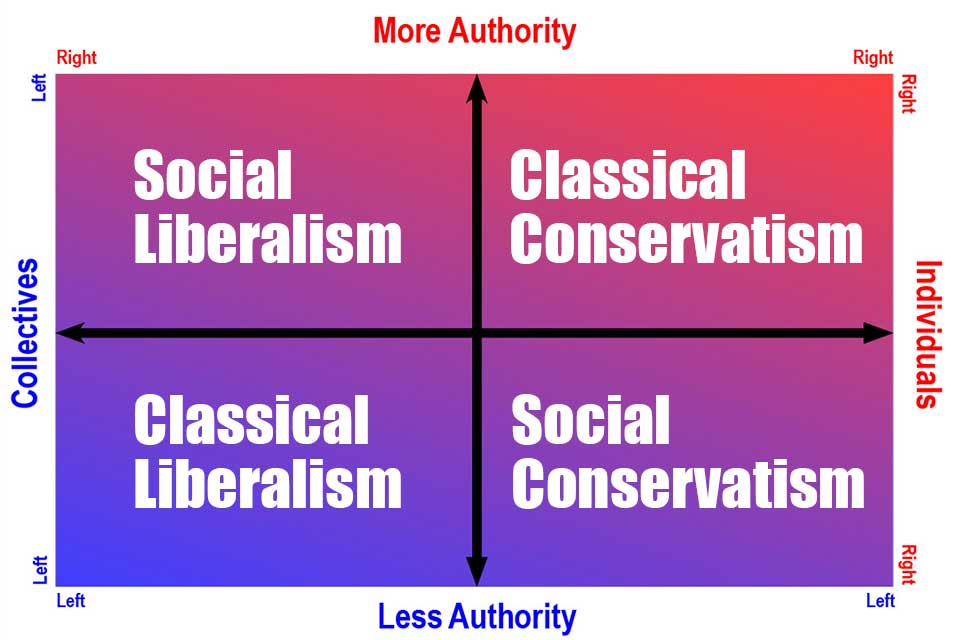
When you look at modern ballot boxes, news feeds, and dinner table arguments, the liberal versus conservative divide shapes nearly every major public debate. These aren't just party slogans or temporary team colors. They're comprehensive, competing frameworks for how society should organize itself, distribute wealth, and handle change. If you've ever wondered why two reasonable people can look at the same economic crisis or social issue and reach opposite conclusions, you're looking right at this philosophical fault line.
At its core, the division comes down to how each side views human nature and social progress. Liberals generally see society as malleable, capable of deliberate improvement through collective action and government reform. Conservatives tend to view established social institutions and traditions as hard-won wisdom, preferring stability and organic evolution over rapid overhauls. Let's break down how these competing worldviews actually play out across the economy, social policy, and daily governance.
Philosophical roots and views on human nature
Every political stance rests on assumptions about human nature. Liberal thought traces back to Enlightenment thinkers who emphasized individual liberty, rational progress, and the idea that social arrangements can and should be redesigned to maximize human well-being. From this viewpoint, inequalities and systemic barriers are problems we can solve with the right public policies and institutional fixes.
Conservative philosophy, particularly as articulated by thinkers like Edmund Burke, emerged in reaction to radical upheavals like the French Revolution. It treats society as an intricate, delicate ecosystem built over generations. Knocking down traditions or institutions without fully understanding their stabilizing functions can lead to unintended disasters. Consequently, conservatives place high value on continuity, duty, and social order.
In practice, these roots translate into different attitudes toward authority and change. A liberal is more likely to ask, "How can we reform this system to make it fairer right now?" A conservative is more likely to ask, "What will we lose if we tear down the existing rules, and what proof do we have that the replacement will work?"
Economic policy: Markets, regulation, and taxation
Economic debates provide the sharpest, most measurable contrasts between these two schools of thought. They disagree profoundly over what free markets can achieve on their own and when the state needs to step in.
The liberal economic toolkit
Liberals generally argue that unfettered markets create extreme inequality, environmental degradation, and systemic vulnerabilities. To counteract these tendencies, they support:
- Progressive taxation: Higher earners pay a larger percentage of their income to fund social safety nets, public education, and infrastructure.
- Active regulation: Strict rules protecting consumer safety, labor rights, and the environment to prevent corporate overreach.
- Public investments: Government-backed funding for healthcare, green energy transitions, and social support systems.
As outlined by economic analyses from institutions like the Brookings Institution, public interventions can correct market failures and provide broader access to economic mobility.
The conservative economic toolkit
Conservatives view economic freedom as deeply tied to personal liberty. They argue that excessive government intervention stifles innovation, creates bloated bureaucracies, and distorts natural market signals. Their preferred approach features:
- Lower tax burdens: Reduced corporate and income taxes to stimulate private investment, business growth, and job creation.
- Deregulatory momentum: Stripping away red tape so businesses can adapt, compete, and scale faster.
- Market-based solutions: Relying on competition and private enterprise rather than government programs to solve social and economic challenges.
Thinkers in the tradition of Milton Friedman argue that true political freedom requires economic freedom, and that heavy state control inevitably leads to bureaucratic stagnation.
Social issues and cultural norms
When it comes to social policy, the divide shifts from balance sheets to questions of personal identity, rights, and morality. Here, the tension between individual autonomy and traditional social cohesion takes center stage.
Liberals tend to champion rapid adaptation to changing social norms, expanding personal freedoms, and protecting historically marginalized groups. They view civil rights as an ongoing project of inclusion, pushing for expanded legal protections for LGBTQ+ individuals, reproductive autonomy, and systemic reforms within criminal justice.
Conservatives generally emphasize the preservation of traditional institutions, such as the nuclear family, religious establishments, and established cultural norms. They argue that these shared traditions provide a necessary moral anchor and social stability. When policies shift too fast, conservatives worry that society loses its shared sense of obligation and mutual responsibility.
Institutional design and the rules of governance
The disagreement extends right down to the rules of government itself. How should courts interpret laws? How should elections be run? How much power should rest with federal versus local authorities?
- The judiciary: Liberals often view the constitution as a living document that must adapt to modern realities and contemporary standards of justice. Conservatives frequently champion originalism, arguing that judges should interpret laws according to their original public meaning at the time of adoption rather than rewriting them from the bench.
- Institutional reforms: Liberals are more open to altering structural rules—such as expanding voting access or reforming legislative procedures—to ensure that institutions reflect current demographics. Conservatives tend to defend existing institutional checks and balances, like the Electoral College or the Senate filibuster, as crucial safeguards against populist overreaches or rushed majoritarian rule.
Political scientist Ian Shapiro notes that the procedural rules we choose ultimately determine whose preferences translate into actual policy, making these institutional battles some of the highest-stakes fights in modern politics.
Common ground and bipartisan realities
Despite the intense rhetoric on cable news and social media, actual governance requires constant compromise. In practice, the two camps often find common ground on specific, practical issues once the ideological branding is stripped away.
Bipartisan consensus regularly emerges around infrastructure funding, targeted criminal justice reforms, and national security measures. Most citizens, regardless of label, want safe neighborhoods, functioning roads, good schools, and economic opportunity. The disagreement isn't usually over what goals matter, but how to achieve them sustainably.
As columnist David Brooks has observed, a healthy democracy relies on a dynamic tension between the reforming spirit and the conserving impulse. Without liberals, societies risk stagnating in unjust traditions; without conservatives, they risk tearing down vital institutions in wild chases for utopia.
Frequently asked questions
Are most people strictly liberal or conservative?
No. Public opinion data consistently shows that most voters hold a mix of views. Someone might lean conservative on fiscal tax policy but hold liberal views on environmental protection or social welfare programs.
Do these political labels mean the same thing in every country?
Not at all. The meaning of liberal and conservative shifts dramatically depending on national history. In the United States, "liberal" generally denotes center-left policies akin to European social democracy, whereas in other parts of the world, "liberalism" historically refers to free-market capitalism and limited government intervention.
Why has the political divide become so polarized recently?
Media fragmentation, algorithmic sorting on social media, and shifting economic conditions have created isolated information ecosystems. When people consume entirely different sets of facts and narratives, compromise becomes significantly harder to achieve.
Can a society function without both political philosophies?
Political historians argue that both impulses are necessary for stability. A society needs the conservative impulse to maintain social cohesion and institutional memory, and the liberal impulse to adapt to technological, demographic, and moral changes over time.


