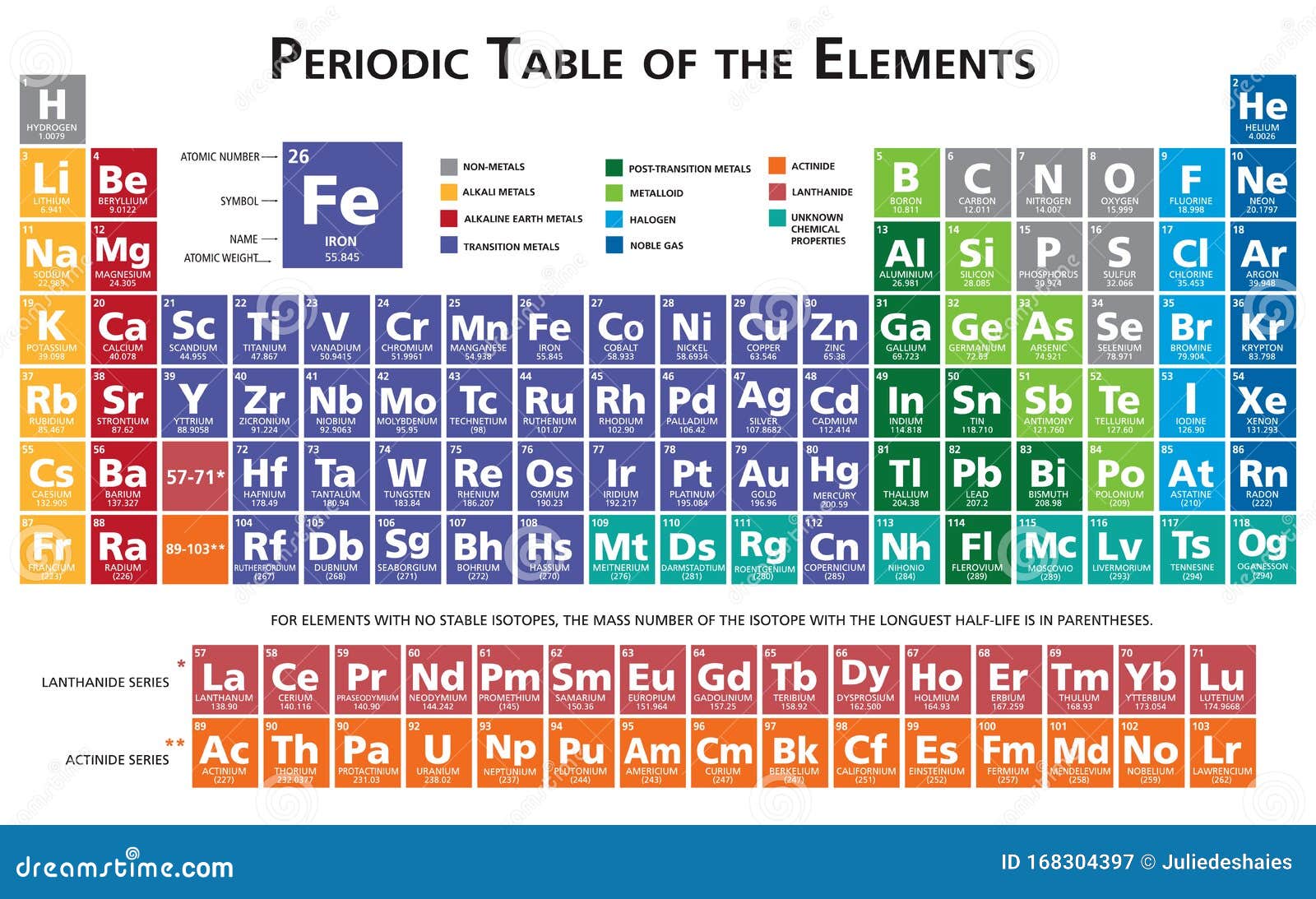
Mastering chemical structures requires looking past simple electron counts to understand how atoms actually distribute electron density in three-dimensional space. While introductory coursework relies on basic dot models, complex molecules demand advanced mapping strategies that account for resonance, formal charge distribution, and orbital hybridization. Understanding these nuances lets chemists predict molecular behavior accurately, even when standard octet rules fall short.
This guide breaks down advanced techniques for mapping chemical bonding beyond standard electron models. You'll learn how to handle expanded octets, resolve delocalized systems, and apply molecular orbital principles to tricky structural anomalies.
Beyond the Octet: Handling Expanded Valence Shells
Standard electron models teach that second-period elements strictly obey the octet rule. However, atoms in the third period and below frequently violate this guideline by accommodating ten, twelve, or even more electrons.
When mapping species like sulfur hexafluoride (SF6) or the triiodide ion (I3-), traditional dot placement fails unless you account for low-lying empty orbitals.
- Identify Central Atom Capacity: Elements from Period 3 onward have accessible d-orbitals that participate in bonding configurations.
- Distribute Excess Electrons: After satisfying terminal atoms, any remaining valence electrons must be assigned directly to the central atom as unshared pairs, creating hypervalent centers.
- Evaluate Formal Charges: Calculate formal charges using the standard equation: valence electrons minus nonbonding electrons minus half the bonding electrons. The most stable structure minimizes these values across all constituent atoms.
For example, when constructing the perchlorate ion (ClO4-), distributing the valence pool across four surrounding oxygen atoms often yields multiple apparent resonance configurations. Minimizing formal charges shifts the preferred representation toward double-bond character on multiple chlorine-oxygen linkages, matching experimental bond length data far better than single-bond-only Lewis representations.
Mapping Delocalized Electrons and Resonance Hybrids
Molecules with alternating single and multiple bonds or lone pairs adjacent to $\pi$-systems feature delocalized electrons that cannot be localized to a single bond axis. Benzene and the ozone molecule are classic examples where a single static dot diagram misrepresents physical reality.
To map these systems accurately, you must construct complete sets of resonance contributors and combine them into a weighted resonance hybrid.
- Draw Valid Contributors: Shift only $\pi$-electrons or lone pairs using curved arrows. Never break single $\sigma$-bonds during this step.
- Assess Structural Equivalence: Symmetric species like the carbonate ion (CO32-) possess equivalent resonance forms, meaning each carbon-oxygen bond exhibits fractional bond order (in this case, an effective bond order of 1.33).
- Apply Stability Criteria: Contributors featuring complete octets on electronegative atoms and minimal formal charge separations contribute more heavily to the actual hybrid state.
According to resources from LibreTexts Chemistry, recognizing these fractional bond orders is essential for interpreting bond lengths and vibrational frequencies accurately in spectroscopic analysis.
Integrating VSEPR Geometry with Electronic Maps
Flat two-dimensional dot diagrams provide a necessary starting point, but they don't capture true molecular geometry. Valence Shell Electron Pair Repulsion (VSEPR) theory bridges this gap by treating lone pairs and bonding pairs as discrete regions of negative charge that repel each other to maximize spatial separation.
When moving beyond standard models, you must evaluate steric numbers—the sum of bonded atoms and lone pairs surrounding a central node.
- Count Steric Zones: Treat double and triple bonds as single electron domains for basic geometry determination.
- Account for Lone Pair Repulsion: Lone pairs exert greater electrostatic repulsion than bonding pairs, compressing bond angles in molecules like water and ammonia.
- Map Distortion Trends: Distinguish between electronic geometry (the arrangement of all electron domains) and molecular geometry (the spatial arrangement of atomic nuclei).
For instance, sulfur tetrafluoride (SF4) has a steric number of five, leading to a trigonal bipyramidal electronic arrangement. Because one of those domains is a lone pair, the resulting molecular geometry adopts a seesaw shape rather than a symmetrical configuration.
Common Mapping Mistakes to Avoid
Even experienced students stumble when dealing with complex ions or odd-electron species (radicals). Watch out for these frequent pitfalls:
- Exceeding Valence Limits for Hydrogen: Hydrogen only accommodates two electrons (the duet rule) and can never act as a central bridging atom.
- Ignoring Overall Ionic Charges: Forgetting to add electrons for anions or subtract them for cations throws off the entire valence electron tally.
- Forcing Octets on Transition Metals: Transition metal complexes involve d-electron counting rules (like the 18-electron rule) rather than simple octet tracking.
For deeper insights into atomic structure and bonding fundamentals, consult the RMIT University Learning Lab Chemistry Guide.
Frequently Asked Questions
Why do some atoms form fewer bonds than expected?
Bond formation depends on available unpaired valence electrons and spatial availability. If steric crowding prevents additional atoms from approaching, or if electron promotion requires too much energy, an atom will form fewer bonds than its maximum capacity.
How do you calculate formal charge in complex ions?
Subtract the number of assigned nonbonding electrons and half of the bonding electrons from the atom's standard valence electron count. The sum of all formal charges in a neutral molecule must equal zero, while in a polyatomic ion, it must equal the net charge of the ion.
Can Lewis dot models explain metallic bonding?
No. Metallic bonding involves a collective sea of delocalized electrons shared across a crystal lattice, which localized dot pairs cannot represent. Band theory or molecular orbital theory is required for metals.
What makes an electron pair count as a single domain in VSEPR?
Multiple bonds (double or triple) share the same spatial region between two nuclei. Because their electron density is confined to that specific internuclear axis, VSEPR treats them as a single repulsive domain.


