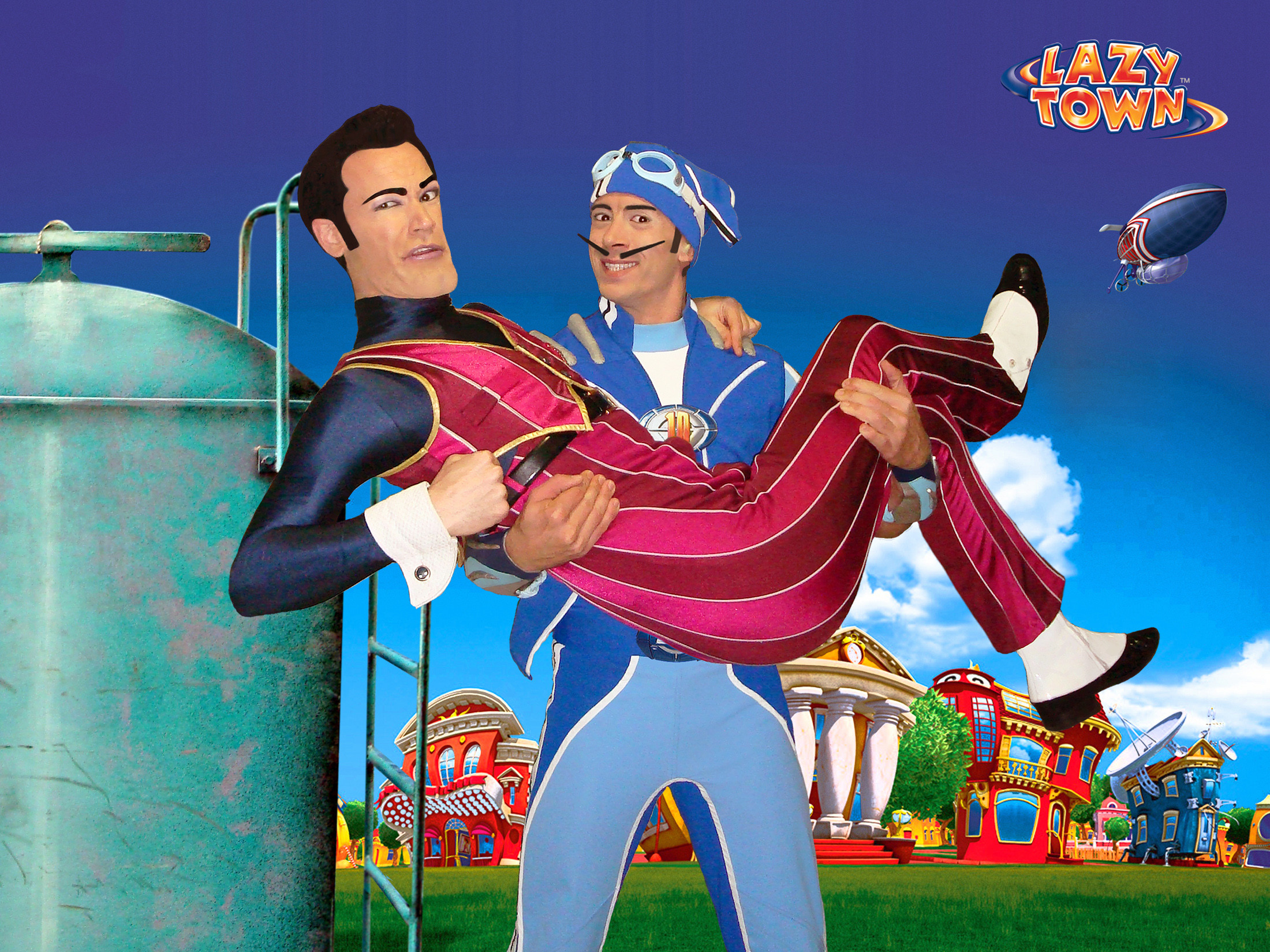
When Magnús Scheving created LazyTown, media experts didn't know what to do with him. Here was an athletic Icelandic gymnastics champion playing a blue-suited hero who ate sports candy and did backflips on demand. The show didn't lecture kids about sedentary habits. Instead, it invited them to jump, stretch, and move along with the characters on screen.
The primary keyword Lazytown Sportacus represents a fascinating cultural pivot in children's television. Long before tablets and interactive streaming dominated youth media, this quirky international production attempted to solve a mounting public health crisis. It turned passive viewing into active participation. Let's look at how the character reshaped youth fitness, the mechanics behind the screen-time paradox, and what modern parents and educators can learn from a superhero who preferred apples over cookies.
The Problem LazyTown Set Out to Solve
By the late 1990s, childhood inactivity rates were climbing alongside the rise of home video game consoles and multi-channel cable television. Most children's programming treated viewers like couch potatoes. Kids sat still, stared at moving images, and absorbed stories.
Scheving recognized that telling children to turn off the television and go outside rarely worked. Kids love screens. So, rather than fighting the medium, he weaponized it. He designed a show where movement was the ticket to admission. For additional details on the matter, detailed reporting can be read on The New York Times.
- The Sedentary Villain: Robbie Rotten represented the allure of staying indoors, eating junk food, and avoiding effort.
- The Active Hero: Sportacus served as an aspirational figure who made physical exertion look fun rather than like a punishment.
- The Active Audience: Episodes paused or incorporated physical cues that demanded a physical response from the living room floor.
By bridging entertainment and physical literacy, the show challenged the notion that screen time and physical activity had to sit on opposite sides of the fence.
The Mechanics of Movement on Screen
Most children's shows rely on plot progression alone. LazyTown relied on kinetic energy. Every episode followed a predictable rhythm that forced kids off their seats.
When Sportacus sprinted across the screen or performed a standing backflip, he wasn't just showing off. He was setting a standard of physical competence. The choreography drew directly from gymnastics, martial arts, and acrobatics.
Kids didn't just watch the show; they mimicked it. This participatory television model anticipated modern exergaming by nearly a decade. When Sportacus ate sports candy—his term for apples and vegetables—he reframed healthy eating as a superpower.
Why the Active Model Worked
Children imitate what they see. When a charismatic character treats a jump rope like a magical artifact, kids want that artifact. The show succeeded because it stripped away the clinical feel of school physical education classes. There were no whistles, no grading rubrics, and no laps around a muddy track. There was only music, bright colors, and the simple joy of movement.
The Screen Time Paradox
You can't talk about Lazytown Sportacus without addressing the obvious contradiction. Can a television show truly promote fitness if it requires kids to sit in front of a screen to watch it?
Pediatric health advocates have long warned about the dangers of excessive screen exposure. Critics argue that even high-energy shows can't replace unstructured outdoor play. However, the show introduced a nuanced middle ground: co-viewing and physical engagement.
Passive Screen Time ---> Traditional cartoons where kids sit completely still.
Active Screen Time ---> Shows that prompt jumping, dancing, and mimicry.
Real-World Play   ---> The ultimate goal: taking those movements outside.
The friction lies in what happens when the episode ends. Does the child go outside to run around, or do they sit down for another three hours of passive programming? The show provided the spark, but adults had to supply the oxygen.
Lessons for Modern Parents and Educators
Today, kids face an even more fragmented digital landscape filled with endless short-form video feeds and hyper-addictive mobile games. The lessons from the blue superhero remain remarkably relevant for anyone trying to manage screen time today.
1. Match Digital Media With Physical Output
Don't let screens exist in a vacuum. If kids engage with active media, pair it with real-world physical goals. Use dance games, active streaming channels, or sports tutorials as a bridge rather than an endpoint.
2. Gamify Movement, Not Just Sitting
Video games excel at keeping kids glued to chairs through rewards and levels. Apply those same psychological hooks to physical tasks. Make tracking daily steps or learning a new cartwheel feel like leveling up an RPG character.
3. Normalize Healthy Choices Without Preaching
Sportacus didn't give long, boring lectures on nutrition. He crunched on crisp carrots and made them look delicious. Kids sniff out preachiness instantly. Model active habits yourself instead of just talking about them.
Frequently Asked Questions
Did Magnús Scheving perform his own stunts as Sportacus?
Yes. Scheving was a European aerobics champion and gymnast before creating the show, which allowed him to perform the high-flying acrobatics and flips seen on screen without a stunt double.
How did LazyTown impact school physical education programs?
The franchise partnered with schools worldwide to introduce structured physical literacy curricula. Teachers used the show's music and character themes to energize classrooms and make gym class more engaging for younger children.
Is LazyTown considered an early form of exergaming?
While it wasn't a video game, it pioneered the interactive media format. It proved that children would physically respond to on-screen cues, paving the way for motion-controlled games on consoles like the Nintendo Wii.
Why did Sportacus eat sports candy instead of normal fruit?
It was a clever framing device created to make healthy food appealing to children. By renaming fruits and vegetables as "sports candy," the show subverted traditional marketing tactics used by junk food brands.