When people picture Las Vegas, they see neon lights, sprawling desert heat, and cloudless blue skies. They don't picture sirens wailing and funnel clouds dropping out of the sky. Popular culture suggests that desert terrain acts as an impenetrable shield against severe weather. That belief causes many residents and visitors to assume that any mention of tornadoes in the Mojave Desert is pure fiction.
The reality sits in a gray area. Tornadoes do happen in the Las Vegas Valley, but they bear little resemblance to the destructive monsters that tear through the American Midwest. Understanding how desert meteorology works separates urban legend from verifiable meteorological data, helping you stay prepared when the desert sky turns dark.
The Core Question: Do Tornadoes Happen in Las Vegas?
Yes, tornadoes happen in Las Vegas, but they are exceptionally rare and weak. Official records from the National Weather Service and the National Centers for Environmental Information confirm that Clark County has experienced multiple confirmed touchdowns over the decades.
These events don't match the catastrophic, mile-wide wedges seen in Oklahoma or Kansas. Instead, Las Vegas tornadoes typically register as EF0 or EF1 on the Enhanced Fujita Scale, meaning maximum winds stay under 110 miles per hour. They stay on the ground for only a few minutes and travel short distances, usually generating minor damage like downed tree branches, displaced patio furniture, and peeled roofing material.
Calling them fiction is incorrect, but calling Las Vegas a tornado alley is equally false. The risk is real, low-frequency, and fundamentally different from standard tornado-prone regions.
Why Desert Climate and Topography Limit Twisters
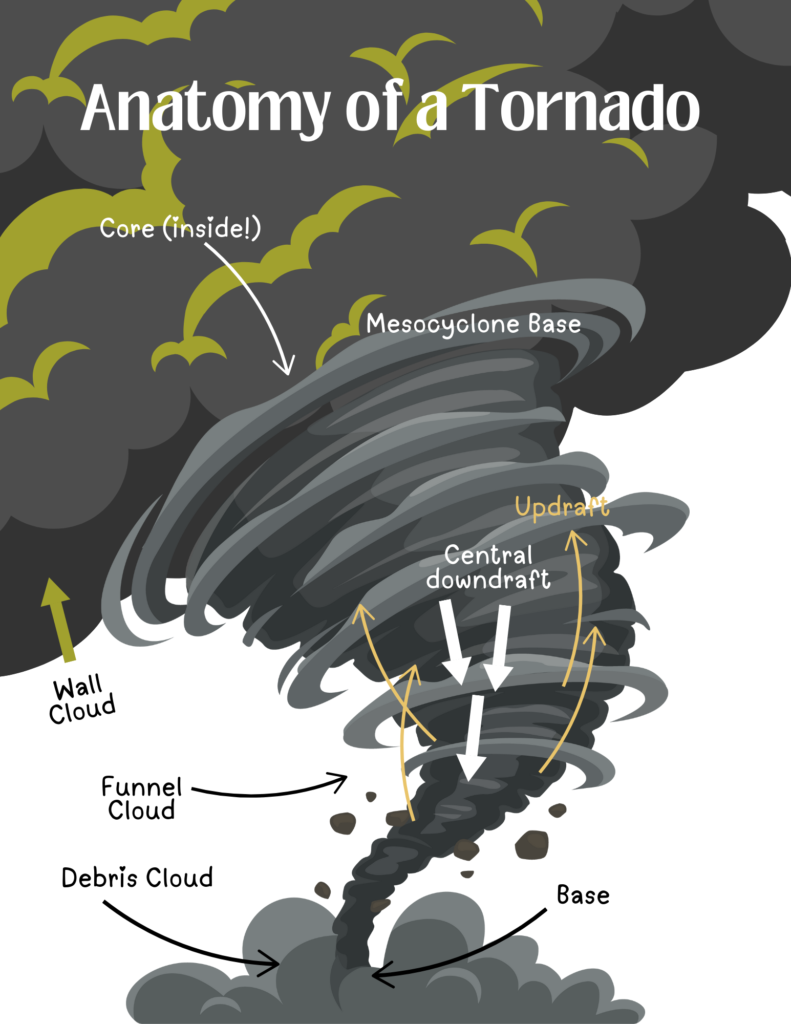
Tornado formation requires a precise recipe of atmospheric ingredients: warm humid air at the surface, cold dry air aloft, strong wind shear, and a triggering mechanism to spark rotation. The Mojave Desert environment disrupts several of these core elements.
- Lack of Sustained Moisture: Tornadoes thrive on abundant low-level moisture. The dry desert airmass prevents the deep, persistent updrafts required to fuel long-lived supercell thunderstorms.
- Terrain Friction: The surrounding mountain ranges, including the Spring Mountains and the McCullough Range, disrupt incoming wind patterns and break up low-level rotation before it can organize.
- Transient Storms: Desert storms usually form quickly from intense solar heating or monsoon moisture surges, but they exhaust their energy just as fast. They lack the multi-hour stamina of midwestern storm systems.
Even though these factors suppress violent activity, micro-scale rotation still develops when unique seasonal triggers align.
Historical Precedent: Documented Storms in Clark County
Official databases track a handful of notable touchdowns in the Las Vegas Valley that put to rest the myth that the city is completely immune:
- March 30, 1992: A potent storm system spawned two tornadoes in the valley on the same day. One reached F1 intensity, causing roughly $250,000 in property damage as it tossed debris and damaged structures.
- September 11, 1998: Severe thunderstorms battered the Las Vegas Valley alongside golf ball-sized hail. A brief tornado touched down during the downpour, coinciding with localized flash flooding.
- August 4, 2014: A weak EF0 tornado touched down briefly in Clark County, proving that modern summer storm cells still carry rotational potential.
These historical occurrences prove that while the probability remains minuscule, the atmosphere operates outside absolute certainties.
Monsoon Season and the Peak Window for Desert Rotation
If a tornado forms near Las Vegas, it usually happens during the summer monsoon season, which runs from July through September.
During these months, a shift in regional wind patterns pumps moisture northward from the Gulf of California and the Pacific Ocean. Combined with extreme surface heating from the desert floor, this moisture triggers rapid vertical cloud growth. When strong upper-level winds shear the tops of these boiling cumulonimbus clouds, brief rotation can spin up near the surface.
These events frequently manifest as landspouts or waterspouts over Lake Mead that move ashore. They catch people off guard precisely because locals associate summer storms only with brief heavy rain and dry lightning.
Common Mistakes and Misconceptions
People living in or visiting Las Vegas often fall into specific traps regarding local severe weather hazards.
- Ignoring Severe Thunderstorm Warnings: Because tornado sirens are absent or rare in the valley, residents often brush off National Weather Service warnings as mere rain advisories.
- Confusing Microbursts with Tornadoes: Straight-line winds from desert microbursts regularly produce sudden gusts exceeding 70 miles per hour, knocking down power poles. Locals often mislabel these intense straight-line wind events as tornadoes.
- Trusting Mountain Barriers: A common myth claims that nearby mountains block all severe weather. While mountains disrupt some storm structures, they can also channel winds and enhance localized shear, occasionally helping spin up brief vortices.
Practical Safety Steps for Desert Storms
When a severe thunderstorm warning drops for the Las Vegas Valley, you need a straightforward action plan.
- Monitor Trusted Feeds: Keep tabs on real-time radar via the National Weather Service Las Vegas or local broadcast meteorologists when monsoon clouds build up.
- Move Indoors Immediately: If winds pick up rapidly or debris starts flying, get inside a sturdy building away from large glass windows and exterior doors.
- Secure Loose Items: High winds and weak vortices easily pick up unanchored desert landscaping rocks, garbage bins, and patio furniture, turning them into hazardous projectiles.
- Avoid Washes and Dikes: Flash flooding presents a much higher statistical danger in Las Vegas than tornadoes do. Never drive or walk through moving water.
Frequently Asked Questions
Can an EF5 tornado ever hit Las Vegas?
Meteorologists consider an EF5 tornado in Las Vegas practically impossible. The terrain, lack of sustained atmospheric moisture, and climatic energy limits prevent the formation of the massive, violent supercells required for top-tier tornadoes.
How do desert landspouts differ from traditional tornadoes?
Landspouts form upward from the ground when pre-existing surface rotation gets caught in a growing cumulus cloud's updraft. They are usually weaker, shorter-lived, and less destructive than classic mesocyclone tornadoes driven by rotating supercells.
Why doesn't Las Vegas have outdoor tornado sirens?
Cities install outdoor warning sirens based on historical risk and frequency. Because tornado strikes in Clark County happen rarely and typically cause minor damage, emergency management relies instead on mobile emergency alerts, weather radios, and broadcast media.
What should I do if caught driving during a severe desert storm?
Pull over safely away from tall trees and power lines, turn on your hazard lights, and stay in your vehicle with your seatbelt buckled while keeping your head below window level. If a secure building is immediately accessible on foot, exit the vehicle and take shelter inside.



