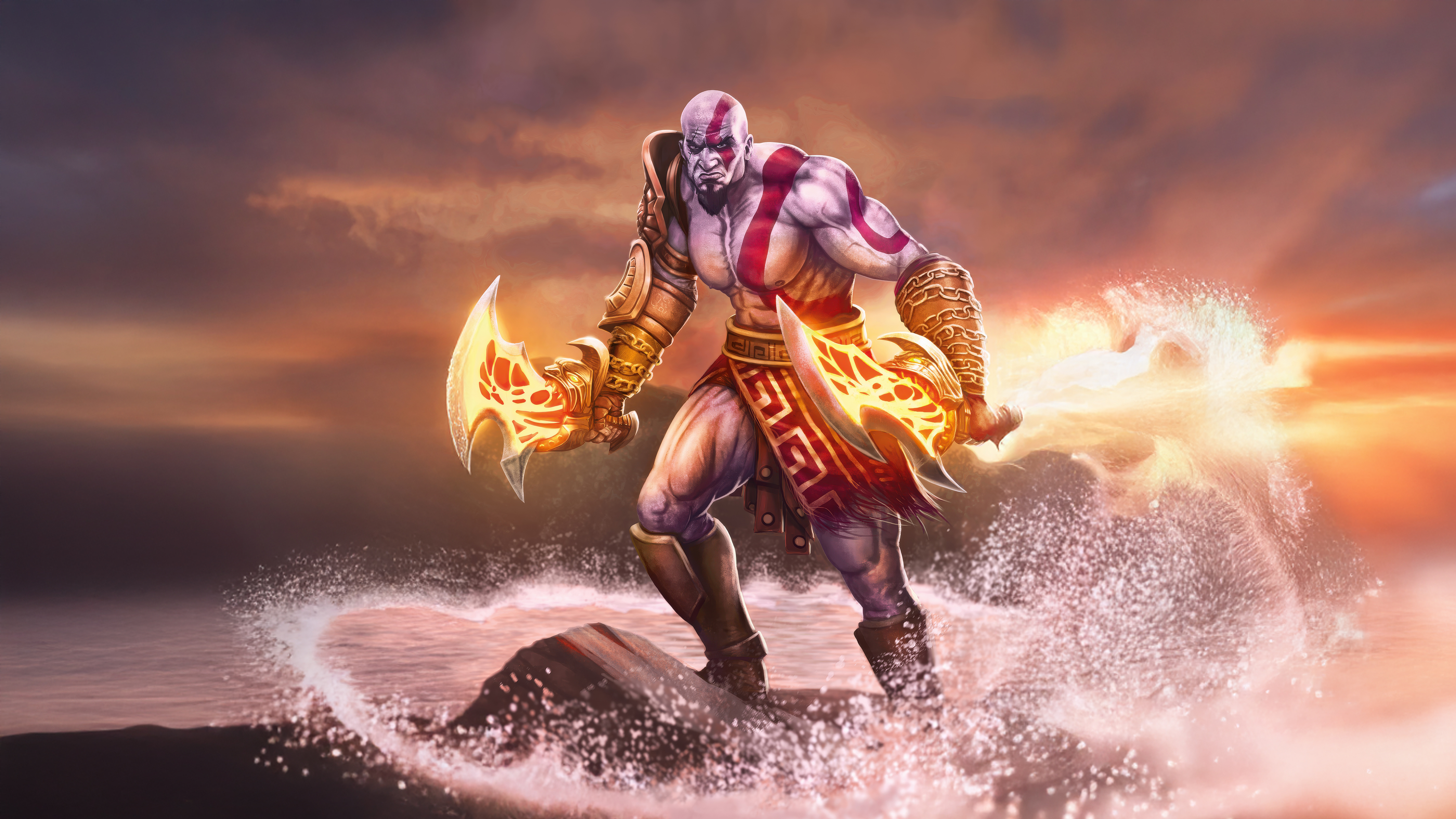
When modern media adapts classical mythology, few figures loom as large as the Ghost of Sparta and the son of Poseidon. Pitting Kratos against Percy Jackson forces a direct look at how contemporary storytelling treats ancient pantheons. One franchise delivers a brutal, blood-soaked Greek tragedy through interactive gaming, while the other builds an accessible, character-driven young adult universe across novels and streaming series. Comparing these two icons reveals how starkly different tones can reshape the exact same myths into completely separate cultural touchstones.
Both characters share deep roots in Hellenic lore, yet they operate in entirely different weight classes of narrative style and medium. Kratos represents the apex of mature, hyper-violent hack-and-slash action, where gods are tyrannical monsters ripe for overthrow. Percy Jackson embodies the classic hero's journey, navigating modern American high schools, summer camps, and a complex familial web of divine politics. Examining their origins, combat philosophies, and thematic legacies highlights why this matchup captures the imagination of fans across the internet.
The Spartan Path: Kratos as an Interactive Tragedy
Kratos burst onto PlayStation consoles in 2005 as a vengeful Spartan warrior consumed by grief and rage. Created by Santa Monica Studio, the God of War franchise turned Greek mythology into a playground for visceral violence and grand-scale cinematic destruction. Kratos isn't a traditional hero; he's an anti-hero defined by tragic flaws, manipulation by the Olympian gods, and an unquenchable thirst for retribution.
The narrative weight of the original Greek era trilogy rests entirely on player agency. You don't just watch Kratos tear through the pantheon; you press the buttons that execute the gods. This interactive element transforms the player into an accomplice to his wrath. Over the course of the series, particularly with the 2018 soft reboot and its 2022 sequel God of War Ragnarok, the character evolves from a mindless engine of destruction into an aging father trying to spare his son, Atreus, from the cycle of patricide.
- Core Motivation: Escaping the haunting guilt of his past and protecting his remaining family.
- Narrative Tone: Grimdark, operatic, and relentlessly fatalistic.
- Stylistic Signature: The iconic Blades of Chaos, chained to his forearms, searing flesh and metal alike.
The Hero's Journey: Percy Jackson as Modern Myth
On the opposite end of the spectrum stands Percy Jackson, introduced in Rick Riordan's 2005 bestselling novel The Lightning Thief. Riordan originally crafted the character as a bedtime story for his son, who struggled with ADHD and dyslexia. Those conditions were ingeniously reframed as a demigod's natural battle reflexes and ancient Greek reading wiring. Percy brought mythology out of dusty textbooks and dropped it squarely into modern New York City, Long Island, and cross-country road trips.
Percy's journey is a classic coming-of-age story wrapped in urban fantasy. He discovers he's the son of Poseidon, gets whisked away to Camp Half-Blood, and immediately finds himself caught up in celestial politics. Unlike Kratos, whose relationships usually end in tragedy or death, Percy relies heavily on a network of loyal friends—Annabeth Chase, Grover Underwood, and a rotating cast of demigod allies.
- Core Motivation: Protecting his loved ones, finding his identity, and maintaining peace between Mount Olympus and the mortal world.
- Narrative Tone: Witty, fast-paced, optimistic, and deeply rooted in found family.
- Stylistic Signature: Riptide (Anaklusmos), a pen that transforms into a lethal celestial bronze sword upon uncap.
Philosophy, Combat, and Scaling Divergence
When fans debate a hypothetical clash between these two titans, the conversation usually grinds to a halt over sheer scale and tone mismatch. Kratos operates on a cosmic, reality-shaking tier. He overpowers titans, shatters the fabric of Greek and Norse realms, and shrugs off injuries that would vaporize a normal mortal. His combat style is merciless efficiency, utilizing a massive arsenal of divine artifacts, heavy armor, and brutal physical strength.
Percy, meanwhile, scales differently. While he boasts incredible feats—such as holding up the sky, triggering volcanic eruptions, and summoning localized hurricanes—his stories maintain a tighter, more grounded sense of personal risk. Percy relies on tactical water manipulation, swordplay, and clever problem-solving rather than raw, apocalyptic brutality. Placed in a direct confrontation, Kratos's millennia of divine slaughter experience and apocalyptic scaling far exceed Percy's teenage ceiling, but their underlying philosophies represent two entirely different ways to view ancient deities: oppressive monsters to be butchered versus flawed, distant parents to be navigated.
Cultural Impact and Legacy in Modern Media
Both franchises have left deep, permanent marks on how audiences consume mythology today. God of War redefined cinematic action games, establishing a gold standard for technical execution, environmental storytelling, and mature narrative framing in the video game industry. It proved that interactive media could handle deeply complex themes of generational trauma and redemption.
Percy Jackson did something equally vital for a younger demographic. By normalizing neurodivergence through the lens of heroic adventure, Riordan's universe inspired an entire generation of readers to dive deep into classical history. The franchise expanded through sequel series exploring Roman, Egyptian, and Norse mythologies, alongside feature films and a dedicated Disney+ television adaptation. Together, Kratos and Percy prove that Greek myths are infinitely malleable—equally capable of fueling a terrifying, cathartic slaughterhouse and a witty, heartwarming tale of teenage endurance.
Frequently Asked Questions
Could Percy Jackson defeat Kratos in a fight?
In a straight physical confrontation, Kratos possesses vastly superior strength, durability, and combat experience accumulated across centuries of warfare. While Percy is exceptionally powerful for a young adult fantasy protagonist—capable of controlling water and surviving intense impacts—Kratos scales to universal and multiversal threats within his game lore.
Why do fans frequently compare these two specific characters?
Both characters occupy a massive cultural footprint as modern definitions of Greek demigods. One represents the absolute peak of mature gaming anti-heroes, while the other stands as the definitive modern young adult mythic hero, making a contrast of their tones irresistible for internet debate forums.
Are the versions of the Greek gods the same in both universes?
No. The Greek gods in God of War are depicted as monstrous, petty, and corrupt tyrants who actively abuse their power, serving as direct antagonists for Kratos to execute. In the Percy Jackson universe, the gods are modern, institutional immortals tied to the heart of Western civilization, acting as distant, unpredictable parents rather than immediate boss fights.
What inspired the creation of Kratos and Percy Jackson?
Kratos was created by Santa Monica Studio to inject fresh energy into hack-and-slash action games by grounding him in tragic Greek motifs. Percy Jackson was created by Rick Riordan as a bedtime story to empower his son, who was diagnosed with ADHD and dyslexia, by reframing those traits as godly advantages.



