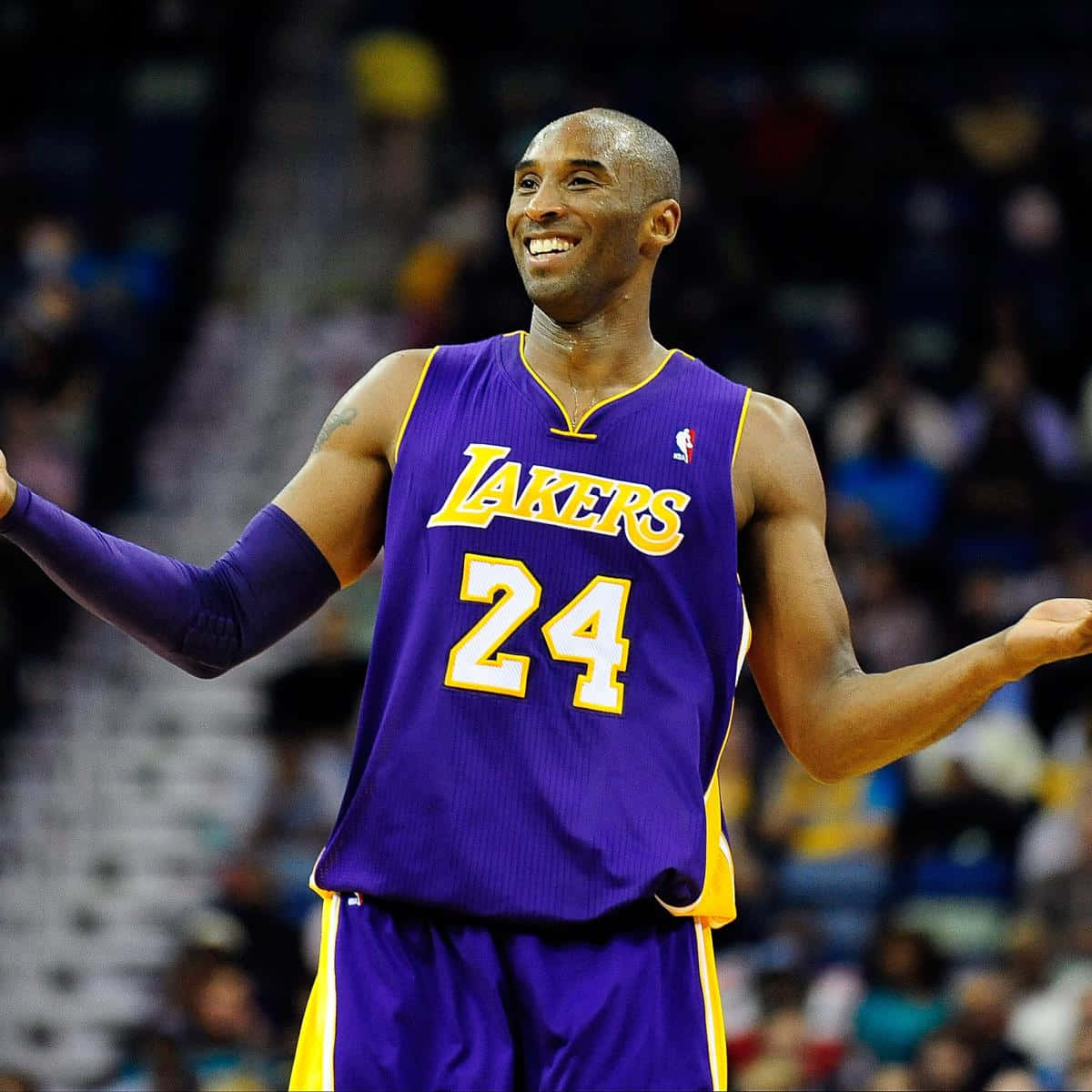
Kobe Bryant finished his 20-year NBA career with a regular-season three-point percentage of 32.9%, sinking 1,827 shots from beyond the arc. At face value, that number looks ordinary compared to modern elite sharpshooters who hover above forty percent. Yet evaluating Bryant's long-range marksmanship requires context beyond a flat statistic. His shot selection, era-specific spacing, and high degree of difficulty completely shift how his perimeter efficiency should be measured.
During his two decades with the Los Angeles Lakers, Bryant operated in a slower, more physical league that prioritized congested mid-range isolation and post-ups over volume perimeter shooting. To understand how the Black Mamba truly performed from deep, we have to look past the raw box score and break down his year-by-year variance, shot difficulty, and playoff performance.
The Raw Numbers and Career Progression
Over 1,346 regular-season games, Bryant attempted 5,546 three-pointers. His yearly accuracy fluctuated based on his offensive load, physical health, and rule changes regarding hand-checking and zone defenses.
Early in his career, operating primarily as a high-flying bench spark and secondary option, he flashed hot-and-cold perimeter numbers. By the turn of the millennium, as the Lakers captured consecutive championships, his volume increased. His peak individual shooting season from deep came in 2002-03, when he shot 38.3% on nearly four attempts per game, highlighted by an iconic streak where he hit nine consecutive three-pointers in a single game against the Seattle SuperSonics.
Later in his career, as injuries piled up and his athleticism dipped, Bryant leaned heavier into the three-pointer to preserve his body. In the 2005-06 season—his famous 35.4 points-per-game campaign—he launched a career-high 518 three-pointers, converting at a 34.7% clip. While those late-career volume years dragged down his lifetime average, they kept defenses honest and stretched out fading legs.
Shot Quality and Degree of Difficulty
Raw percentages lie if you ignore shot context. Modern analytics separate catch-and-shoot looks from unassisted pull-ups. Today's offenses manufacture wide-open corner triples via drive-and-kick sequences and sophisticated off-ball screening actions.
Bryant rarely enjoyed those luxuries. The vast majority of his perimeter attempts fell into the high-difficulty bucket:
- Late-Clock Bailouts: Bryant routinely took deep step-backs as the shot clock expired, forcing low-percentage heaves out of broken plays.
- Heavy Contests: Defenders blanketed him with tight isolation contests because triangle offense spacing rarely afforded clean, set-feet catch-and-shoot looks.
- Deep Range: Long before modern guards pulled up safely behind the arc, Bryant frequently tested the limits with deep, logo-adjacent territory shots.
When isolating his cleaner catch-and-shoot opportunities, tracking data from his later prime years indicates his percentages climbed significantly higher, proving that his mechanics were sound when he wasn't forced to create something out of nothing.
Playoff Performance and Big Moments
Postseason basketball dials up defensive intensity, usually causing efficiency metrics to plummet. For Bryant, his playoff three-point percentage mirrored his regular season at 33.1% across 220 postseason games.
The defining trait of his long-range shooting wasn't consistency; it was timing. Bryant possessed an innate knack for burying high-leverage perimeter shots when momentum hung in the balance. Whether pulling up over two defenders in the 2008 Western Conference Finals or hitting dagger triples in the closing moments of the 2010 NBA Finals against the Boston Celtics, his willingness to take the critical shot never wavered, regardless of how his numbers looked on a spreadsheet.
Common Misconceptions About Mamba Ball
Critics often point to Bryant's sub-35% career mark to label him a subpar shooter who hurt his team's offensive flow. That view misses how guard play functioned in the late 1990s and 2000s.
First, the league average for three-point percentage during most of Bryant's prime hovered between 35% and 36%, but guards who carried massive usage rates—such as Allen Iverson, Tracy McGrady, and Vince Carter—faced similar efficiency trade-offs. To shoulder a 35% usage rate while drawing primary defensive attention means defenses are happy to concede contested jumpers.
Second, Bryant's threat as a shooter forced opponents to press up on him, opening up driving lanes for his lethal mid-range fadeaway and passing angles to cutting teammates. Efficiency isn't just about the ball going through the net; it's about defensive gravity. Bryant commanded maximum defensive attention every time he crossed half-court.
Frequently Asked Questions
What was Kobe Bryant's best three-point shooting season?
His most accurate high-volume season occurred in 2002-03, when he converted 38.3% of his 324 attempts.
Did Kobe Bryant ever win a Three-Point Contest?
Yes. Bryant won the 1997 NBA All-Star Weekend Three-Point Contest during his rookie season, scoring 17 points in the final round to secure the trophy at just 18 years old.
How does Kobe's three-point percentage compare to Michael Jordan's?
Jordan finished his career shooting 32.7% from beyond the arc on significantly lower volume (1,778 career attempts compared to Bryant's 5,546), reflecting a different era where the three-point shot played a minor role in team gameplans.
How would Kobe Bryant's shooting translate to the modern NBA?
Analysts generally agree that with today's spacing, green lights for pull-up transition threes, and an emphasis on analytics, Bryant would likely shoot a higher percentage by eliminating contested long twos in favor of step-back triples.


