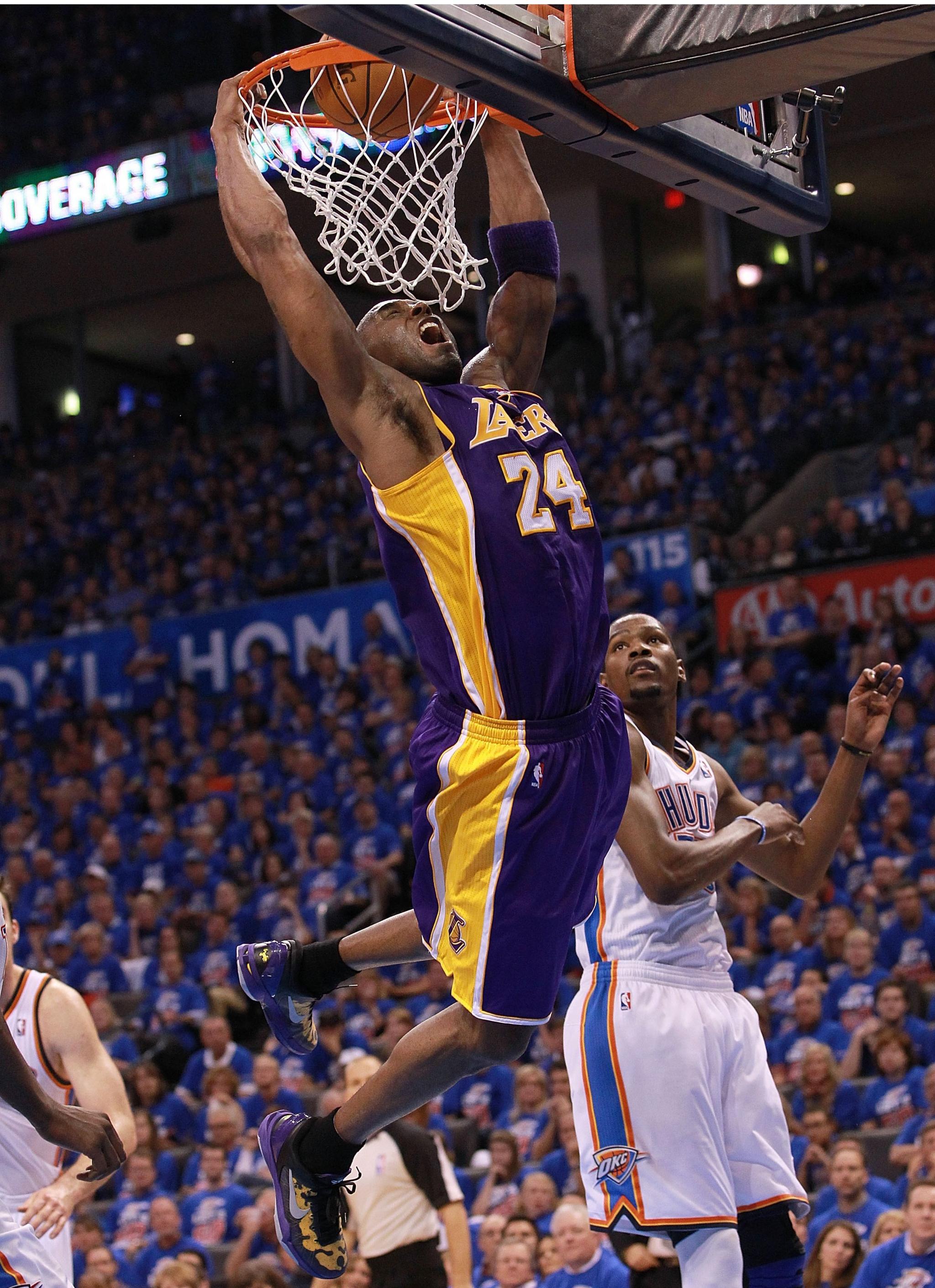
Kobe Bryant finished his 20-season NBA career with a regular-season three-point percentage of 32.9%. On paper, that mark looks ordinary by modern standards, sitting well below elite marksmen of his generation and today's volume shooters. Yet evaluating Bryant's perimeter shooting through a single career percentage misses the evolution of his shot selection, his willingness to take high-difficulty attempts, and his historic multi-three-point scoring nights.
Understanding how Bryant approached the arc requires looking beyond the raw output to examine shot difficulty, era context, and seasonal shifts.
Career Overview and Aggregate Shooting Numbers
Across 1,346 regular-season games with the Los Angeles Lakers, Bryant attempted 5,546 three-pointers and made 1,827 of them. That volume placed him high on historical lists for attempted shots from deep, reflecting an era where shooting threes off the dribble or late in the shot clock carried different tactical weights than it does today.
His postseason numbers mirror his regular-season output. In 220 playoff games, Bryant shot 33.1% from beyond the arc, hitting 292 out of 882 attempts. Consistency defined his career arc rather than extreme volatility; he rarely posted a season above 36% or below 30% after establishing himself as a starter, anchoring his offensive value in his multi-level scoring versatility.
For context on his volume and standing among all-time players, look at official historical data compiled by Land of Basketball.
Era Context and Shot Selection
To understand why Bryant's career percentage settled around 33%, you have to look at how the game was played from 1996 to 2016. Bryant entered the league when isolation scoring, mid-range pull-ups, and post-ups were the primary currency of elite guards. Teams shot far fewer three-pointers per game, and the analytics movement that rewards corner three-pointers and catch-and-shoot efficiency had not yet reshaped floor spacing.
Bryant specialized in tough, heavily contested shots. He routinely took:
- Late-clock bail-out jumpers where teammates dumped the ball off with seconds remaining.
- Deep, off-the-dribble pull-ups against tight double-teams.
- Buzzer-beating heave attempts that negatively impacted his cumulative shooting splits.
Unlike modern spot-up specialists who camp in the corners to shoot clean catch-and-shoot looks, Bryant generated his own offense. He took difficult perimeter shots because the defensive schemes of his era forced him into isolation, and his aggressive mindset demanded that he take responsibility for breaking down defenses.
Year-by-Year Evolution
Bryant's perimeter shooting evolved through distinct phases across his two decades in the league.
The Developmental Years (1996–1999)
As a teenage rookie and sophomore, Bryant was a bench player and partial starter who experimented with range. During his 1996-97 rookie campaign, he shot 22.2% from deep on 1.5 attempts per game. In the 1998-99 lockout-shortened season, his percentage dropped to 21.4%. These early struggles pulled down his career average, as he was still figuring out which perimeter looks fit his offensive rhythm.
The Prime and Championship Years (2000–2010)
During his prime championship runs alongside Shaquille O'Neal and later with Pau Gasol, Bryant stabilized as a legitimate threat. His best shooting season by volume and percentage combined arrived in 2002-03, when he shot 38.3% on 3.9 attempts per game, pouring in 30.1 points per night. During the Lakers' 2007-08 MVP season and subsequent title runs, he hovered consistently between 34% and 36% from deep while shouldering a massive offensive load.
The Twilight and Record-Breaking Nights (2011–2016)
In his later years, injuries altered his athleticism, but his ambition from deep remained intact. On January 7, 2006, Bryant set an NBA record by hitting 12 three-pointers in a single game against the Seattle SuperSonics, including nine consecutive makes—a performance that highlighted how scorching hot he could get when locked into a rhythm.
Common Misconceptions About Kobe's Perimeter Game
Casual fans often misinterpret Bryant's shooting profile by comparing his percentages to modern volume marksmen like Stephen Curry or Damian Lillard. Several key factors separate how those eras are evaluated.
- Assuming poor mechanics: Bryant possessed text-book shooting mechanics with a high release point and consistent elbow alignment. His lower percentage was a product of shot selection and defensive attention, not broken fundamentals.
- Ignoring defensive pressure: Modern tracking data shows that a high percentage of Bryant's career three-pointers were contested with a defender lunging into his space, whereas modern systems prioritize wide-open kick-out looks.
- Equating percentage to clutch capability: While his overall percentage was modest, Bryant hit some of the most memorable game-winning buzzer-beaters from deep in NBA history, proving that percentage over a 20-year sample size does not capture his performance in high-leverage moments.
For official details on his international play and tournament shooting profiles, reference data provided by USA Basketball.
Frequently Asked Questions
What was Kobe Bryant's highest three-point percentage in a single season?
His highest single-season three-point percentage came during the 2002-03 season, when he shot 38.3% from beyond the arc while making 124 total three-pointers.
How many career three-pointers did Kobe Bryant make?
Bryant made 1,827 regular-season three-pointers out of 5,546 attempts, placing him among the most prolific volume shooters of his era.
Did Kobe Bryant ever win the NBA Three-Point Contest?
Yes, Bryant won the NBA All-Star Weekend Three-Point Shootout during his rookie season in Cleveland in 1997, scoring 18 points in the final round to secure the trophy.
How does Kobe's three-point percentage compare to his overall field goal percentage?
Bryant shot 44.7% from the field across his career. His lower three-point percentage (32.9%) reflects how difficult perimeter shots were relative to his mid-range and post-up game, where he operated with greater efficiency.


