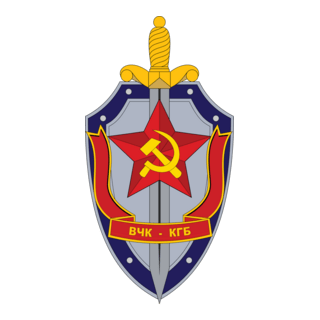
The acronym KGB stands for Komitet Gosudarstvennoy Bezopasnosti, which translates directly from Russian to English as the Committee for State Security. Operating from 1954 until the collapse of the Soviet Union in 1991, the KGB served as the principal intelligence agency, foreign spy network, and domestic political police force for the USSR. More than a conventional intelligence service, it acted as what leadership termed the "sword and shield of the Communist Party", maintaining absolute internal control through mass surveillance and projecting Soviet influence across the globe during the Cold War.
Understanding what the KGB was requires looking past the myths of cinematic espionage to examine its institutional evolution, its sprawling domestic and international mandate, and its ultimate collapse. Far from appearing overnight, the agency was the final, highly refined iteration of a state security apparatus that began with the Bolshevik seizure of power in 1917.
Evolution of the Soviet Security Apparatus
The lineage of the Soviet secret police began just weeks after the October Revolution. On December 20, 1917, Vladimir Lenin established the Cheka (the All-Russian Extraordinary Commission for Combating Counterrevolution and Sabotage), headed by Felix Dzerzhinsky. The Cheka was designed as a temporary emergency weapon of the dictatorship, given unchecked powers of arrest, summary trial, and execution. It carried out the Red Terror, systematically eliminating real and perceived political opponents during the Russian Civil War.
Over the next three decades, the organization underwent a continuous cycle of reorganizations, expansions, and renaming as successive leaders sought to consolidate control over both the population and the party apparatus itself:
- GPU and OGPU (1922–1934): Following the formation of the Soviet Union, the Cheka was reorganized into the State Political Directorate (GPU), later becoming the Unified State Political Directorate (OGPU). During this era, state security turned inward to enforce forced collectivization and crush peasant resistance.
- NKVD (1934–1946): Under Joseph Stalin, the People's Commissariat for Internal Affairs (NKVD) absorbed the security apparatus. Headed by figures like Nikolai Yezhov and later Lavrenty Beria, the NKVD orchestrated the Great Purge, executing hundreds of thousands of party members, military officers, and citizens, while managing the sprawling Gulag forced labor camp system.
- MGB and MVD (1946–1954): Immediately after World War II, Stalin split state security and internal policing into separate ministries, primarily the Ministry of State Security (MGB) and the Ministry of Internal Affairs (MVD).
Following Stalin's death in March 1953, party leaders feared the immense, unchecked power wielded by Lavrenty Beria through the security ministries. Beria was arrested and executed later that year. To prevent any single individual from ever wielding such concentrated police power again, the leadership dismantled the old structures and formally established the KGB on March 13, 1954, placing it under the direct supervision of the Council of Ministers and the Communist Party Central Committee.
Core Mandates and Operations
The KGB was headquartered at the infamous Lubyanka building in Moscow, a structure that struck fear into Soviet citizens because it housed both administrative offices and interrogation prisons. The organization's responsibilities spanned multiple distinct directorates, touching nearly every aspect of Soviet life and foreign policy:
- Domestic Counterintelligence and Suppression: The Fifth Directorate of the KGB was specifically tasked with monitoring ideological subversion, tracking dissidents, controlling religious organizations, and censoring literature. They deployed a vast network of civilian informants across workplaces, universities, and apartment blocks.
- Foreign Intelligence: The First Chief Directorate operated international espionage networks, gathering political, military, and scientific intelligence from Western nations. They recruited high-profile assets, such as the Cambridge Five in the United Kingdom, and orchestrated industrial espionage.
- Border Troops and Internal Security: The KGB commanded hundreds of thousands of heavily armed border guards who secured the Soviet Union's perimeter, ensuring citizens could not emigrate or flee without authorization.
- Political Leadership Protection: The Ninth Directorate provided round-the-clock security, transport, and surveillance for members of the Politburo and top government officials.
Unlike Western intelligence agencies that operated under strict legal boundaries and civilian oversight, the KGB possessed unchecked authority within Soviet borders. It utilized administrative exile, psychiatric incarceration (where political dissent was diagnosed as mental illness), and targeted harassment to neutralize opposition without requiring standard judicial trials.
The KGB During the Cold War
During the decades of superpower standoff between the United States and the Soviet Union, the KGB matched the American CIA and FBI in a global chess match of espionage, covert action, and technological competition.
The agency achieved significant intelligence coups, penetrating Western defense projects, diplomatic corps, and academic institutions. During the 1930s and 1940s, predecessor agencies successfully infiltrated the Manhattan Project, accelerating the Soviet Union's development of its own nuclear weapons. Later, during the height of the Cold War, the KGB maintained deep networks of illegal agents living under false identities abroad, embedding them in foreign societies for years without direct contact with Soviet embassies.
However, the agency's global reach was often paired with institutional rigidity. Historians and intelligence analysts note that while the KGB excelled at gathering raw intelligence and conducting HUMINT (human intelligence) operations, its internal bureaucratic culture discouraged officers from delivering bad news to the Kremlin. Reports sent back to Moscow were frequently massaged to align with Marxist-Leninist ideology, creating blind spots that hindered the Soviet leadership's understanding of Western economic strength and domestic decay.
Dissolution and Modern Legacy
By the late 1980s, Soviet leader Mikhail Gorbachev introduced policies of glasnost (openness) and perestroika (restructuring), which directly challenged the secrecy and absolute power of the KGB. Hardline elements within the agency, frustrated by the crumbling of the Soviet empire, attempted a clumsy coup d'état against Gorbachev in August 1991.
The coup failed within days due to massive public resistance and a lack of unified military backing. In the aftermath of the failed putsch, the victorious democratic reformists dismantled the apparatus. On December 3, 1991, Russian President Boris Yeltsin signed the legislation officially abolishing the KGB, splitting its functions into separate agencies, including the Foreign Intelligence Service (SVR) and the domestic Federal Security Service (FSB).
The legacy of the Soviet secret police casts a long shadow over modern geopolitics. Many former KGB officers transitioned into high-ranking political and economic positions in post-Soviet Russia during the 1990s, most notably Vladimir Putin, who served as a KGB lieutenant colonel stationed in East Germany before later heading its successor agency, the FSB.
Frequently Asked Questions
What does KGB stand for in Russian?
It stands for Komitet Gosudarstvennoy Bezopasnosti, which translates to the Committee for State Security.
When was the KGB founded and dissolved?
The KGB was formally established on March 13, 1954, following the death of Joseph Stalin and the removal of Lavrenty Beria. It was dissolved in December 1991 following the collapse of the Soviet Union.
How was the KGB different from the CIA?
While the American CIA is strictly a foreign intelligence and covert operations agency legally barred from operating domestically against U.S. citizens, the KGB combined foreign espionage with massive domestic police powers, political censorship, border control, and internal security forces.
Who was the most famous head of the KGB?
Yuri Andropov served as the Chairman of the KGB for fifteen years (1967–1982), making him its longest-serving and most influential leader. He later served briefly as the General Secretary of the Communist Party before his death in 1984.
Does the KGB still exist today?
No, the agency as a unified entity ceased to exist in 1991. Its domestic security duties were inherited primarily by the Federal Security Service (FSB), while foreign intelligence operations were assigned to the Foreign Intelligence Service (SVR).



